On Robert Yang’s Radiator 2: Handle With Care

You can get all of Robert Yang’s Radiator games here.

I finally got around to playing the first two entries into the Radiator series of games made by Robert Yang (and maybe some other people?). The first two, “Polaris” and “Handle With Care,” are both about relationships. Let me say up front the both of them are brilliant, but I didn’t find “Polaris” particularly gripping, and I was often confused by its star-finding mechanic. I am not good at games.

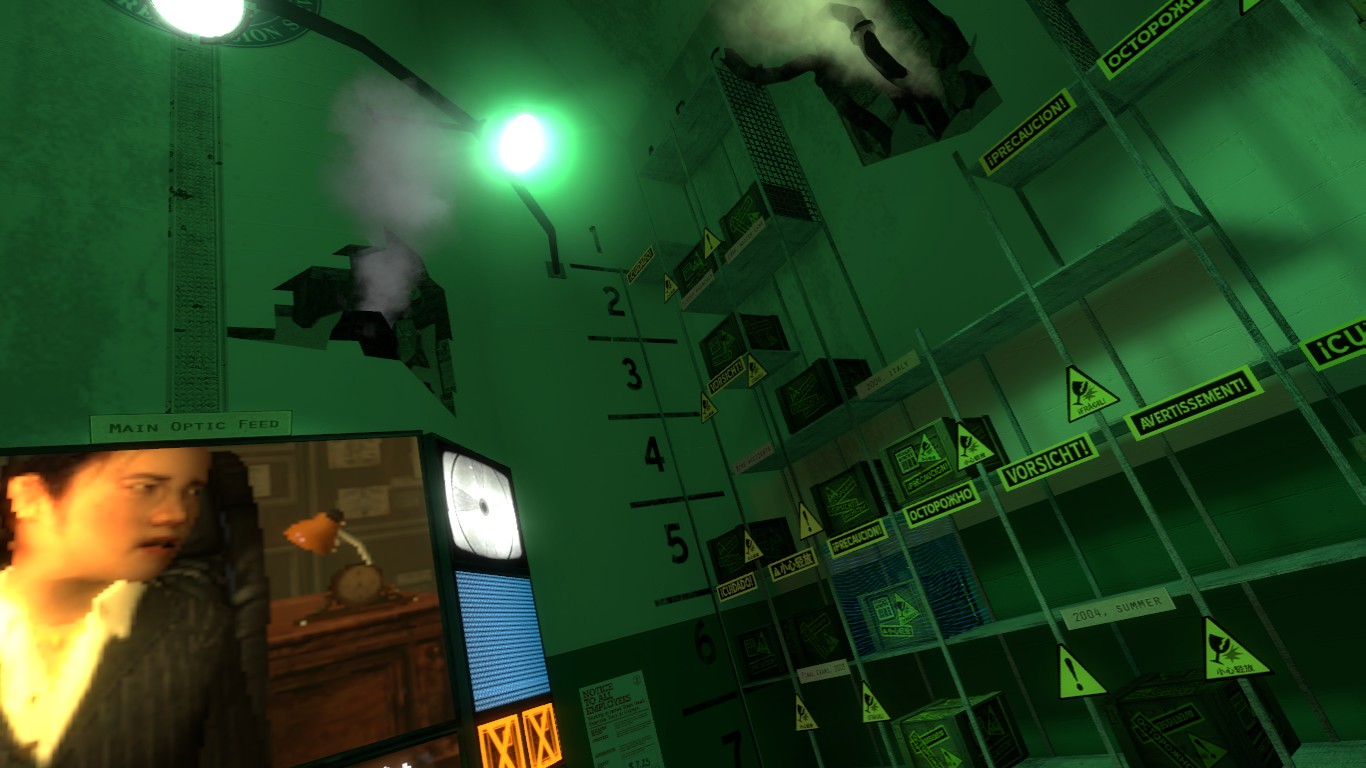
Anyway, “Handle With Care” is a first-person neurosis simulator. The player takes the role of a man, James, in joint therapy with his partner. While a traditional game might have the player negotiate this session through dialogue choices, branching conversation trees, and whatever the hell else passes for “video game writing,” Yang moves “HWC” toward pure gameplay. You move inside the head of the therapy subject; you pick up boxes of memories and you place them inside cubby holes. You manage the inside of James’ (your) mind, making sure that everything is in its right place, nothing out of managerial sync with the world outside your head.
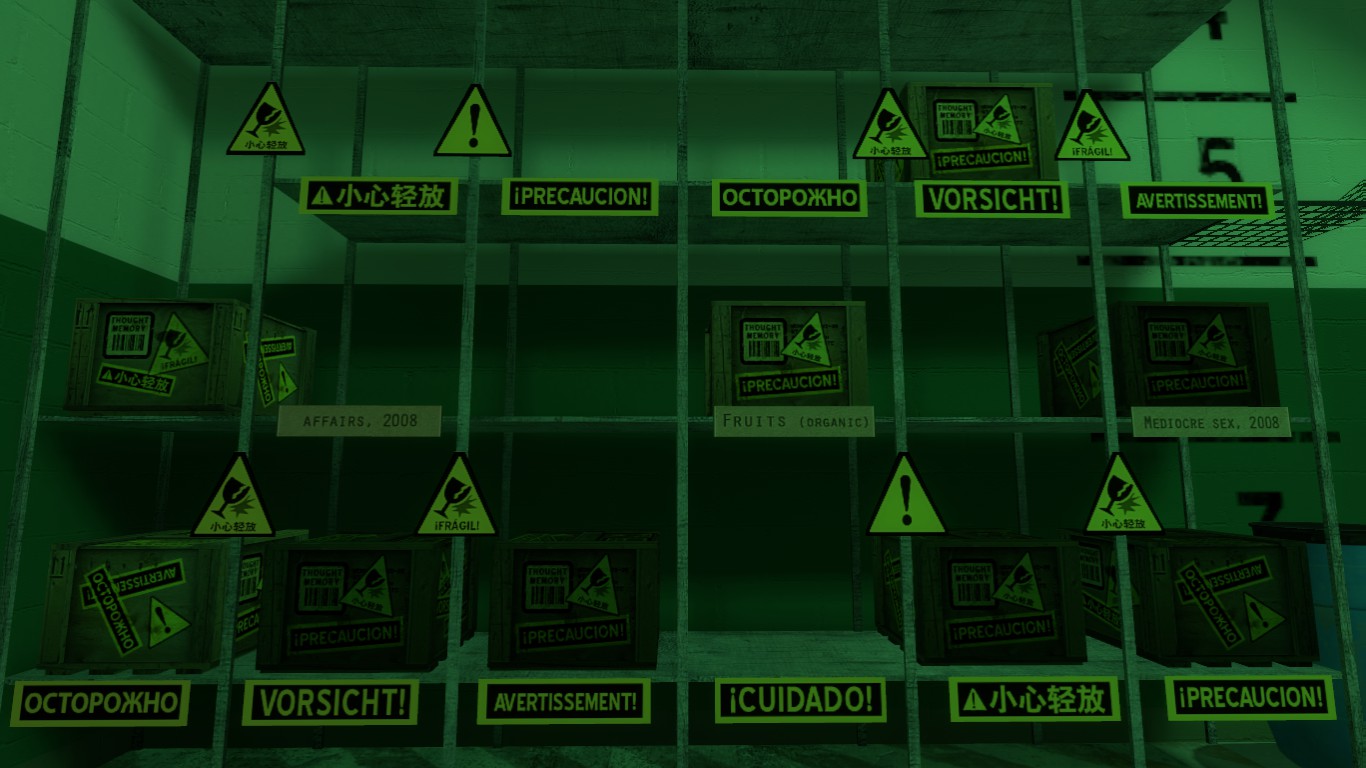
This image is powerful–it is a view of the internal world not as an innerspace or multiplicity, but as a warehouse that has a very particular factory function. It is the late capitalist understanding of the inner experience of every individual who has distinct, particular moments that can be processed, filed, and noted for collection late. Just like debt, or your birth certificate, or your Google search records–everything is codified forever in its right place.

The turn of the game happens when the player makes a mistake. In the mind warehouse, crates drop from a tube. You pick them up and move them to their cubbies. If you bang them up too much, they explode. The message is clear: if you don’t manage your traumas, your issues, in the best possible way, they return. Repression only works if you can maintain it, like a boiler. Because I am absolutely shit at video games, I immediately blew up a memory box and was flashed into some distant memory. It was a fight, maybe, or a jealous rage.
The memories aren’t rendered explicitly. They are translucent; you are only in them for a moment, you hear some dialogue, and then you flash away. They are skeletons of memories; they are like flashes from childhood, from before memory. I think this probably has something to do with the end of the game when your partner, David, mentions that he doesn’t know what life is like after divorce and that you and David had been together so long that he couldn’t remember what things were like before. Memories have so much weight that we have to repress them, or even more, eliminate them from our mind. But what were they to begin with? Impressionistic images that affect us, staged plays, snippets of words between two people in the heat of the moment. “Handle With Care” shows that these moments have destructive, or constructive, power; moreover, they impact us even in their absence.
The ending of the game presents us with contradiction, but a brilliant one. Instead of repeatedly putting boxes in slots, we methodically smash them. The player explodes everything, over and over again, just enough times for it to be as repetitive and annoying as the audio loop or the memory box placement game. The movement away, to recovery, is just as difficult and full of problems as any other process. It left me unfulfilled and confused; it is genius design.

Overall, I think that Robert Yang is doing some of the most important work in video games today. He has an amazing ability to mesh game design with a message–I can’t imagine extracting a single part of the experience of “Handle With Care” and saying that it is the “core” of the game. The imagery, narrative, and gameplay are all necessary in order to communicate the full power of a person and relationship breaking down concurrently. I strongly encourage you to play it.

Some additional reading about “Handle With Care” is below:

Yang – “Not That There’s Anything Wrong With That” (Yang responds to the anti-gay responses to “HWC”)
Meer – “Shrink Rapt” (Rock, Paper, Shotgun review)
Khaw – “Interview with Yang”

Posted in Video Games | Tagged , , , , | Comments Off on On Robert Yang’s Radiator 2: Handle With Care

On Experience-Taking

This is a quick bit of writing about “experience-taking,” which is a term created by Lisa Libby and Geoff Kaufman, from Ohio State and Dartmouth, respectively. If you don’t care about what I have to say about it, just read an article about the whole thing here. 

The general concept revolves around how readers of fiction react to that fiction. Libbyy and Kaufman’s paper, based on experiments, asserts that readers of texts can sometimes take on the emotions of characters in the text. The study took an extra step and found that those who read about characters who were different from themselves became more compassionate toward the people of that group.

“When you share a group membership with a character from a story told in first-person voice, you’re much more likely to feel like you’re experiencing his or her life events,” Libby said. “And when you undergo this experience-taking, it can affect your behavior for days afterwards.”

While people are more likely to lose themselves in a character who is similar to themselves, what happens if they don’t learn that a character is not similar until later in a story?

In one experiment, 70 male, heterosexual college students read a story about a day in the life of another student. There were three versions – one in which the character was revealed to be gay early in the story, one in which the student was identified as gay late in the story, and one in which the character was heterosexual.

Results showed that the students who read the story where the character was identified as gay late in the narrative reported higher levels of experience-taking than did those who read the story where the character’s homosexuality was announced early.

Experience-taking is a measure of compassion combined with an affective affinity–the reader of the story becomes drawn to the character; the lines between the real and the fiction begin to melt.

While this has application for fiction, it is hyper-applicable to studies of video game narratives. Instead of reading about what the character experienced and then being compassionate to them, we instead experience the event at the same moment the character does. On face, I think that probably supercharges the ability for the player to develop new subjectivities in the face of the game–we can become different people, and through that, we can better understand certain scenarios (like war) or positions of power.

But there is also a part of me that thinks that it could have the opposite effect. There is something powerful that happens when you read a particularly powerful narrative. For instance, my own work/readings in domestic violence has led me to some incredibly moving narratives from victims of domestic violence. There is a lot that goes into making those narratives powerful, and maybe the most important thing is that it is spoken from a subjective experience. A story is situated in a person, in a body, with affective and emotional content that gets communicated verbally and nonverbally.

Most of that narrative, that becoming-story, is lost in an actual encounter. Does a digital moment of experience-taking facilitate that uptake as well as an analog one? Or does it just matter that we get lost in the diegetic, absorbing whatever we can?

I have heard that you can access the full pdf of the original article here.

Posted in Video Games | Tagged , , , , | 1 Comment

Mitu Khandaker Talks About Games

So this happened like two months ago. I missed the initial broadcast and sometime between broadcast and podcasting, I forgot to actually listen to Mitu talk about video games. However, this past weekend I finally sat down to listen. The podcast itself is fifteen minutes long, which means that you can probably take some time out of your busy day to chill the hell out and listen to some video game talk.

The whole setup of the radio show sets her up as defensive from the start–the person who talks Khandaker in likens game players with sex offenders, for example, and though she has to play defense a little (particularly on violence), she does a really great job of explaining the inherent worth of video games as “objects we use to think through [problems]”. Video games are simulation moments, safe places where we can work out larger or smaller issues–the “safe mode” of lived reality, if you will.

In any case, listen to it here.

Posted in Video Games | Tagged , , , | Comments Off on Mitu Khandaker Talks About Games

Laure and the Sacred (2)

My first post on Laure and the Sacred can be found here

The notes for “The Sacred” created by Georges Bataille and Michel Leiris attempt to more clearly define the sacred in Laure’s thought. They write:

The representation of “the sacred” expressed in this text attests to lived experience. . . . This definition would link the sacred to moments in which the isolation of life in the individual sphere is suddenly broken, moments of communication not only between men but between men and the universe in which they are ordinarily foreigners: communication should be understood here in the sense of a fusion, of a loss of oneself, the integrity of which is achieved only in death and of which erotic fusion is an image. Such a conception differs from that of the French sociological school which considers only communication between men; it tends to identify that which mystical experience apprehends with that which the rights and myths of the community bring into play. (87)

So for Laure the sacred is a moment of dissolution of the self, or maybe in more charged language, the recognition that the self is merely one object in a sea of equally existent objects. There is no inherent value of the self–in fact, individual existence seemed to be a key point of depression and anguish for her. As Laure wrote,

My illness is so profoundly linked to my life that it could not be separated from all that I have experienced. So? Perhaps it is one of those misfortunes that turn into luck: you will understand later what I mean by that… (93)

In this way, experiences of suffering are not interruptions or corruptions of singular beings or objects. Tuberculosis is not a violence being done to Laure’s body. Instead, it is another object entering into relationship with her–it is communication, and therefore, it is sacred. This is radical, especially because of the way that it envisions the self. Instead of the traditional model of the subject as a secure, insulated entity that then enters into relationships with other subjects and objects, Laure imagines a world in which the single adult subject lives a terrible life by default. Life is hollow and empty until the subject is interrupted by something else, and that violence infuses the subject with meaning.

Posted in General Features | Tagged , , | 5 Comments

Laure and the Sacred (1)

I have been reading the collected writings of Laure, aka Colette Peignot, over the past couple days. I’m not very far into the book, but there are already a few things that I want to note for the future.

The opening section of her half-completed work “The Sacred” is really interesting for video games studies, particularly because Laure is focused on death and ending as a critical part of her philosophy. She writes

The sacred is the infinitely rare moment in which the “eternal share” that each being carries within enters life, finds itself carried off in the universal movement, integrated into this movement, realized.

It is what I have felt as weighted with death, sealed by death.

This permanence of the threat of death is the intoxicating absolute that carries life away, lifts it outside of itself, hurls forth the depths of my being like a volcano’s eruption, a meteor’s fall. (41)

For Laure, it seems that the sacred is a moment of being where the self is caught up in the act of living. For me, this seems similar to the well-worn concept of “flow,” the moments when the player is excelling and moving with a game system so well that they forget that they are playing a game. The sacred is occurring when life is being lived with no obstructions, but more importantly, it is when there is a harmony between the world and self while also being toward death.

I will admit to finding this confusing, and the fact that Laure’s writings are mostly fragments makes it difficult to parse most of it, but she provides an example here.

The bullfight has to do with the sacred because there is the threat of death and real death, but it is felt, experienced by others, with others. (42)

A little unpacking: “the threat of death” and “real death” are posed as different things here. I take the former to mean the threat of the end of the game of the bullfight–the end of the finite distraction that we have invested huge stakes in, particularly the lives of the animal and the bullfighter (the real death). More importantly, the event of a bullfight is communally engaged in–it isn’t the individual bullfight, but the bullfight desiring assemblage, the one that worships the bullfighter and collectively mourns for the collapsing, bleeding bull.

And we see this happening in video games, too. The collective investment in an game event, like Mass Effect 3, is limited in time and space–there is an “arena” of fandom for it that, while it might seem eternal right now, is merely an instant in time. Just like a bullfight, the game event is a combination of the player, the system and objects that make up the game proper, and then all of the collective investments that the entire audience possesses for the game. A huge assemblage with millions of small bullfight instances, but all “sacred” in the way that Laure means. All moving toward an ending, toward a death, toward a moment of eliminated existence.


Posted in Video Games | Tagged , , , | Comments Off on Laure and the Sacred (1)

On Rhythm and Comics

Elizabeth Grosz writes in Chaos, Territory, Art that

The first artist, for Deleuze, is the architect, the one who distinguishes inside from outside, who draws a boundary, as we have discussed previously. This boundary is not self-protective but erotico-proprietorial: it defines a stage of performance, an arena of enchantment, a mise-en-scene for seduction that brings together heterogeneous and otherwise unrelated elements: melody and rhythms, a series of gestures, bows, and dips, a tree or a perch, a nest, a clearing, an audience of rivals, an audience of desired ones. 

While Grosz is talking about birds and how they delimit a territory here, I can’t help but think about the comic book creator as the most direct form of the architect (at least visually). Unlike a director of photography for a film, who chooses what is in a shot but is ultimately bound by what exists (though the film assemblage isn’t), an artist is free to draw anything; literally the bounds of the universe are set by what the artist decides to put onto paper. The comic artist is free to draw from anything and therefore is able to access rhythms that those who capture the physical, material world are unable to to access. A film is always recording an existence in front of it; these bodies have their own rhythms, and the best the film can do is attempt to draw these already-lived refrains together into a cohesive part.

The point that Grosz makes in this section of the book is that the refrain is an overlapping part of chaos and life–the middle part of a venn diagram, if you will. Deploying Deleuze and Guattari, Grosz is making the point that refrain “brings a minimum of livable order to a situation in which chaos beckons.” The refrain is what establishes a territory (or an organism). She writes that

The tapping a child makes in wandering around aimlessly, the humming we sometimes unconsciously perform as we anxiously wait for something or someone, the small piece of annoying music that sticks in our heads despite our loathing it–these are all versions of the refrain, a small capture of melodic and rhythmical fragments what, while they are not the raw materials of music, are the content of music and are what music must deterritorialize in order to appear.  (51-52)

I film is always going to capture and show what Grosz is writing. A film about a fidgeting child is a film about a fidgeting child.

But a comics page has additional layers, most interestingly what is know as “pacing.” Pacing is the way the comic makes you read it. The size of the panels, their shape, their placement on a page, their existence at all. All of these things change the rhythm of reading the comic–the comics artist is able to interface, even if only on accident, with the rhythm, and thus chaos, more readily than a filmmaker.

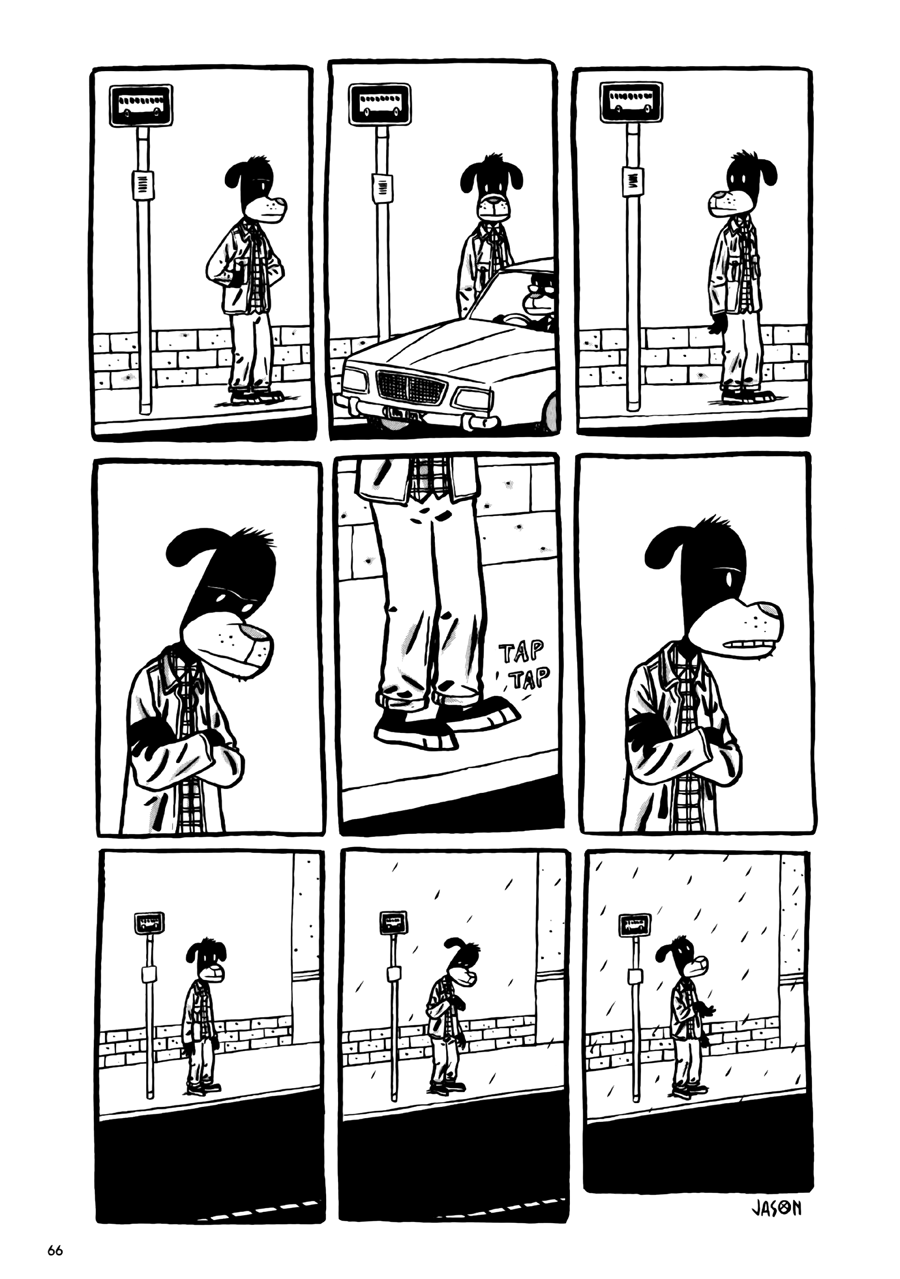
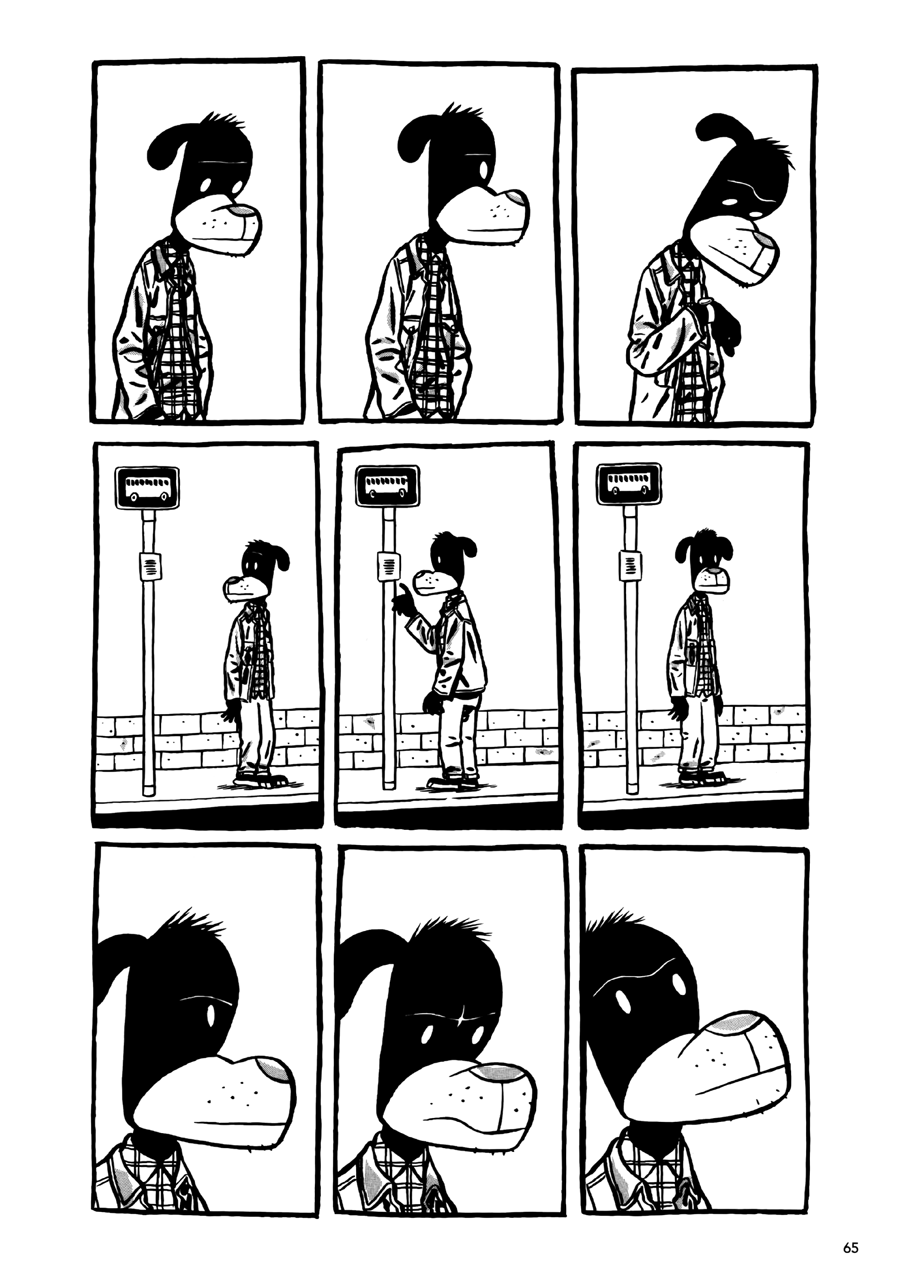
Take this short story by Jason below.

He creates a very specific rhythm of images and panels that set up a world of inside and outside–all that exists is this anthropomorphic dog and his street corner. Eventually, there is rain, but what is missing from the panels is always pressing down on the comic: where is the bus? The pages are territories; the outside is immanent, just like the bus or the next page of the story. Jason, in setting up a rhythm of impatience and expectation, prepares the reader for anything to happen. There is a pacing of expectation, of something coming from the outside, but it never comes. Just some rain.

Posted in Comics | Tagged , , , , , | Comments Off on On Rhythm and Comics

Looking for a Face

I. What does it mean for a computer to understand my face? What does it mean for it to interpret me; what do I look like to a computer?

II. I look at my computer. A black box, but not the kind that divests information. Instead, an opaque being. Sitting. Humming. It doesn’t have a face, not in the way that I or my dog or a fish has a face–not in the way that Levinas or Sloterdijk would have it. But still, it is there, humming.

III. Do you remember that scene in Se7en when Morgan Freeman and Brad Pitt need to find a face in a sea of faces? They run some proto facial recognition software and it takes hours and hours. The computer looks through all of those faces, doing work that humans won’t, or can’t, because it requires too fine of an eye. A computer trying to find a face.

IV. My face is reducible to a pattern. You can find me in shapes, panels, lights and darks, contrast and brightness. I can be found by the shadows in my eyes. I can be found by my jawline.

V. My computer has parts inside of it. It has green planks and blue connections and red wires. It isn’t those things, but they are part of it. And with those pieces, it thinks about my face. It thinks about lots of things. It goes about its life, thinking and doing, probably the same as I do.

VI. Zeroes and ones. That’s how I would represent a computer, if you held me down and forced me to do it. But that doesn’t capture it; that isn’t what a computer is. I’m not shapes and shades, but the computer, held down and forced, tries to think up a face. Neither of us can get it right.

You need to check out pareidoloop.


Posted in General Features | Tagged , , , | Comments Off on Looking for a Face

Sega Shock Collar

Today is Friday. I am busy trying to make something really cool happen.

This is a video where two people hook a shock collar up to a Sega Genesis. The most interesting part of it is how quickly they become wary of the pain. When the one guy is playing Sonic at the very end, he is wary of everything. He moves very slowly. He is afraid of what is off-screen, and he hesitates about everything to the point that he might actually be hurting himself more because he isn’t moving at the speed the game intends.

Posted in Video Games | Tagged , , , | Comments Off on Sega Shock Collar

Praising Difficulty, Opacity, and the Incomprehensible

Ben Abraham does a reading of the Alt Lit movement and points out some interesting things about it (and some problems). I think he hits on something really amazing, though, when he writes

. . . what would it mean truly for a medium to treat incomprehension in a work as a virtue? Not a kind of “anything goes” postmodern relativity – but instead an absolutely radical, nihilistic, all-encompassing rejection of attempts at comprehension? Probably something excitingly different to Alt Lit, to be honest, because I much suspect it doesn’t live up to such a stratospheric standard (maybe some of it does – which is what I find exciting).

While I don’t think that a pure, absolute destruction of meaning should be an end-goal, I certainly think that the introduction of opacity into games is something that should be given a bigger push. I think that we should celebrate games that don’t give us all the pertinent information we need to make a decision, or games that surprise us by making us weird victims, or games that purposefully make sure that we have a hard time playing them.

Those are the games I enjoy, of course, but I also think that there is a lesson to be learned in a game that makes you struggle and feel emotional pain. I have written before that “I want to see games where [players] are the killed, not the killers.” Beyond the affective potential for assuming the losing position, there is also the struggle in itself–being reduced to a non-actor, an object without power, can create a new subjectivity in the player. Distancing the self from the winning world is a lesson in humility, but more importantly, it is a lesson about the positive aspects of struggle.

In his talk “Learning to QWOPerate,” Bennett Foddy talks through some of the things that he believes players enjoy in games. He believes that players like to be “confused, humiliated, and frustrated” if the developer is causing those feelings to exist. I absolutely agree, and the perceived intentionality on the part of the developer is key. I enjoy Demon’s Souls’ crushing difficulty because I know that it is intended, that is gameplay that I am supposed to persevere through until I come out the other side. In the same way, I didn’t enjoy how Anna had mind-breakingly difficult puzzles that weren’t complex, merely random–that is to say, they were there because of lack of clear intent.

Foddy’s point in the talk is that all games are adversarial; single player games are merely competitions between the developer and the player. Other people have formulated this same idea in their definition of what “game” means at the base level–a player interacting with a system.

And this struggle against difficult controls, or controls that are opaque to the player without massive baroque documentation, gives us something to overcome. I am by no means that “hardcore gamerrrrr” who thinks that there is too much handholding in games or that games have softened up and are thus shitty. I can tell you that SNES, NES, and Genesis games were fucking hard as hell for me when I was ten and they are just as hard now, even though I still try to get my R-TYPE on sometimes. But Bennett has a really good point when he shows a QWOP player scooting along on one knee and says “I would be embarrassed to show this to anyone, but this person is genuinely proud of it” (I’m paraphrasing).

People set their own goals in these really difficult, really abstract games, and the same thing can happen in opaque or “incomprehensible” games. In spaces without meaning, without a telos that defines the play experience, we make whatever we want–this was the success of Minecraft for a long time, before the “end game” was added. But there is the possibility for more.

I want to resist imprinting meaning on things. I want them to exist, to be interacted with, and not be based on my experiences or my access; I want to be open to digital worlds or other beings or the strangeness of the universe and not have it be limited to final boss levels or achievements.

And I guess we’re gonna have to build that.

Posted in Video Games | Tagged , , , , | 3 Comments

A Battle Before the Beginning of Time

I am fascinated with the idea of the “battle before time” in video games. A conflict that happened before the player existed, independent of the game world’s existence as only there for player consumption. I, like a few others (most especially Darius Kazemi), am concerned with what it means for a game world to not be centered around the experience of the player. This has roots in speculative realism, and more particularly in a reading of the object-oriented ontology subgroup housed within the broad umbrella of SR.

The Fallout franchise is at the top of the pile as far as these noncorrelationist video games are concerned. The world goes about its business when you are not around. People have routines, maintenance, stories that exist outside of player access. More particularly, the narrative goes out of its way to present a global annihilation conflict and its aftereffects on an incredibly long timescale. Though each player moves through the Fallout games feeling very important to the world, what the timescale and the number of games should tell the player is this: these world-breaking events are always happening.

Killing the supermutant overlord in the first game is merely a blip in the political movements of the world. You felt important, but only because of your smallness. The huge, gameworld-overtaking megachurch from the first game is totally forgotten in the space between the first and second games. By the time that New Vegas rolls around, it might as well have never happened. The Vault Dweller was only important in the player’s memories.

The world, as Stephen King would write, moved on.

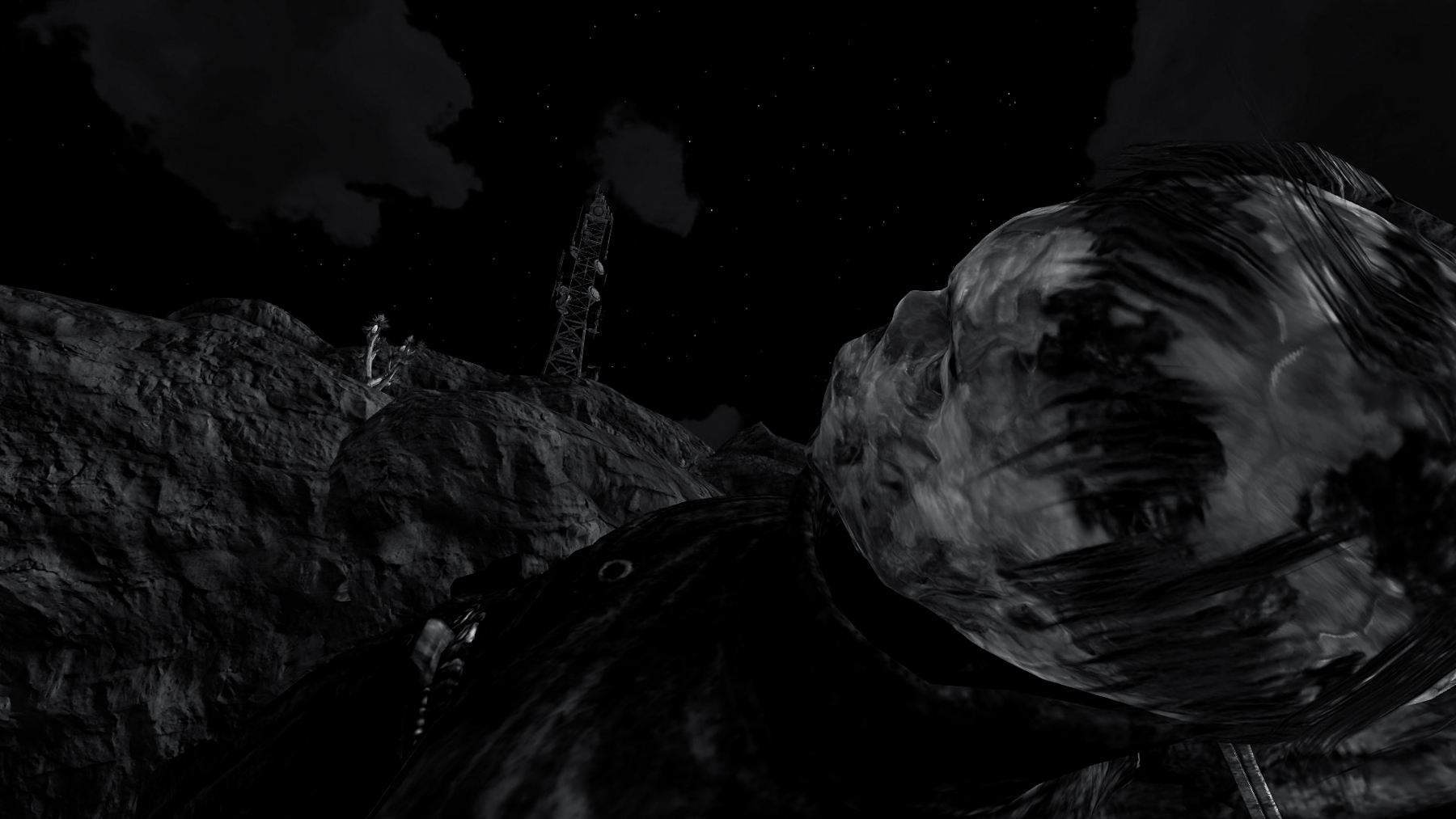
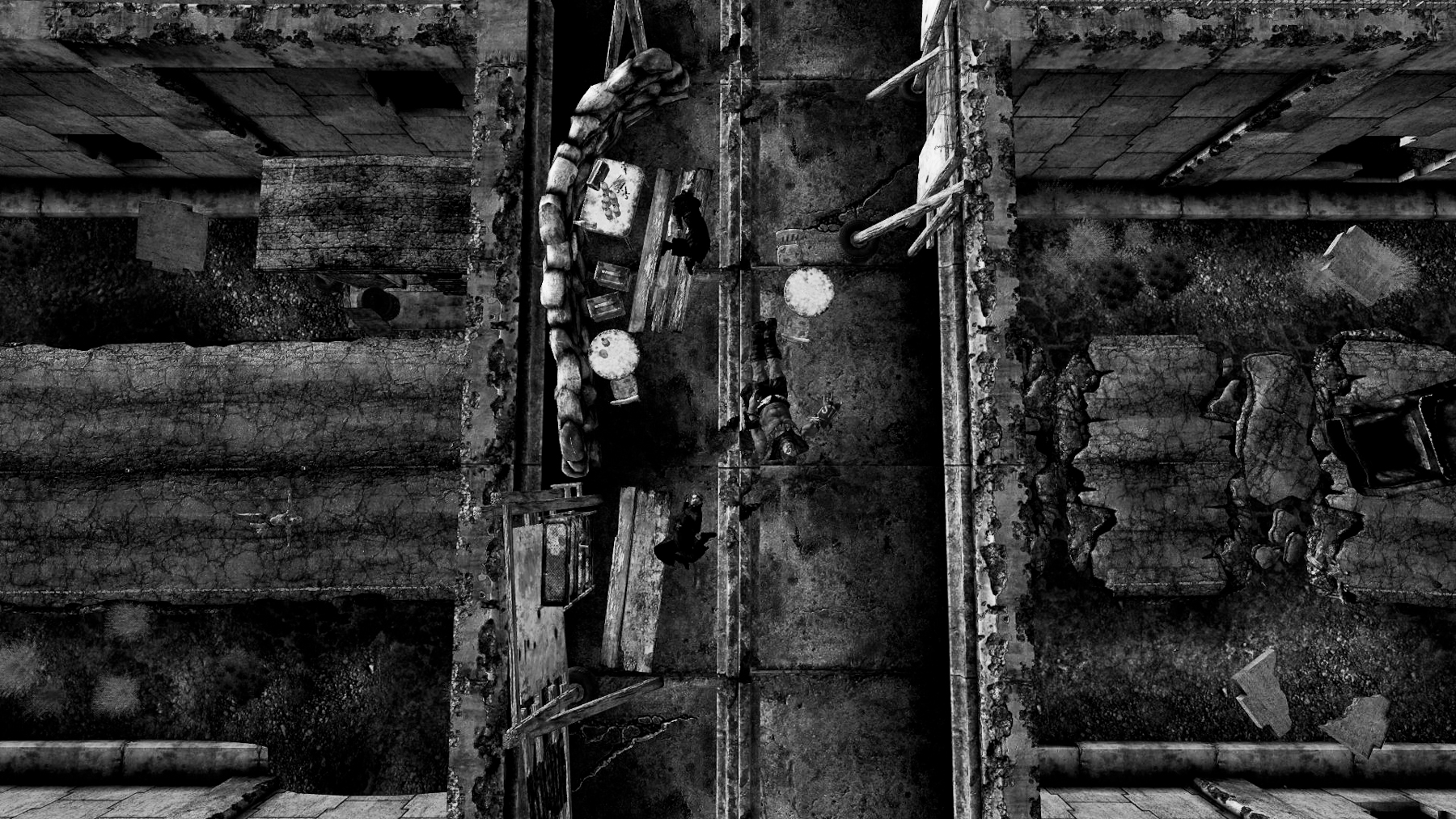
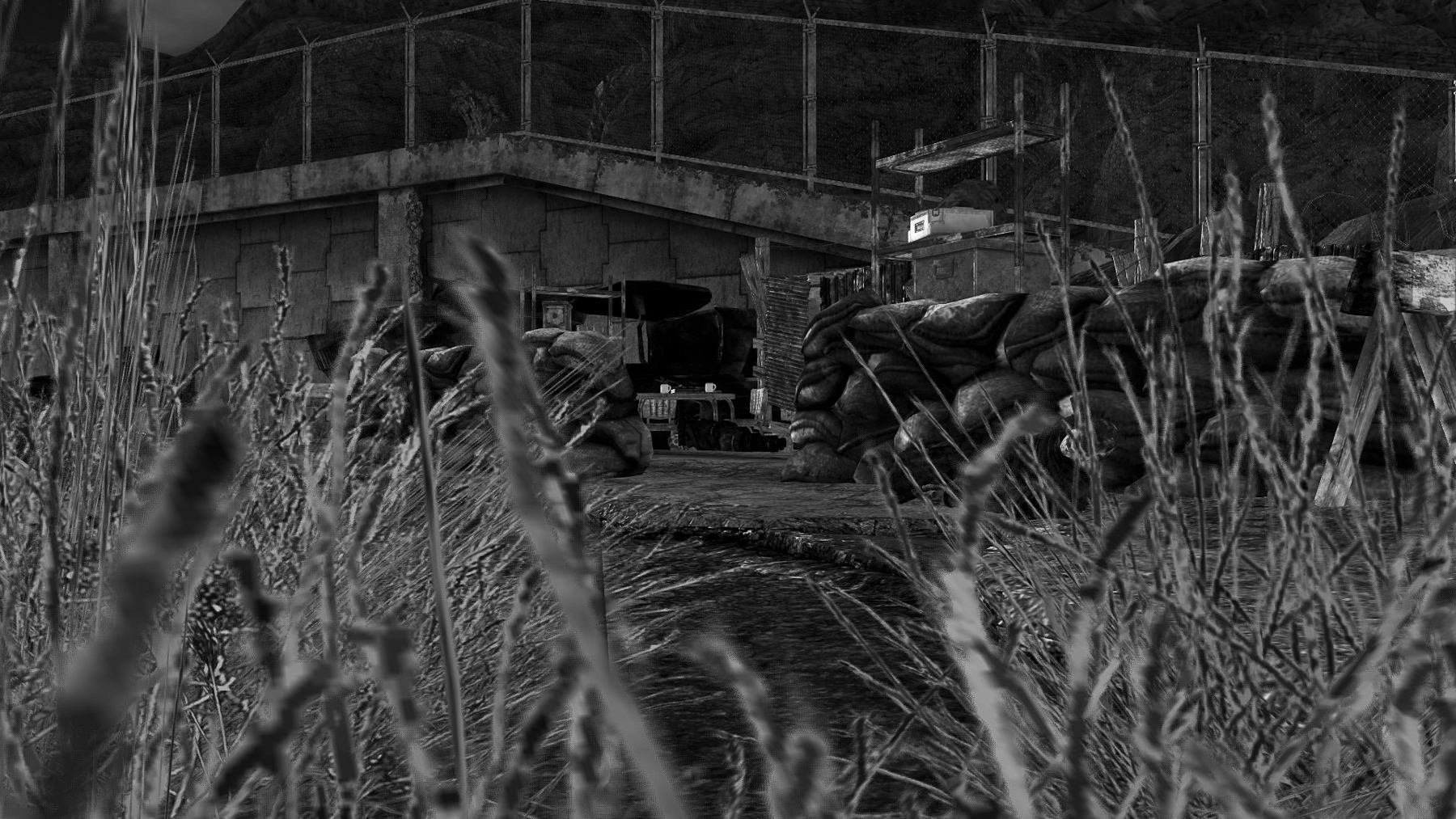
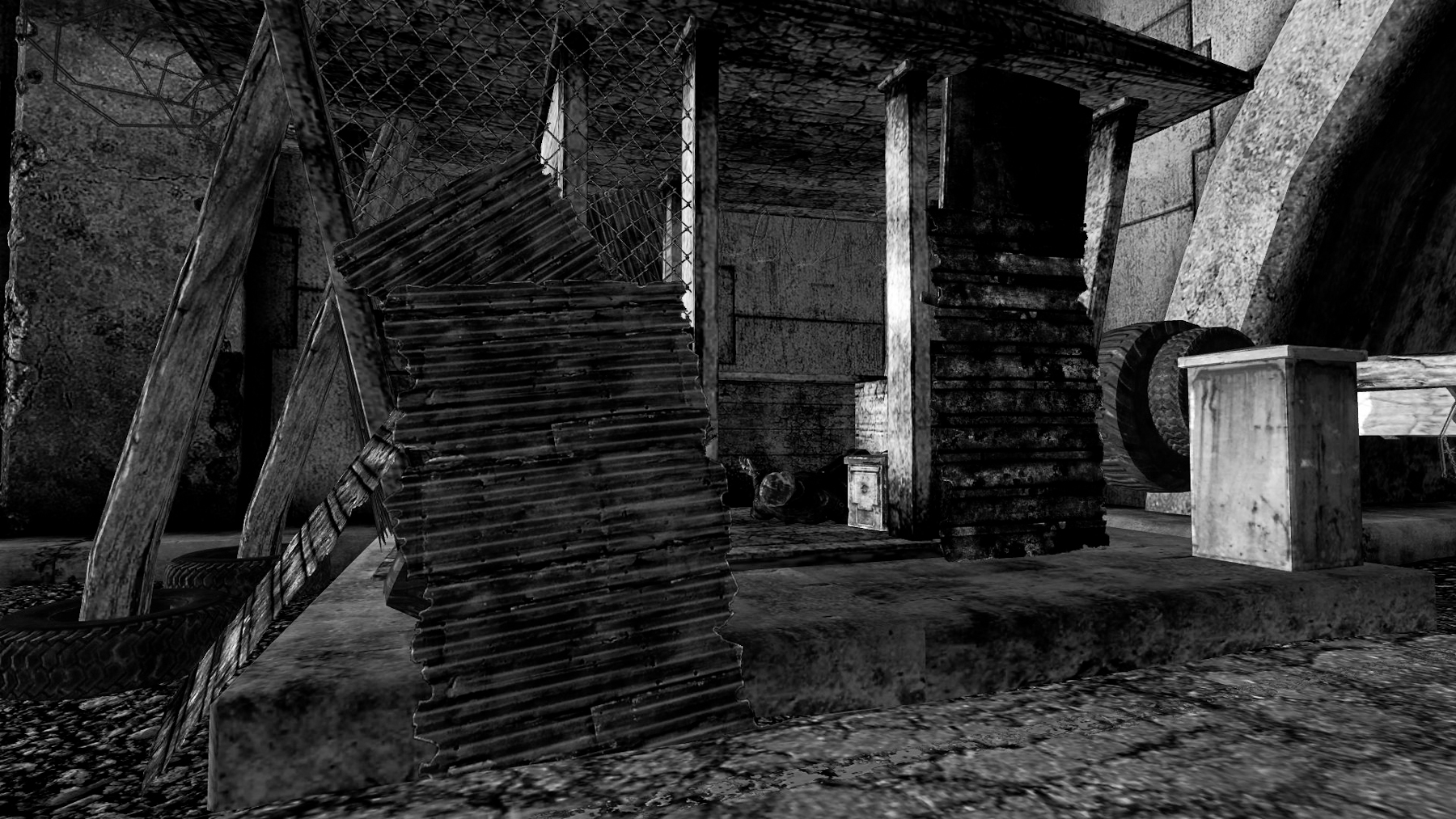
I was playing Fallout: New Vegas this morning and found a strange thing. I found an underpass set up with barricades. There were bodies strewn around, and a few feral ghouls that had obviously moved in like crows after a battle. I saw a small forward operating base with bodies inside; an overpass defensive position was also covered in plasma-weapon armed troops.

What had happened here?

This is the “battle before time.” The machinery of the world keeps pumping on, even if the player is not there. I couldn’t be sure if they were placed there or if they were spawned when I got close, allowed to fight their battle, and then left there.

Their world is totally different from mine. Their lives are distant from mine. I won’t know them. They had no dialogue. They were distant objects.


Posted in Video Games | Tagged , , , , | Comments Off on A Battle Before the Beginning of Time