On Thirty Flights of Loving

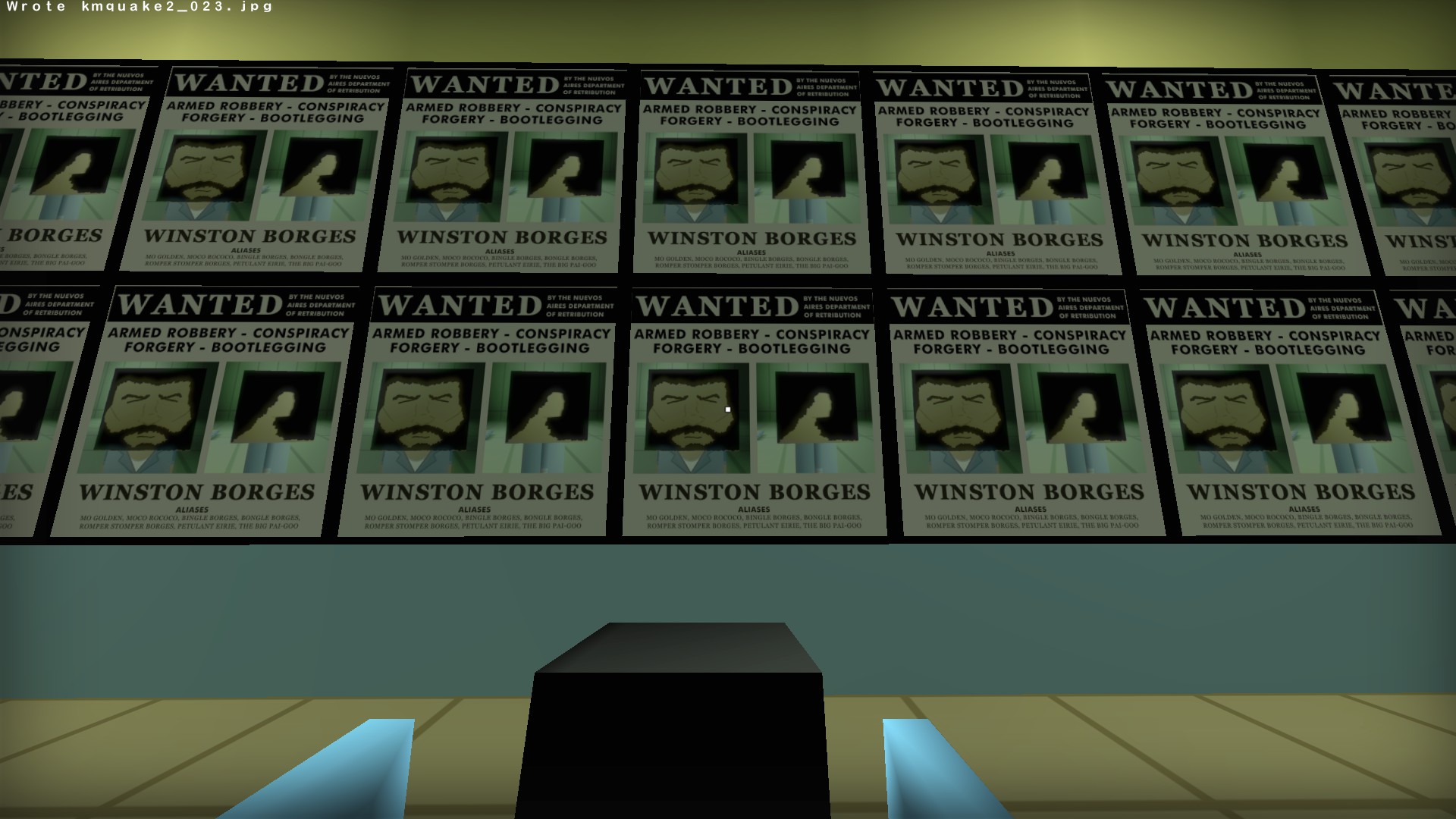
I really, really enjoyed Thirty Flights of Loving. It was made by Blendo Games aka Brendon Chung. 

I enjoyed it not because of how it cuts up space, though I did like that aspect. But film already does that–I like to wander around in a game world, and we have a collective desire for that; why else would “open world” be such an attractive feature for us? I didn’t enjoy it because it is a manifesto, partially because I don’t think it is as politically charged as a manifesto has to be.

I enjoyed Thirty Flights of Loving because it doesn’t pander to the audience. Mark Brown sort of gets at it in his Wired review: “it trusts you to put all the loose ends back together.” And I love that, not because the player is forced to participate, but because we are forced to think through “how do all these pieces fit together?”

I especially like this because I think that it is impossible.

Of course, we can play the “Dear Esther game” all day long. We can put pieces together. We can try to make sense of the marriage plot, the dancing, the drinking, the three-member relationship, the heist, the plane, the accident, the gun, the saving of the male member of the team, the car crash, and every other plot point. We can try to render it explicit and solid; we can turn it into something else. We can translate Thirty Flights of Loving into something we can understand.

That’s sort of bullshit, though. It actively resists interpretation, and I have a feeling that if there was a solid meaning to the text, it would have come to me by now. I’ve played it five times since it came out. The plot makes no more sense to me than it did the first time. I’ve come upon some interesting questions, though. Like, why does Anita change into another woman when you flash back to the bed? Why is that other woman at the wedding?

For a linear game, Thirty Flights of Loving goes out of its way to maximize its horizontal theoretical potential. By that, I mean that each time period, each moment between a cut, has many, many questions that can never be answered with any depth. Each plateau is shallow but wide. Why are there so many cats? Why oranges? What was the heist about?

I don’t have any answers. I respect Thirty Flights of Loving‘s opacity. It merely is.

Also, the last few minutes of the game are brilliant. It actively makes fun of those of us who are overanalyzing games, as if there are pieces and theories that, when understood completely, fill in all the blanks. Wonderful stuff.

Posted in Video Games | Tagged , , , , | 6 Comments

Announcement: Designing Horror

Check out the games in the Designing Horror series.

It is rare that I make announcements on this blog. I don’t have a lot to announce; mostly, I just have weird things to say. I like to gush.

But this is an announcement.

I am going to start playing horror games. I am going to try to figure out what makes them work, and I am going to do it slowly, over a long period of time. Probably one game per week.

To be honest, this is a strange thing for me to do. I love horror as a genre, but I absolutely hate the act of watching horror films, playing horror games, or having experiences that even approximate those things. I get all emotional and sweaty. I do a lot of eye diversion, trying to look around the problem.

But I still think there is something really important there. More than that, I believe that my strong affective reaction to horror means that there is something that horror does that other kinds of games do not do. There was a time when I was really on my high horse about the fact that I never feel “immersion” as a force in my life. I never feel drawn into a narrative–it is always apart from me. On some level, that probably has to do with half a lifetime performing critical moves on texts.

The converse interests me, though. I get scared so, so easily. I get drawn into a fear assemblage at the drop of a hat.

So I am going to brave it all. I am going to figure out what Designing Horror means for me. And you get to read me writing about how fucking terrified and/or paralyzed I am every time that something weird pops up on screen.

The format will look something like this: I will read each game through three different lenses. Easy enough.

1. Why Is It Horror? Based on my having already played a few horror games, I am going to say that this will be one of the most difficult things to explain for most of the games. Most horror games merely follow the tropist line of creation–“gameX plus zombies, dark spaces, nonsense things = horror”. Part of the difficulty of this is going to be deciding what “horror” games I am going to play. Honestly, I’ve just been trawling the web looking for games that people call horror. Whether that is true or not, time will tell. Anyway.

2. How Does It Work? An analysis of game mechanics and elements that make it “work”  (or not “work”) as a horror game. Good stuff.

3. What Did It Do To Me? I know that I preach about tourist writing in games, and that New Games Journalism is a bit shit sometimes, but I think this is incredibly important in a genre that explicitly preys on the reactions of the player. This is going to be the part where I bare all of my scared emotions. Get excited.

So that is it. I hope that sounds like fun. I hope you want to read that. (I will do it anyway, even if you don’t).

Side note: I just had a repressed memory reveal itself. I faked sick in high school one time so that I could stay at home and play Silent Hill 3 in my room alone in the dark. I played the whole thing through squinted eyes–but I really liked it.

Posted in Designing Horror, Video Games | Tagged , , | 9 Comments

Or, What Is It Like To Be A Thing?

I MADE A GAME SO PLAY IT. 

I often go on and on about people who study games and write about games having a kind of obligation to understand how games are made and be familiar with the materiality of game creation.

So I did it. I’m not sure that you can call what I have made a “game” so much as it is a linear narrative where you make choices and that sometimes impacts the outcome that you get. It is maybe a game about information, and playing it optimally means getting the most amount of information and context for what it occurring. Playtesting through it a couple times has led me to realize that you can play through and probably not understand a damn thing that is going on.

I am totally okay with that.

The title is a play on the subtitle of Ian Bogost’s Alien Phenomenology, or What It’s Like To Be A Thing. I can’t tell you what it is like to be a thing, but I can always ask it as a secondary, appended question.

What Is Life, or What Is It Like To Be A Thing?

What Is For Dinner, or What Is It Like To Be A Thing?

See what I did there? (or, What Is It Like To Be A Thing?)

In any case, I am eternally grateful to Anna Anthropy’s post on her blog where she made the sources for her various Twine projects available. It is a super resource. She is amazing. These are things we should all know.

PLAY THE GAME HERE.

Posted in Video Games | Tagged , , , , , | 4 Comments

Steven Shaviro on Postmodernity

Our only chance lies in this: to remake ourselves over and over again, frenetically chasing fashion, keeping up with state-of-the-art technology, and always being sure to purchase (or steal) the latest upgrades. Isn’t that the American way? Even the most arcane fads can be marketed for success, but nothing stays hip for very long. The regulative principle of postmodern irony is that we can survive only by squandering ourselves, which is to say by becoming yet more cynical than our controllers. “Life is a rollercoaster,” Nixon writes, “exhilarating on the way up and breathtaking on the way down.” Next stop, Space Mountain. Like it or not, we’re all aboard for the ride.

Steven Shaviro, “Walt Disney” Doom Patrols 

Posted in Quote Time, Video Games | Tagged , , | Comments Off on Steven Shaviro on Postmodernity

Dear Esther: A Photo Essay

This gallery contains 10 photos.

Dear Esther is linear. It speaks like a 19th century novel. It is full of pain and loss. As the narrator say, “the infection is not simply of the flesh.” The island stands alone–“the revolution and the permanence” of a play … Continue reading

More Galleries | Tagged , , ,

On Dear Esther (3)

Previous posts on Dear Esther are here and here.

I keep coming back to Dear Esther. After Gameloop, and the discussion of art games that I had a few times there, Esther kept coming back to my mind. So I played it again.

Much like the last time that I played the game, I came out with some snippets of information instead of a grand statement about the game. I think I am closer to the definitive thing that I want to say about the game, but I honestly think I’m a year and a few more playthroughs away from hammering that out.

1. While a huge chunk of the events in the game are random, something that happens every time is that a gull flies over the player’s head when s/he leaves the lighthouse. At the beginning of this playthrough, my narrator said that even the gulls had fled the island, following the shepherds.

The narrative of the game, which culminates in the player character jumping from a tower and transforming into a bird, is all about closeness and distance–forced or otherwise. Esther is gone, and there is a gulf between the narrator and her. Jakobson died of some disease and froze on the island’s slopes, and he was dragged into some cave to rot. Donnelly died of syphilis, donated his body to science, was was disseminated into civilization. So flight, either into or out of, characterizes all of the characters mentioned in the game.

The very end of the game is a black screen. The only way to “complete” the game is to access the menu and leave. That is a flight away from the experience. It is an acknowledgement of the gulf between player and game.

2. The mailman knocked on my door while I was playing the game. I had the sound up loud. I was deeply invested. It shocked me. I got up, took the package from him, and sat back down at my desk; I was shaking. It took me a few minutes to get back into the rhythm.

3. I have listened to the Dear Esther soundtrack, in its entirety, over a hundred times since it was released.

4. “You have been rendered opaque by the car of a drunk.”

5. Another theme: remembrance. The narrator is remembering Esther, the inhabitants of the island, the researcher, and the goatherd. The stones themselves remember the island’s history; the cliff’s are a memorial to disease and isolation. The dents in the car, the lines on the road, all of these are material markers in time. Why does the narrator say he can only see the place where the accident occurred in his rear view mirror?

The philosophical message is that we have to start looking for the material markers of the future.

My writing this is both: I am looking for the signs of possible Dear Esthers, possible new experiences, possible new playthroughs. I am also remembering that-which-was. I remember that being that crouched at the knee and launched itself into space, becoming a bird.

6. “I have run out of places to climb. I will abandon this body and take to the air.”

Posted in Video Games | Tagged , , | 1 Comment

John D. Peters on Communication

The real work of communication thus occurs largely on a non-material plane, wherever mutual partaking of intentions and thoughts opens up. Each sign is a seance in miniature, as it were, calling forth a spiritual being: “When I perceive a sign as a sign, something more comes to presence.” The sign’s own body is at best incidental. In a lovely phrase Augustine could have written, Logue and Miller write, “the sign-vehicle’s own thingness recedes into the background and sacrifices itself, as it were, for the meaning that it bears.” The motto of the venerable tradition which Logue and Miller represent might be, “The letter killeth, but the spirit giveth life.”

John D. Peters, “Sharing of Thoughts or Recognizing Otherness? “

Posted in Quote Time | Tagged , , , , | Comments Off on John D. Peters on Communication

Philip K. Dick and the Living Image

This post isn’t going to be nearly as dramatic as the title would have you believe, but I do have some things to say about Philip K. Dick and the essay titled “What Do Pictures Want?” from W.J.T. Mitchell’s book of the same name.

The essay itself is about the desires of images. Mitchell takes a stance that I am partial to: what are the repercussions for thinking about images as objects in their own right instead of mere representations or depictions of authorial intent? Mitchell is “aware that it involves a subjectivizing of images,” though I am two steps ahead of him in my stance; I’m willing to side with the OOOers and suggest a flat ontology instead of turning pictures into subjects. However, Mitchell pays lip service to ontological questions and quickly skips to an Lacanian understanding of desire in order to explain his theory of desiring images (though I am confused why Deleuze isn’t mentioned anywhere in the essay other than a footnote about minoritarian struggle).

I’m getting to Philip K. Dick, I promise.

In discussing the alterity of the image and how that creates a fixed struggle for power that constitutes desire, Mitchell writes

The paintings’ desire, in short, is to change places with the beholder, to transfix or paralyze the beholder, turning him or her into an image for the gaze of the picture in what might be called ‘the Medusa effect’.” (36)

This doesn’t quite sit right with me. It might be that I have been thinking about John Dewey all weekend (courtesy of Alex Myers), but I don’t think that makes any sense. It might be my internal resistance to Lacan, but I don’t believe Mitchell is correct when he writes that what images want is “manifested as a lack.”

I don’t think the aesthetic moment is one of paralysis. A picture, or any other art object, actively mobilizes the viewer by causing an aesthetic moment followed by a reaction. This reaction can be laughter or joy or terror or horror. Even if the reaction is paralytic in its nature it is still generative; it still fosters an additive stacking of affect on the viewer.

So I take a turn from Mitchell: the aesthetic moment isn’t a lack; it is a colonization. It is a movement of the work of art into the mind of the viewer (is it too risky to mention experience-taking?). What a picture wants is not to mesmerize and hold, to turn to stone, but instead to force the viewer to carry the work inside of her head all day long. If the process goes as planned, that carrying creates an act, a new work of art, a piece of carpentry, a speech, or any number of other things.

The image infects, burrows, pupates, and emerges like a butterfly from its host.

In The Three Stigmata of Palmer Eldritch, Philip K. Dick wrote about a non-understandable space entity that did much the same thing to cybernetic spaceman Palmer Eldritch. The plot revolves around Eldritch’s return from deep space and the introduction of a translocating drug called Chew-Z into the general populace. When taken, Chew-Z seems to dislocate the user in time and space, often allowing her or him to live the life of fictional, marketed characters. A central debate early in the novel is about the nature of those translocations–does the user hallucinate living in a Dream House with the Barbie-esque, or is there a literal change going on, an ontological shift that is achieved for a mere few minutes?

Like most Dick novels, this is meditated on at length. Late in the novel, two characters have this exchange:

“Let me tell you my cat joke. It’s very short and simple. A hostess is giving a dinner party and she’s got a lovely five-pound T-bone steak sitting on the sideboard in the kitchen waiting to be cooked while she chats with the guests in the living room–has a few drinks and whatnot. But then she excuses herself to go into the kitchen to cook the steak–and its gone. And there’s the family’s cat, in the corner, sedately washing its face.”

“The cat got the steak,” Barney said.

“Did it? The guests are called in; they argue about it. The steak is gone, all five pounds of it; there sits the cat, looking well-fed and cheerful. ‘Weigh the cat,’ someone says. They’ve had a few drinks; it looks like a good idea. So they go into the bathroom and weigh the cat on the scales. It reads exactly five pounds. They all perceive this reading and one guest says, ‘Okay, that’s it. There’s the steak.’ They’re satisfied that they know what happened, now; they’ve got empirical proof. Then a qualm comes to one of them and he says, puzzled, ‘But where’s the cat?’ ”

“I heard that joke before,” Barney said. “And anyhow I don’t see its application.”

Anne said, “The joke poses the finest distillation of the problem of ontology ever invented. If you ponder it long enough–”

“Hell,” he said angrily, “it’s five pounds of cat; its nonsense–there’s no steak if the scale shows five pounds.”

“Remember the wine and the wafer,” Anne said quietly. (217-18)

The ontological question is about the nature of is and what it means for something to be a distinct being in the substance that makes up reality. The last twenty pages of the novel read like a horror story–the characters realize that they have been colonized by the being that appears to be Palmer Eldritch; many people are beginning to show signs of the three cybernetic stigmata of the title.

Maybe the damn organism was like a protoplasm; it had to ingest and grow–instinctively it spread out farther and farther. Until it’s destroyed at the source, Leo thought. (227)

So the turn I take from Mitchell is the Dickian one: the work of art, the image, is a protoplasm instead of a Medusa. Amorphous, it seeks to implant itself; it needs living children, it needs thoughts birthed in its wake. Obviously, art creates its own children–the very concept of a genealogical understanding of art means that procreation occurred. The fact that the trash response to lots of contemporary art is “Well, I could have done that!” solidifies my point–art is getting better at creating children. It is getting better at laying experiential eggs.

But I maintain the agreement that art objects are objects in their own right, that they are alive, and that we might never understand them fully. Opaque, we view them; they view us.

Posted in Theory | Tagged , , , , | 2 Comments

David Mitchell on Films

. . . the vacant disneyarium was a haunting frame for those lost, rainy landscapes. Giants strode the screen, lit by sunlite captured through a lens when your grandfather’s grandfather, Archivist, was kicking in his natural womb. Time is the speed at which the past decays, but disneys enable a brief resurrection. Those since fallen buildings, those long-eroded faces: Your present, not we, is the true illusion, they seem to say. For fifty minutes, from the first time since my ascension, I forgot myself, utterly, ineluctably. (235)

David Mitchell, “An Orison of Sonmi-451,” Cloud Atlas

Posted in Quote Time | Tagged , , , | Comments Off on David Mitchell on Films

The Creation of Games

I have returned from Boston unscathed, but scarred, and I don’t have much of anything content-wise to show you today. There will be a longer post later in the week about Gameloop and the experiences that I had over the past couple days, including a rundown of panels for those of you who are totally into reading about panels at conferences that you didn’t attend (I am totally into that.)

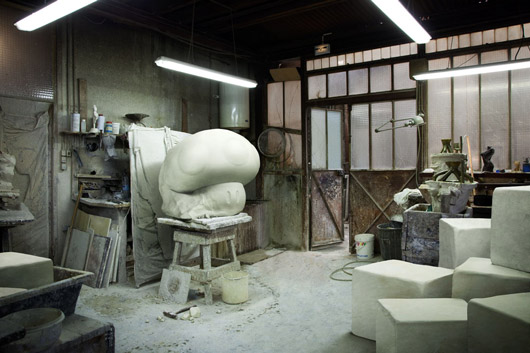
In any case, I found this while looking at Next Nature this morning: the spaces where games are made.

The argument being made by the piece is brilliant–games don’t just magically appear. Angry Birds wasn’t a fever-dream production that flopped out of someone’s brainspace over coffee. Games are objects that require hammering and finessing, like creating a fine golden chain; they also require you to do a lot of shit labor, like digging a mine to get that gold.

See more of them here.

The project was created by Marc Da Cunha Lopes and the photographs originated at Amusement, but I will be damned if I can actually find them on the website (direct attributive links are awesome, people.)

Posted in Video Games | Tagged , , , , | Comments Off on The Creation of Games