Playing the Canon on Dragon Quest

dragon_warrior

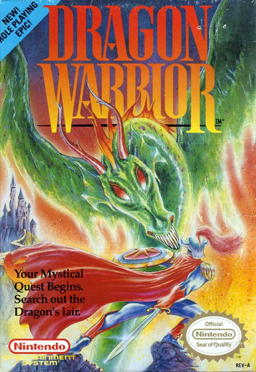
or Dragon Warrior as I knew it when I played the game as a wee child in the mid-1990s.

If you aren’t aware of Playing the Canon, it is a blog where Joel Newman is playing through the “canon” of video games. If that seems to be a horrible longform endeavor to you, you’re not alone, and I have a massive amount of respect for Newman for making the effort to play a massive number of games in a number of genres and on lots of different platforms.

His newest post on Dragon Quest is less about that game and more about the politics of grinding and how the process operates on a player and it is absolutely worth reading (and the best post on the blog so far, I think.)

A sample:

A grand majority of Dragon Quest takes place walking in circles between Point A and Point B, because the protagonist is not strong enough at Point A to survive very long at Point B. Before any true progression can take place, levels must be won, hit points must be upped, new powers and weapons must be acquired. Yuji Horii, the game’s mastermind, developed this routine in a fit of alchemy more magical than anything in Dragon Quest‘s boilerplate fantasy plot. Horii looked at hardcore, Western computer RPGs likeWizardry and Ultima and translated their sadistic number-crunching into something any novice gamer could understand within a few button presses. Horii often mentions with pride thatDragon Quest can be easily beaten without a strategy guide and played at any level of skill. And he’s right; experienced players can use their inventories and spells in much riskier, under-leveled battles, which scaredy-cats and novices can wail on slimes and other weak monsters until they feel powerful enough to comfortably progress.

Posted in Video Games | Tagged , , , , | Comments Off on Playing the Canon on Dragon Quest

A Cups Podcast

HEY I have had a long day so this is short.

Angela Washko and Ann Hirsch have a new podcast called A Cups where they talk about their own art and the art of guests. I listened to the first two episodes while commuting today and I can say that: it is good; they are funny; it helped me work out some issues I have had with my own art and its reception recently; it is something that is worth my time; it doesn’t go on too long.

So check it out. 

Posted in General Features | Tagged , , , , | Comments Off on A Cups Podcast

Harvest Moon: Extreme Ethical Farmer Edition – Part 2

harvesting a moon

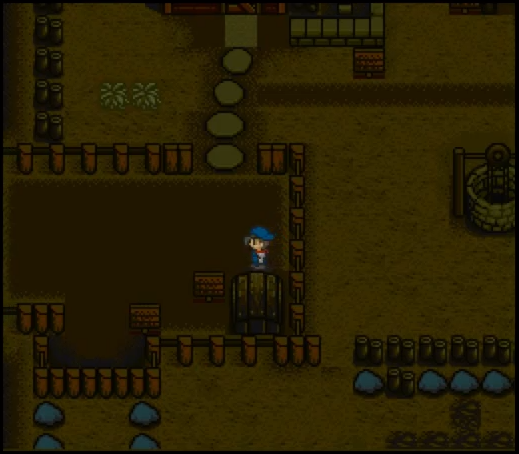
This is the second part of my Harvest Moon video series where I try to be an ethical farming child.

Not much happens in this episode: I get enthused about fishing before I think about the fact that fishing is totally fucked up; I mess up my farming; I carry my dog around; I learn a number of things about the game.

Posted in Extreme Ethical Farming, Video Games | Tagged , , , , | Comments Off on Harvest Moon: Extreme Ethical Farmer Edition – Part 2

Suspicion Under Everything: Riff Raff Meets Boris Groys

A little information before we get to the proper bit of this post: Groys is doing phenomenology so everything emanates from the necessity of a subject/observer in the following. I’m still not sure where I sit with phenomenology on the whole, so I’m just giving it all a pass and taking Groys at his word. There we go.

In Under Suspicion Boris Groys makes one simple argument: everything rests on suspicion.

To be more clear and less dramatic, all human inquiry, including interpersonal communication, comes from a place of fundamental unknowing about the other subject to whom you are speaking or thinking about. Humans, as a species who develop a particular category of subjectivity, will always develop a desire to know and to account for this suspicion–this desire, for Groys, is a “media-theoretical, ontological, metaphysical desire” [11] that constitutes the thinking core of the category of the human. Groys claims that our species is consumed with trying to get at submedial space, which exists underneath the surface of sign-carrying objects in the world.

I want to pause for a second and stress how I understand Groys to be operating here. He is very purposefully combining a number of experiences that a subject can have in the world in order to give a grand theory of submedial space. For example, Groys doesn’t seem to be drawing a distinction between you and I talking to one another on the street and you reading this essay on the computer. On the street, I’m compelled to know what is behind the mask that is your face; are you plotting against me? or do you think the stain on my shirt makes me inferior? or do you find me attractive? are all questions that I am absolutely preoccupied with while never presenting them to you. The same suspicion drives the way that you are reading this essay: what is he getting at? or what is the point? or is he manipulating me rhetorically? These questions drive critical discourse in the same way that a distrust of your interior drives our conversation in the street. This is suspicion.

I’m getting to something more exciting, I promise.

To skip a retread of Under Suspicion, read this quotation from the intro:

This is why submedial space necessarily reamins for us the dark space of suspicion, speculations, and apprehensions–but also that of sudden epiphanies and cogent insights. Indeed, we inevitably suspect manipulation, conspiracy, and intrigue lurking behind the surface of signs presented by public archives and the media. This aptly demonstrates what kind of answer one expects to hear in response to the media-ontological question, and the nature of this answer has nothing to do with any kind of scientific description. Rather, the observer of the medial surface hopes that the dark, hidden, submedial space at some point reveals, betrays, divulges itself for what it is. The observer of the medial surface is waiting for the voluntary or coerced sincerity of of submedial space. [. . .]

The media-ontological quest strives for a clearing, for an empty spot, for an interval of the sign layer that covers the entire medial surface. It strives for an unmasking, uncovering, unconcealment of the medial surface. Or, to put it differently: the observer of the medial surface waits for the medium to become the message, for the carrier to become the sign. [13]

Groys comes to the conclusion, later in the same part of the text, that the moment in which the submedial space is revealed in all of its glory “on the surface of things” (not quoting Groys there) will change nothing; we won’t believe it, we’re still suspicious, we still want to dig to find the meaning.

In short: we wouldn’t know what something meant if it was staring us in the face.

riff

I’ve written about Riff Raff quite a few times, and I’ve even elaborated my own grand theory of what I think he does in, and to, the world. The short version is this: I think Riff Raff is pure surface; in Groys’ terms, I don’t think that we could ever see Riff Raff crack and show us how dark hidden truths.

Groys elaborates his theory of sincerity around the potential for a media surface to crack and show us what it really contains. He writes that

Sincerity does not refer to a certain mode of signification, but to the media status of signs–to something that is hidden underneath a given sign. A quasi-automatic repetition of what is always the same creates the impression of an eternally unwinding program that spews out certain phrases and signs without thereby manifesting the submedial subject, spirit, thought or person. [. . .] We have a particularly intense suspicion of somebody who speaks and lives mechanically, automatically, without deviations, and according to fixed rules. We suspect that such people are completely different on the inside from how they pretend to be on the outside, because we have the feeling that they do not want to show themselves to us at all. [53]

And all of this leads to

Because media-ontological suspicion above all gives rise to the anxiety that the interior makeup of submedial space is different from how it presents itself on the surface, the observer will accept only those signs as sincere revelations of the inside that seem different from the familiar signs on the surface [53]

Groys gives an illustrative example of this phenomenon (somewhere, I can’t find the page right now ugh) is of a politician who actively votes against QLTBG rights and then is revealed to be a gay man–the veneer, the media screen, of signs is broken by something that is radically different from it but emanating from the same source. This is sincerity at the core, like a television being smashed from the inside out.

This isn’t the only way that a subject can be in the world, though. There is the possibility of a being that exists totally on the surface, never cracking, presenting its submediality on the face of things constantly so that there isn’t a chance for something on the interior to interrupt the status quo of signs.

Groys calls this figure the alien.

These aliens are not subjects of meaning and communication–hence they cannot be deconstructed. At the same time, however, these aliens are also not forces of a subjectless nature or of the unconcious; they do not destroy uncontrollably, aimlessly, or arbitrarily as might natural catastrophes or eruptions of insanity. Aliens are not subjects of signification or of communication–they are, rather, subjects of targeted actions. The physical appearance of the aliens betrays their origins in the menial, the deep, the interior. Yet their actions are nonetheless systematically organized and strategically well planned. Aliens pursue their victims in a very efficient manner and thus demonstrate their high intelligence. At the beginning of the alien is the deed, not the word. . . . Aliens are the sign of radical sincerity through which the reality of the submedial reveals itself to us. [58]

What I’m trying to do here is not to point out flaws in Groys, nor am I trying to “smarten up” Riff Raff (readers of my Riff Raff work might know that I think arguments about Riff Raff being profound are hilariously off the mark and just wrong). Instead, I’m trying to account for the reasons that I and lots of other people find Riff Raff so compelling.

When James Franco ripped off Riff Raff aesthetically in Spring Breakers, he did it as a character named Alien, and he has occasionally been known as “the golden alien.” Riff Raff’s album dropping later this year is called Neon Icon, named after Riff Raff’s actual qualities; he maintains that that’s what he is, a neon icon, an inhuman alien that exists outside of us and away from us. That’s the draw–he, like Ridley Scott’s xenomorph, is dramatically different from the subjects and objects that we see in daily life. He is submedial space written on the surface; Riff Raff is the most sincere human being on the planet.

So when the Gawker reporter expresses sheer befuddlment when Riff Raff doesn’t understand why he’s been interrogated about his past and his music, what we’re seeing is not some elaborate play where Riff Raff games us all. We’re seeing that submedial content right on the surface, and if you look at the comments to that piece, you can see suspicion ever more violently raising its head. People want to know. There must be more to Riff Raff.

What if there isn’t?

Posted in Critical Riff Raff Studies, Theory | Tagged , , , | 3 Comments

Harvest Moon: Extreme Ethical Farmer Edition – Part 1

So I recorded my first Let’s Play today.

A little while ago I asked if Harvest Moon was vegan on twitter in a sort of half-serious way. Line Hollis said that it might be, so I thought that the only thing I could do was to try it out. That’s what we have here.

What I mean by “vegan” is pretty vague. I’m not sure what the game actually entails and how deep the systems go, but I want to minimize the amount of harm that I do to animals in the game while still maintaining a successful farm. That might be easy or it might be hard, I’m not sure yet, but I will definitely lay that out as I am playing the game.

This is my first Let’s Play and it is very bare bones–it is me talking while I play the game. I’ve never played the SNES Harvest Moon before and I’m not looking at a walkthrough so you’re getting to see me bumble my way through the game. In this first video I waste a lot of stuff, wander around, pick up my dog, and then grow some radishes. I talk to myself and occasionally say things that might be important, but mostly you just get my awful voice and the peace of knowing that I’m awful at video games while you are watching.

The process was fairly easy, so I intend on playing through the entire game this way in 30-60 minute chunks.


Posted in Extreme Ethical Farming | Tagged , , , , | Comments Off on Harvest Moon: Extreme Ethical Farmer Edition – Part 1

Sunaura Taylor on Disability and Animals

Is there another way? What would a reframing of dependency look like to animals oppressed by humans? Viewing the dependence of farm animals through a disability studies framework gives new answers to the questions surrounding animal exploitation and may also open up a third path. Instead of continuing to exploit animals because they are dependent on us, and instead of leading these animals to extinction as a potential vegan alternative, could we not realize our mutual dependence on each other, our mutual vulnerability, and our mutual drive for life? The big questions in disability studies seem equally relevant to the animal rights debate: How can we create new meanings for words like “dependent” and “independent”? How can those who are seemingly most vulnerable within a society be perceived as also being useful, strong, and necessary?

Sunaura Taylor, “Beasts of Burden: Disability Studies and Animal Rights”

Posted in Quote Time | Tagged , , , | Comments Off on Sunaura Taylor on Disability and Animals

Responding to Sparky Clarkson Responding to Remember Me

A couple days ago Sparky Clarkson posted this great analysis of Remember Me that immediately generated an emphatic “nuh uh!” like I was some super whiny 90s baby with a huge chip on my shoulder about video games and my oh-so-precious opinions of them.

I let that cool off, but I really do think that I need to step in here to some degree and defend Remember Me at least a little bit.

Clarkson rightly pushes at the tensions between the genre expectations of Remember Me and how he experienced the game. He (also rightly) places Remember Me in the “cinematic action game” genre, which is to say that it is a game that is concerned almost wholly with creating a movie-like experience in which the player steps in to perform combat or boss battles or whatever. The thesis of Clarkson’s piece is something like this following sentence that ends the second paragraph of the piece, and it is from here that my commentary really starts:

Remember Me’s failures have nothing to do with its graphics and everything to do with the design of the interface, the levels, and the game itself.

The rest of the post deal with the ways in which specific mechanics, like the Uncharted-style climbing or the always-displayed combo system, are actively working to push the player out of the game rather than pulling them in and erasing the artifice and artificiality of the game like a Hollywood blockbuster would.

The fundamental impasse between Clarkson’s read of the game and my own is that I see the various problems he points out as strengths in that Remember Me is actively commenting and complicating the cinematic action game and is knowingly integrating artificial, game-y mechanics into the game.

[Note that this doesn’t mean that I think Clarkson is wrong in his analysis.]

Part of Clarkson’s criticism of the game is that the constant pulling out of the cinematic experience messed with his immersion in the illusion of a coherent, “cinematic” product. I understood the game’s narrative to be all about breaking these kinds of illusions–the plot of the game, after all, is to make sure that people can’t divest themselves of bad memories–and I understood these game-y elements to be this constant reminder that the player doesn’t exist in a slick, smooth universe in which the narrative moves elegantly from beginning to end.

When the rhythm of combat is interrupted by an enemy exclamation point, I don’t have the reaction of “oh no, this genre doesn’t work this way!” I hop out of the way, poorly, and I usually got hit or died. This cinematic universe isn’t characterized by the ways in which set pieces are connected but by the ways in which there are predictable attacks patterns, systems, that can be analyzed and adapted to from the inside out.

I know that “mechanics that mesh with narrative” is a passe thing to celebrate at this point, but I think that there’s something to Remember Me‘s active choice to depend on mechanics that actively work against the expectations of the probable audience. The world of the game is one where a closed, coherent narrative is the most dangerous thing you can give someone–if everything is polished, then you’ve remixed. Real life isn’t like memory; games aren’t like cinema.

So when all of that strange visual information popped up on my screen, or when each boss locked into a predictable pattern, I felt the game. I felt like it was a system I could master, could change.

And this was a very fragmented thing.

Posted in Video Games | Tagged , , | 1 Comment

Boris Groys on the Materiality of Signs

After all, signs are material; they are primarily things, objects in the world. Just as real, material, and finite are such sign carriers as books, paintings, films, computers, museums, and libraries, as well as stones, animals, humans, societies, and nation-states. All operations of the medial sign economy are exclusively conducted among such finite media carriers–and this exhausts the possibilities of how to deal with signs.

Boris Groys, Under Suspicion p.33

Posted in General Features | Tagged , , , | Comments Off on Boris Groys on the Materiality of Signs

On The Last of Us

This post contains spoilers for The Last of Us.

last of us

1. 
The Last of Us treads the familiar ground of a middle-aged white man making his way through the world. There are no surprises here.

2.
I come back to this question all the time. It is the Deleuze and the Spinoza burned into me. A game, for me, is a question of bodies. What can a video game body do? What are bodies doing inside of a video game?

The Last of Us is being praised for the ways its bodies touch one another. Joel is our fifty year old white man who protects a young white girl, Ellie. He touches other bodies quietly, with a knife in the throat or with an arrow from around a corner. He touches other bodies in a great cacophony of sound with scissors tied to the end of pipes, with his fists, with shotguns and handguns and machine guns.

Everything has weight, especially the pipe.

Machetes meet heads, fungal fingers tear jaws from heads and eyes from sockets, small hands touch needles that touch human flesh. Young women are carried by strong men. Bullets mix up soft flesh. Wounds fester. These things reach out and touch the player, touch me. They generate a new body, an affective linkage, where we watch and emote at the game for building us up and then tearing us down.

3.
More substantial: The Last of Us is a very clever mashup of Children of Men and The Road. The story goes this way: a white man, a symbolic holdover from a culture that has literally collapsed, performs a great deed in order to plant the seeds for the future. Along the way he makes hard, brutal choices that make us (turn the sarcasm levels way up) really feel the pain of the apocalypse.

It is the product of game development time–three or four years ago these narratives were shocking and tactile and really presented something to me that I hadn’t seen over and over again. There was a time when the apocalyptic narrative, the story of living after the end of the world, felt fresh. The 20th century created a vibrant tradition of these narratives, but the past ten years have generated so many copies, so many versions of the end of the world through zombies, comets, plagues, nuclear incidents, solar flares, polar shifts, and so on that I wouldn’t be surprised if the past decade has created more end of humanity narratives than the last century combined.

The Last of Us generates something like apocalypse fatigue in me. I have watched and played and read the end of the world so many times that it just doesn’t do anything for me anymore. It doesn’t automatically generate empathy, or panic, or nostalgia in me. It just makes me weary that our fantasies are about how we can’t help but fuck everything up.

4.
There are two groups of enemies in The Last of Us: cordycep fungal zombies and human beings. The former will track you by sound, will bit you, will infect you, will beat you to death, will (to crib on McCarthy) fill your mouth with dirt. The latter will hunt you, will take joy in your death, will eat you, will take your clothing, will express disappointment that you had no food and that your shoes were dirty.

The zombies are unpredictable. I never quite figured out how to manage them or keep them away from me. Luck saw me through most encounters (and I had to try a great many of them over and over again.)

The humans are predictable. They patrol. They fire at your last known position. They rarely stop to listen, to think, and I killed a great many of them with arrows in their backs. They died alone, quietly.

5.
Children of Men is about a man dying so that the world can live on.

The Road is about a man trapped so far inside of himself that he can’t see the world for how it is. He dies, too.

The Last of Us is about a young woman who commits horrible acts in the name of a surrogate father who kills everyone else she has ever known because of his own selfishness. He tortures and murders and kills people who are only attempting to defend themselves because killing was a foregone conclusion; it is in the case of how, not why, that we are given an option to play things out.

6.
The Last of Us is the culmination of storytelling for this generation. There are contextual, optional bits of narrative that tie everything together. There are scraps of world scattered around. The scope is large both chronologically and spatially. The combat features characters helping and interacting with one another. Non-player characters interact with the world. There is an economy in which all of these words trade off with one another.

The best that this console generation could muster is characters talking to one another and reliving some tried themes from novels and films.

7.
Joel falls from a second-story onto a piece of rebar. It impales him (very reminiscent of Lara Croft). I spend quite a while following Ellie around and she escorts Joel through the halls and corridors and science labs. She kills a great many people. Joel gets onto a horse; Joel falls off a horse. Things go black.

The screen opens on a white field and then I am Ellie. I am no longer a follow-along character who sometimes helps; I am hunting a deer in the snow. I hunt and follow and eventually I learn that Joel is still alive but very, very sick.

I’m sitting on my couch and I’m sad because her story is still tied to his.

8.
The end of the game comes around. Joel has killed everyone that Ellie knows and has finally filled the hole in his heart left by his dead daughter through torture and mass killings with nail bombs and shotguns and boots on the heads of people trying to survive. Ellie asks him a question and he lies to her and we cut to black.

9.
Behind all of this is the beauty of humanity gone away. Streets grow over with grass and trees and vines. Entire cities are abandoned, and after a time incomprehensible to any of us  viewing this, even the tall towers will be gone. There will be nothing left but leaves and fungal growth and the the occasional concrete tunnel enforced with steel left untouched by the elements. Plastic will float in stagnant water and spray paint will linger like cave paintings.

10.

Once there were brook trout in the streams in the mountains. You could see them standing in the amber current where the white edges of their fins wimpled softly in the flow. They smelled of moss in your hand. Polished and muscular and torsional. On their backs were vermiculate patterns that were maps of the world in its becoming. Maps and mazes. Of a thing which could not be put back. Not be made right again. In the deep glens where they lived all things were older than man and they hummed of mystery.

– Cormac McCarthy, The Road

Posted in Video Games | Tagged , , , , | 2 Comments

Line Hollis on Games and Narrative

Line Hollis has a new post up about “story blindness” (I don’t think I like the term much). A sample:

I’ve got a particular love for stories that build up or hint at an elaborate, vivid world, then dissolve into intentional narrative incoherence by the end. My favorite book, Dhalgren, for example. See also: The Etched City, Paranoia Agent, Magnolia, Mulholland Dr. Honestly, unintentional incoherence works just as well in a pinch. These things feel more honest to me because they mirror the way I tell stories. Probably this means they mirror the way I experience events as well. I don’t really perceive logical chains of cause and effect leading up to events. What I see is: lots of factors contribute to the world being a certain way and having certain pressures in it. These pressures restrict the range of things that are likely to happen. Within that range, though, shit’s pretty random. Fiction that echoes this worldview is comforting to me.

I have a lot of love for what Line is talking about here. Most of my favorite media objects have a semblance of a narrative that quickly dissolves into something other than what you think it is, and it is something that I want to chase in game design. Mulholland Dr. holds a special place in my heart because of the way it constructs a kind of channel-flipping narrative with some common characters and then immediately breaks that structure. Something similar is going on in Like a Velvet Glove Cast in Iron.

I can’t think of very many good examples of this in games, though, so I’m excited for Line’s upcoming mixtape on the subject (and I don’t think “you were a monster the whole time” games count.)

Posted in Video Games | Tagged , , , , , | 1 Comment