
I’ve spent all day working on two new projects that I think are very exciting, so there’s not much for me to post today. You can have this image that I made while my internet connection was down for ten minutes earlier.
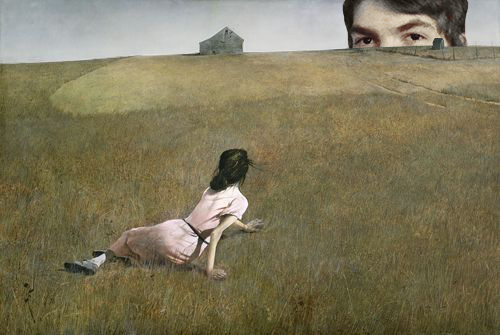
I’ve spent all day working on two new projects that I think are very exciting, so there’s not much for me to post today. You can have this image that I made while my internet connection was down for ten minutes earlier.
This post is part of the Designing Horror series.
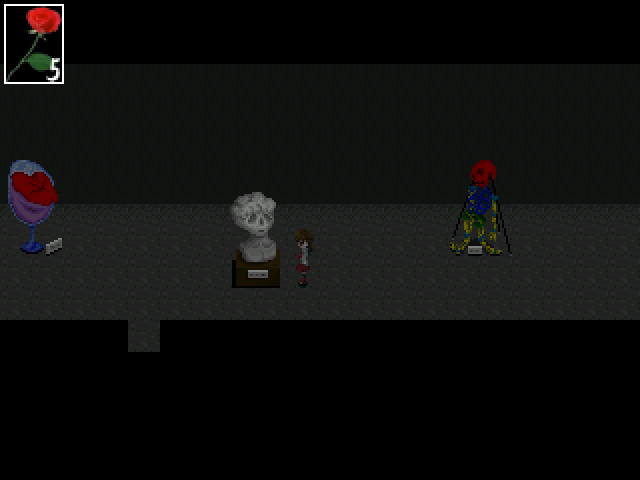
Game: Ib by Kouri
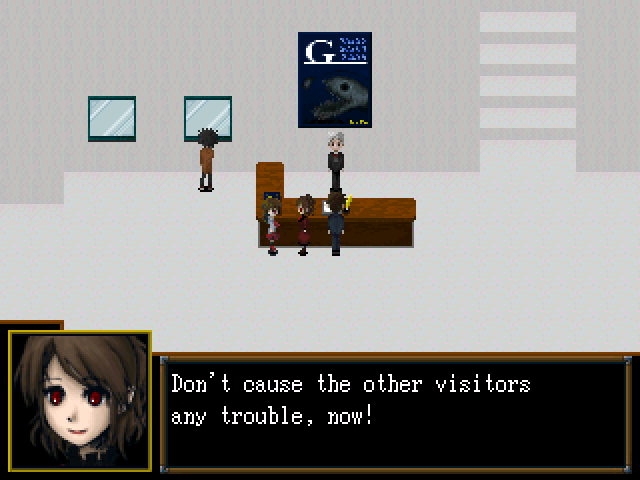
Ib is a game about a young girl who goes to an art exhibition with her parents. The exhibition is a retrospective on an artist named Guertena, whose work can best be described as a mashup of contemporary art, running the gamut of painting, sculpture, “outsider”-style modern art, and basically anything else you can think of. Ib wanders away from her parents and through the gallery, returning after she has viewed all the work in order to find that her parents have disappeared. Then she gets swallowed by the artwork.
The rest of the game is spent moving through a dreamlike world based on Guertena’s art. The game moves along via narrative events and puzzles that facilitate the narrative, mostly in the classic adventure game model of “find something and take it to a place,” although this is occasionally interrupted by moving block puzzles.
Then, at the end of the game, the narrative choices that you have made pay off in the form of a hierarchy of endings that go from “really nice” to “absolutely, incredibly sad.”
1. How Does It Work?
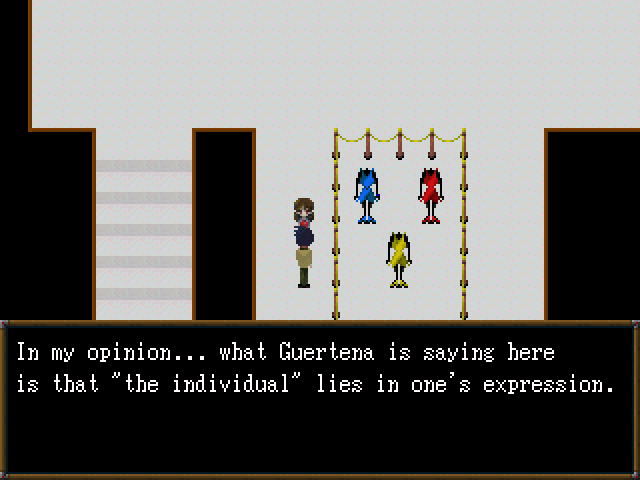
Ib is a horror game built in RPG Maker, which means that there are certain things afforded to the game. To begin with, it means that some general markers of contemporary indie horror games, like a first-person view and sound cues based on that, aren’t available to Ib. The effect of that, and this might a necessary simplification, is that Ib has to work a lot harder to be a scary game.
Being set in an art gallery enables Ib to be a horror game on face due to the nature of contemporary art. Walking through the post-1950s section of any major art institute in the United States is, with the right lighting and music, indistinguishable from a haunted house. Ib is designed to leverage this, with each piece of Guertena’s art from the opening of the game appearing variously as either moving, scary paintings or walking/shuffling enemies. The affordances of the RPG Maker platform are crucial to how the artwork of Ib is horrifying, particularly in the realm of motion and action. RPG Maker is not an engine that you would choose in order to make a game about aggressive action — rather, RPG Maker is better at methodical, narrative-oriented experiences. The art objects that you find scattered through the dream world of Ib are mostly static, staying in their tile space and animating at unpredictable times and intervals. In the case of the few enemies that actually move, we can see that they just sort of generally move in the cardinal directions toward the player, meandering in a semi-disinterested manner toward the player, attempting to eliminate her from this dreaming.

Why talking about the “how” of Ib‘s horror requires us to move beyond the level of the aesthetic, I really do want to stress how successful creator Kouri was in leveraging what was possible within the restrictions of RPG Maker, particularly in the design of horrific encounters. For example, in one segment of the game Ib’s companion Garry is being followed by a doll. The character moves up through a zig zagging pathway, moving right and left, and a doll constantly appears in front of you on the ground. Every time you move far enough away for it to disappear from the screen, it appears again in front of you. Each time that you see it anew, you can choose to talk with it; it will always be hurt and sad that you are abandoning it. This static placement of the sprite seems wholly disinterested in the player — there’s no obligation to interact with it. That makes it more effective when you do choose to speak with it. Kouri knows that the repeated appearance of the doll will interest us, and when we speak with it, we’re delivered the uncanny experience of it speaking directly to us, questioning why we would leave it behind us every time the screen scrolls to the right and the left.
In another scene, Garry enters a small room filled with a number of dolls, and there’s a large empty picture from in the back of the room, directly in front of the player. The door locks and a timer starts, and the player has to find a special doll. While you’re hunting for the correct doll, a large, more horrifying doll slowly creeps up and through the empty picture frame. If it comes through, the game is over.
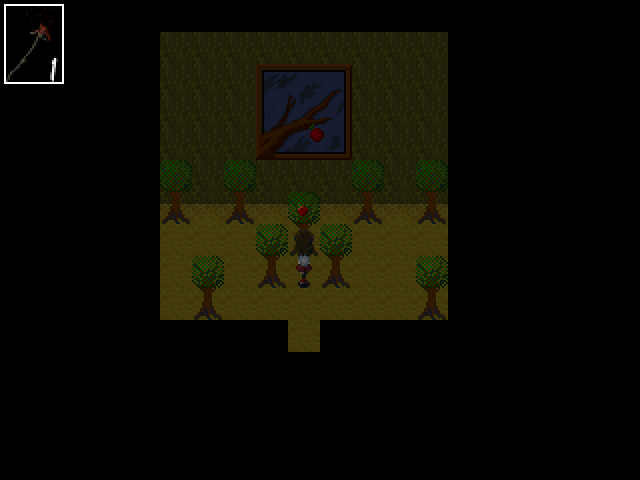
This design move is one that I’ve seen occur a few times — off the top of my head, Deep Sleep and 5 Days a Stranger both used it to varying success — and it seems to be a very safe method for taking a game that generally has a creepy feeling and putting it over the line into adrenaline-fueled full-body sweating. Overall, I think it is a pretty successful design strategy — taking a very deliberate experience and inserting a quick moment of non-deliberative action interrupts the player’s expectations of what is coming.
I apologize for some of that being dry (and maybe repetitive for frequent reader of this series), but I really do think that Ib is successful because it is leveraging a lot of qualities that I’ve been harping on in this series. It avoids jump scares in favor of a general creepy feeling that is delivered through repetition and the plodding, always-forward nature of the top-down JRPG aesthetic.
2. Why Is It Horror?
Many of the games in this series leverage the unknown as a way of generating fear. As I’ve gone over time and time again, the most common way of addressing the unknown is through sensory denial, and even more specifically, by limiting the visual field the player has access to. Ib avoids this by leveraging tranformation instead of appearance; things that exist in the visual field turn into something horrifying in front of you rather than simply blinking into existence at an optimal scary moment.
By choosing a contemporary art exhibition as the setting for the game, Kouri is also operating on the indeterminacy of that space. Guertena’s paintings can come to life at any moment, and it triggers a deep fear in me. Could there be anything more terrifying than Christina’s World turning and looking back at the viewer? What if The Golden Calf woke from its sleep and spoke, holding us accountable for its death?
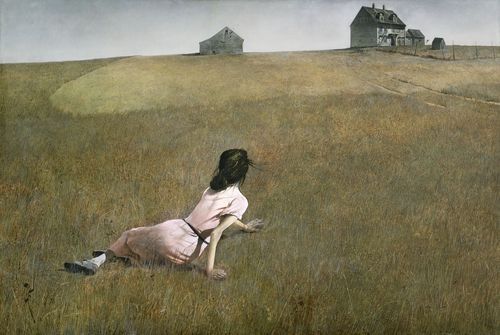

These works operate on that uncanny level — what if they addressed up more strangely than they do now? — and Kouri takes it to the next step, literalizing that address, and affirming that there would be no love for us from our creations.
3. What Did It Do To Me?
I experienced a general discomfort during this game. I checked behind myself a few times. I thought I heard noises.
Read about other games in the Designing Horror series.
→
If you enjoyed this post please consider supporting this blog.
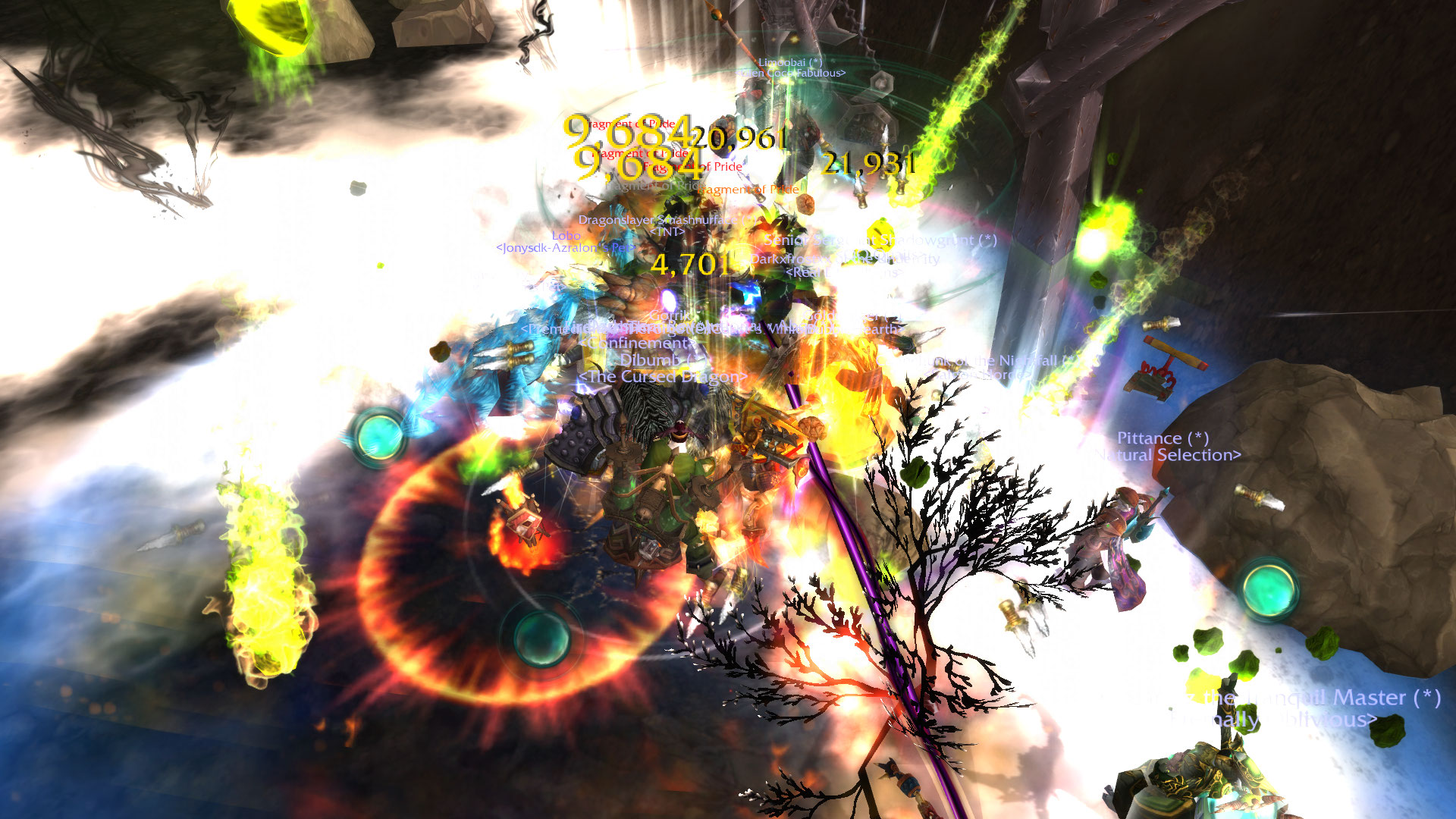
Here the interface is awash in information. Even someone unfamiliar with the game will notice that the nondiegetic portion of the interface is as important if not more so than the diegetic portion. Gauges and dials have superseded lenses and windows. Writing is once again on par with image. It represents a sea change in the composition of media. In essence, the same process is taking place in World of Warcraft that took place in the Mad magazine cover. The diegetic space of the image is demoted in value and ultimately determined by a very complex nondiegetic mode of signification. So World of Warcraft is another way to think about the tension inside the medium. It is no longer a question of a “window” interface between this side of the screen and that side (for which of course it must also perform double duty) , but an intraface between the heads-up-display, the text and icons in the foreground, and the 3D, volumetric, diegetic space of the game itself – on the one side, writing; on the other, image.
– Alexander Galloway, The Interface Effect p.42
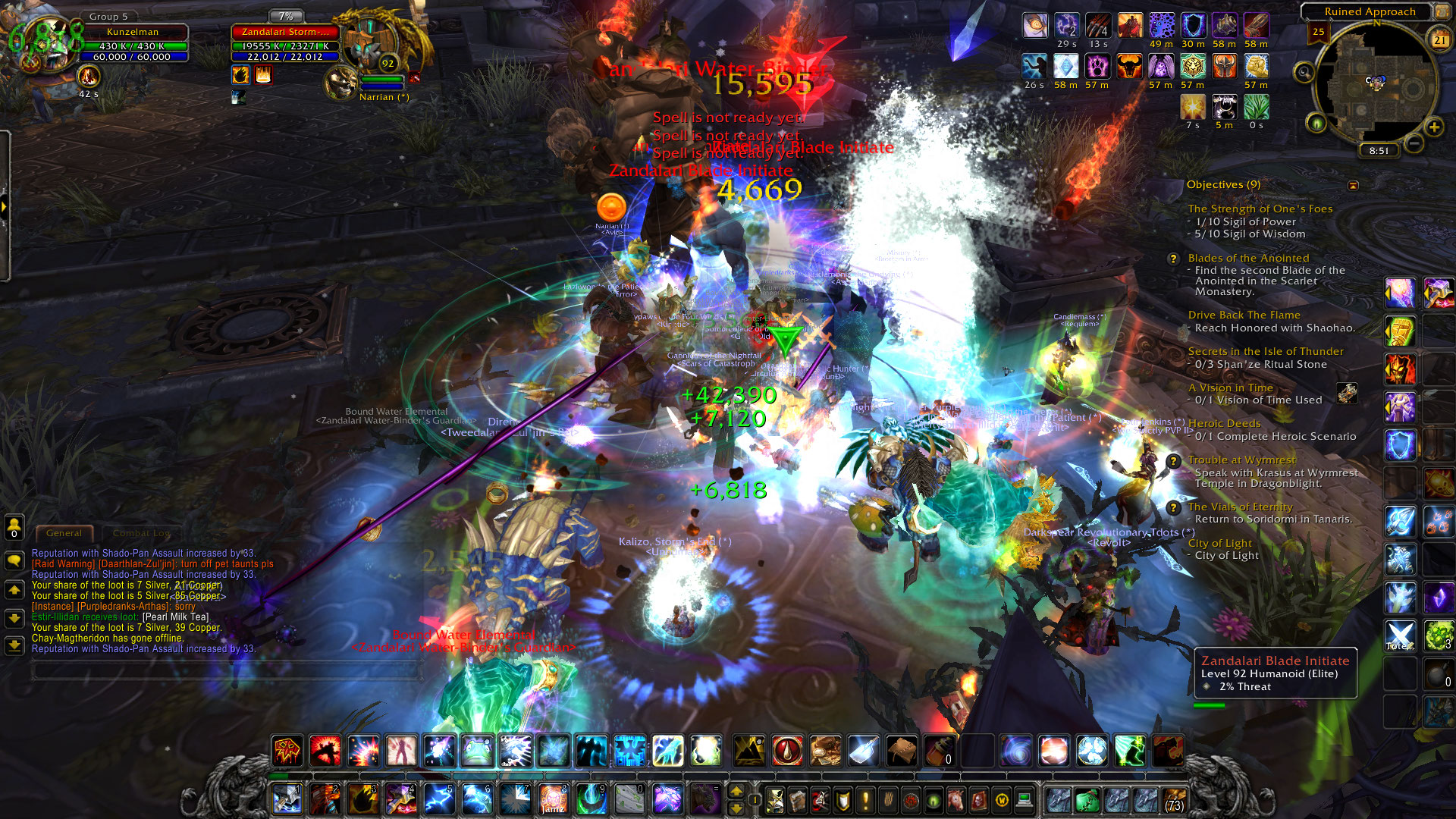
I should have spent the break between semesters planning my course materials for the spring and working on my thesis, but instead I was playing World of Warcraft for “research,” which really meant performing the rote task of grinding in order to get totally kool gear and/or achievements for content that everyone else completed a thousand years ago.
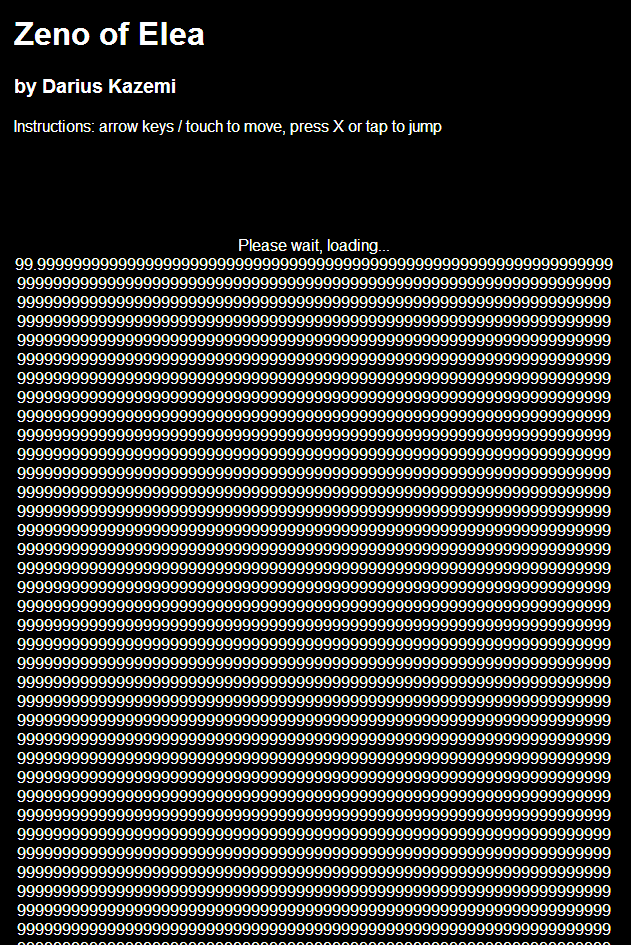
A while back, Darius Kazemi released Zeno of Elea, a game that renders Zeno’s Paradox as (presumably) some sort of platforming game. Except the game never comes, because in the illustration of the paradox, it merely loads by half the distance between 100% and the current percentage of loading bar. Just like Achilles, we never get there.
The brilliance of the piece is that it really has loaded. It becomes an object that actually is complete. Even if Achilles never catches up the the turtle, we can catch up to Zeno of Elea as a game in the sense that we can watch it achieve its full capabilities as an object. Very quickly we see it exhaust itself, what it can do, in everything other than repetition. To put it another way, Zeno of Elea is a game where we can know all the motions immediately; everyone is capable of masterful play.
World of Warcraft is just a more complex version of Zeno of Elea. On the level of interface, what we’re actually experiencing, it seems like it is never complete — the edge of a “full experience” is right beyond our grasp, and maybe if we leave the window open long enough, we will get it.
But the turtle keeps moving. There’s more gear and mixups of stats and trinkets to compare and before you know it you’ve wasted a month.
Robert Pogue Harrison frames Forests with a quotation from 17th century philosopher Giambattista Vico:
This was the order of human institutions: first the forests, after that the huts, then the village, next the cities, and finally the academies. [The New Science §239]
Harrison’s core argument is that Vico has latched onto a fundamental truth about the development of human culture in this developmental history from forests to academies. Harrison reads a long history of European philosophical and literary texts in order to explain that the concept of a forest is fundamental to that historical tradition.[1]
The opening chapter of Forests is dedicated to the difference between a forest and all other spaces. Drawing from Vico’s analysis, Harrison claims that the primeval forest is the location through and against which subjectivity is formed. The trees wholly envelope the land they take over, and it is the act of forming a clearing through which a species is able to gain access to logos, or in Harrison’s terms, a “horizon of sense.”[7]
This close relationship between human modes of signification and the human relation to and distance from forests is a cornerstone of this work. Logos is formed as a byproduct of mastery over the forest as a structure, but the forest never quite leaves the species. Harrison makes a few stops throughout to perform exegesis of various words that have come down through Greek and Latin with woodland-based origins, with ultimate point being that while humans left the forest in order to attain reason, the forest never quite left our systems of reason themselves.
The flip side of this argument is presented when Harrison moves away from the mythological roots of our connections with forests and into the juridical sphere of the middle ages. While the primeval forest of myth or folk tale is a shadowy space where you can lose your way, become entrapped, and die — into the early middle ages, the forests of northern Europes “were still vast, stretching across the continent like domes of darkness and the indifference of time.”[61] Around this time, and throughout the middle ages, these forests became more and more delimited. In yet another gesture toward the relationship between language and the mass of trees and underbrush that we call “forest,” Harrison notes that the word itself is not so much a descriptor for a physical space as it is a juridical term.[69] While Harrison notes that the term has an “uncertain provenance,” he points to the likely constellation of foris (outside) and forestare (to keep out, to place off limits, to exclude).[69]
While Harrison has moved from mythology to the documented history of Europe, his argument hasn’t changed significantly. The world of language is birthed from the human emergence from the forest, but this flows backward; the world of language gives rise to a juridical understanding of forests. He makes this very clear — “a ‘forest,’ then, was originally a juridical term for referring to land that had been put off limits by a royal decree.”[69] More than this, “without this particularized legal bureaucracy, forests cannot exist.”[73]
The tension between these two lines of thought opens up Forests as a book about more than forests. The tense line between discourse and the practice of naming with a politics (the heart of law) and the affordances of an object, what it obscures and what it makes available, are at the heart of every object of study. Harrison provides fruitful analysis, however, because of the nature of forests; or rather, because there is no Nature to forests. The practice of acting toward a forest is impossible without first conjuring up the very concept of a forest. There is no there there, just an ecosystem of interacting agents that are named juridically and without their knowing.
This gives insight into all assemblages of agents, and Harrison invokes a method that might be useful for all of us. When we pick an object, it might do to look at the mythological origins of that object alongside the naming practices that call it into political being. Or, more clearly, it is worth looking at where we think something comes from and where something really is coming from.
The third category for thinking the forest in Forests is through its very materiality. This doesn’t just mean its size and mass and how it is possible to become so entangled that you die inside of it, but rather “what are the effects of forests on the world?” Harrison, who is mostly concerned with literature, focuses specifically on the ways that forests have enabled certain expansionist practices, particularly for the Roman Empire. He writes, quite beautifully:
Forests became fleets, sinking to the bottom of the wine-dark sea. Trees became masts, drifting among the waves of Poseidon. The temple to Poseidon at Cape Sounion, overlooking the waterway that leads into and out of the bay of Piraeus, is an inspiring monument still today, but the barren mountain on which it stands, as well as the entire surrounding landscape, now drenched with that brilliant Hellenic light, shows no traces of the forests that once covered them. [55]
For the Romans, forests were the engine of expansion and war, which enabled them to find more places with more, and different forests. The effect of this was deforestation, and in the case of a huge stretch of northern Africa along the Mediterranean, the desertification of a once-fertile land.[56-57]
Forests are spaces that provide phenomenological experiences, which are then named and given a particular existence in the discursive field of humans, but yet still have a materiality that can be exhausted in particular ways. Harrison quotes David Attenborough’s historical account of the Roman Empire, claiming that “North Africa was producing half a million tons of grain every year and supplying the huge city of Rome, which had outstripped its own agricultural resources, with two-thirds of its wheat.”[56] I bring this us both to point out that the problems of Empire then weirdly resemble the problems of Empire now, but also that the loss of that productive land can understandably be put down as one of the many reasons for the decline, and eventual dissolution, of the Romans.
Forests afford a process of learning to name, naming, and extracting. Harrison gives a beautiful example of how we can live in relation to an assemblage, believe that we come to know it, and then weaponize it to use against itself. Harrison draws compelling conclusions about how forests operate this way with humans as their interactors, but the question remains: what other assemblages have this kind of tight-knit closeness with the human?
→
If you enjoyed this post please consider supporting this blog.
The Flatterers by Pieter Bruegel is maybe my favorite painting right now, merely because it does such a good job of visually describing the internet in our current period.
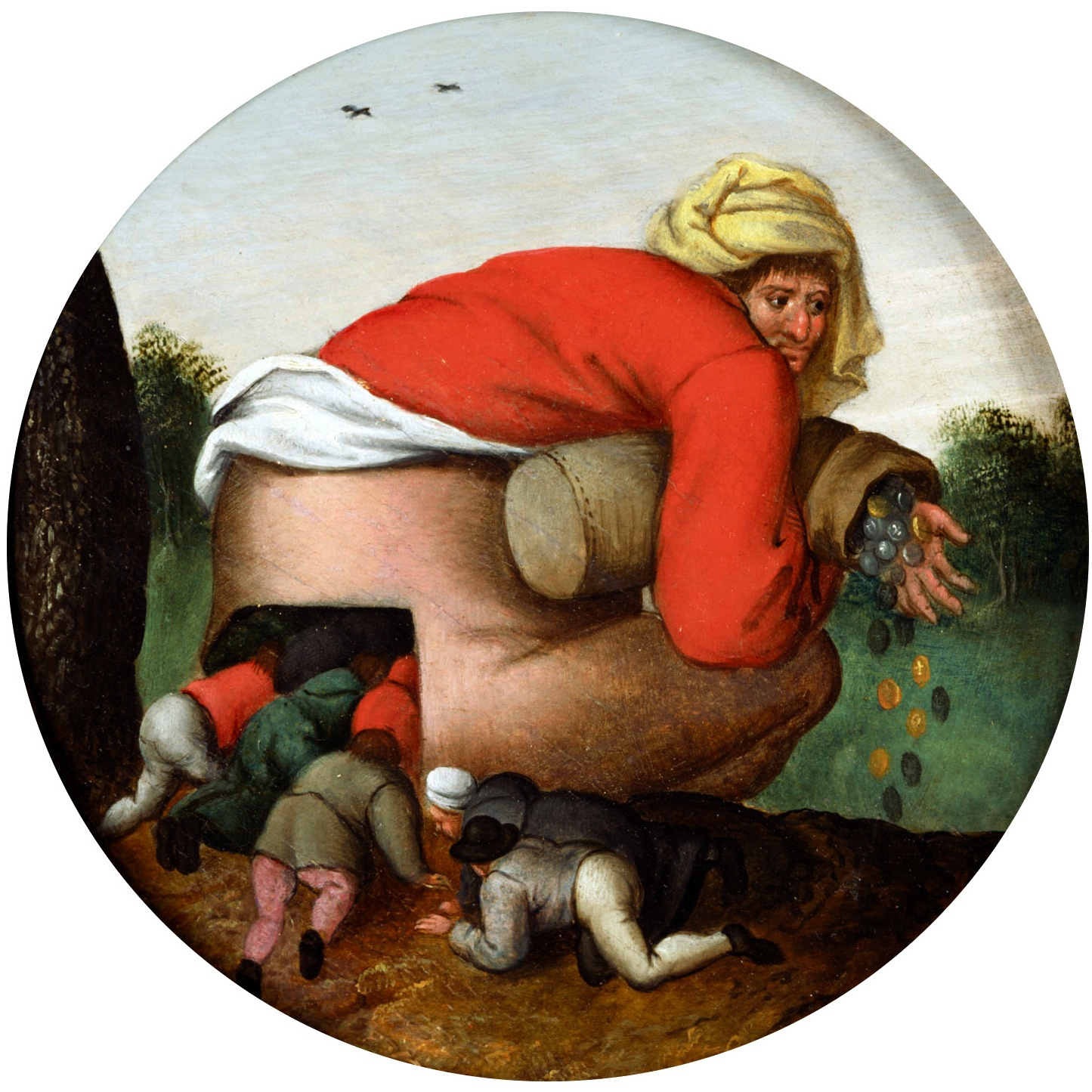
The painting is less about flattery for me, though, and more about the social assemblage of the internet; we’re constantly putting in effort, time, our very lives and bodies (how many of us have carpal tunnel?).
The recent net neutrality decisions make is clear: we’re all putting in the labor, and something much bigger than us holds the giant Mario coins.

Chauncey Devega put this on my radar literally months ago (October, according to the post date), but I’ve been powerfully busy in the time in-between. I’ve actually had it open in a tab since then, which is a minor internet miracle.
In any case, it is an interview with Corey Mead about his recent War Play, a book on the military industrial complex and its material and symbolic effects on the creation and development of the videogame industry. Devega does a great job of pushing Mead, an academic writing a book for a general audience, to explore and contextualize his ideas in the context of the latter part of last year, and I found the whole thing to be really engaging.
Listen to the interview here. It is right at an hour long.
I rarely straight-up promote publications here, but I really do think you should go check out Zolani Stewart and Alex Pieschel’s The Arcade Review, a monthly(?) publication of criticism about experimental and avant garde games.
It is $5, and that $5 is well-spent. So far, the pieces I have read are really interesting and comprehensively excellent. I will post up an actual review at some point, but for now, go check it out.
I really enjoy this video of a talk Robert Yang gave at the NYU Gamecenter a couple months back. In particular, I like that Yang pushes (and has been pushing in a lot of places like his blog, twitter, other conferences) the idea that learning to read code is an important part of thinking about games, whether that means your writing criticism for free on the internet or doing so as part of your academic life.
This is of course a subject fraught with conflict, and I am absolutely aware of all the critiques on both sides of the “do people need to learn to code?” fight. I’m not a hardline believer in the idea that you have to make in order to talk, but I do think there is something like a hierarchy of useful tools when talking about videogames and digital media in general. The top, most useful tool, is being able to actively work in whatever media you are studying — at that level, you probably have the capability to make very specific and precise instruments of measure and analysis that allow you to ask very specific questions of your objects. Below that, you have something like an openness and a desire to both collect and understand those instruments. This is learning to read code, and more importantly, learning to know what you need to be able to read in code (or, maybe even better, hardware and how it is operating). Below that, the standard set of media studies tools that apply to everything equally — good old phenomenological analysis, close reading, and everything that comes with those two tools.
I’m mostly riffing here, but I can’t imagine this is too contentious, is it?
For previous years, look here: 2012, 2011.
This is a list of all the books that I read in 2013. The number is a little bit off — as you can see, I read a whole lot of BPRD in preparation for Catachresis, which I have grouped by story arc because I read them in single issues instead of trades — but for the most part this is all correct. I read less than I wanted to this year, partially because I was reading lots of essays and shorter stuff while writing my prospectus and partially because I felt off in some way for the latter half of 2013. I never really felt like I had firm footing, and I sort of failed at reading some books over the summer, which really put me in a bad place for reading some of the theory books that I wanted to get to.
Usually I run the numbers on the breakdown of the books that I read through the year, but this time I just have to say that way more than 90% of the books I read were by white men and that sucks, especially coming from 2012, where I felt like I had made some progress breaking out of that mold.
Reminder: these are books that I read in their entirety, from the first to the last pages.
→
If you enjoyed this post please consider supporting this blog.
 this cage is worms