So those of you following Operation: Make Stuff will be delighted to know that Darius has said some words about kickstarter, my begging for money, and his proclivities as a game player.
It is basically the most brilliant video that I have ever seen, and it would be a shame if you missed it.
If you enjoy the video, you should feel guilty enough to give me at least $1.
First off, I don’t have any screenshots of this game. I use Irfanview to take screenshots, but for some reason it didn’t pick up A Mother’s Inferno as an actual application. I ended up with twenty screenshots of my desktop background. Sorry about that, but I’m not playing one more minute of the game.
A Mother’s Inferno has a simple setup. A mother is on a train. Her child is violently dragged away. You have to get the child back. Go.
1. How Does It Work?
The game relies almost entirely on visual aesthetics to communicate to the player. The experience is framed through interactions with different cars on a train. The player sees a scary thing, goes through a door, and sees a new scary thing.
I need you to read that in the most deadpan way possible, because I don’t think that the game succeeds at being horror in any tangible way. The emotional and affective experience that I had is roughly the same as the one that I have walking to the kitchen. And maybe it is because of the aesthetics, or the lived experiences based around the aesthetics, that push me into such strong distaste.
Let me give you a taste: the first figure that the player comes upon is a desiccated man who tells you to cut his head off. You press the right mouse button to grab him. You click with the left to slice his head off. He says that he is your guide, and you proceed into the next room to do the same thing to a human-sized crow that twitches around the room. If I seem matter of fact, I can’t help it; the game presents it to me in a very matter of fact way. I, unlike most reviews of the game that I have read, don’t think that it is amazing. I don’t know if there is a single thing that can be done with demons/madness/random visual effects that doesn’t come across as trite at this point.
That isn’t to say that it is totally terrible. I think that the combat mechanics work in interesting ways–most of the “boss fights” involve climbing on top of a large creature and stabbing it repeatedly, which is a new thing for FPS-style games. And even though I hate the idea of “immersion,” and I didn’t feel it at all here, I do think that there is a degree of agency and complicity when the player is forced to put her own eyes out with a shard of glass in order to finish a level (you see what I mean by “trite”?).
2. Why Is It Horror?
Theoretically, the game is horror because of the aesthetic and the core story of a mother losing a child. The story itself is kept ambiguous–what happened to the child?–but I have been assured by various materials that the game is “deep” on the issue of grief and overcoming various issues. I remain unconvinced.
Maybe the game is horror because I felt like I was having a seizure for a full third of my playtime.
3. What Did It Do To Me?
Besides the above-mentioned seizure, the game made me weary. Maybe that is a strength.
More than that, it has solidified to me that “strange things that make no sense (inclusive of blood and entrails and cyclopean structures of intense scale)” has nothing to do with horror. It has nothing to do with transmission of affect onto the player in a specific way–it has to do with a containable, predictable aesthetic. So the game made me aware of what does not work in horror.
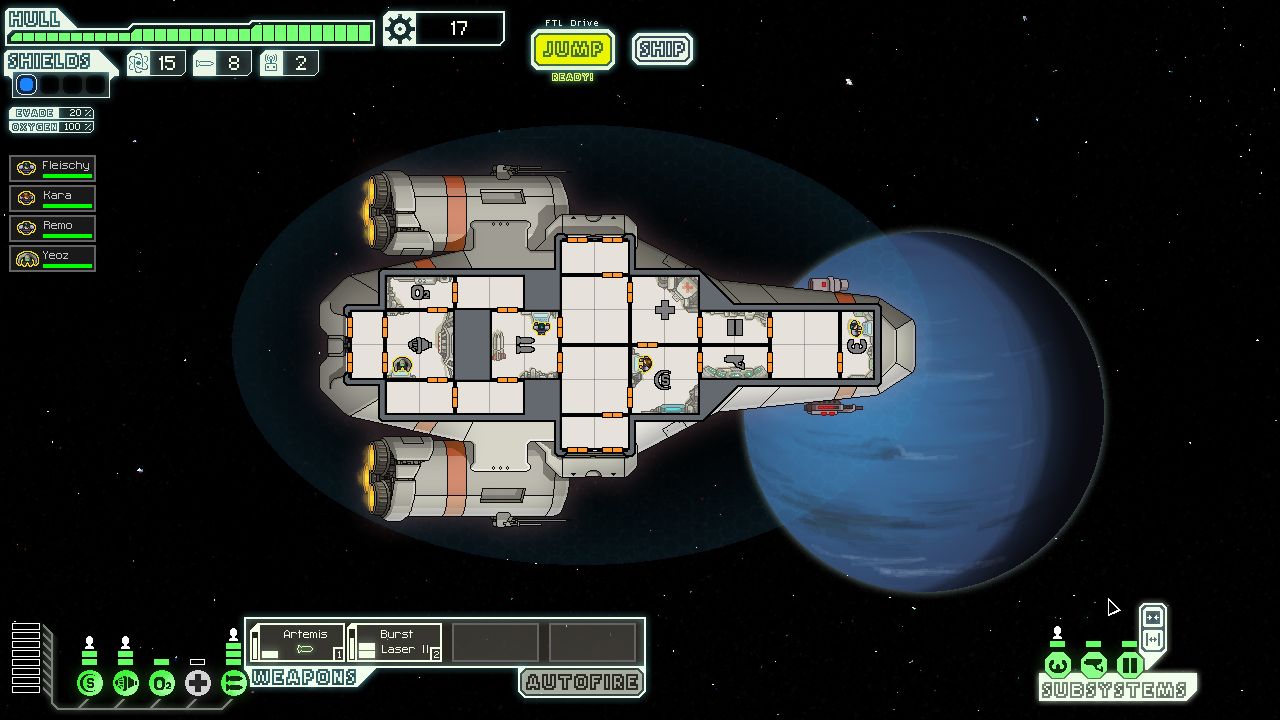
Log 1: Today I crossed the airlock into The Kestrel with a holotape full of information. I carry the Federation’s last hope against the partisan Rebellion. I don’t know why I’m starting this logbook–it isn’t to brag. It isn’t to talk about how I am going to save us all, though I hope to. It is to document my journey. It is to document my crewmates. It is to solidify this mission so it is not lost in time.
Supplies are dwindling. Capable crewmembers are scarce. Kara, a noted shield specialist, volunteered for the mission. Remo, literally the least-qualified member of his training cohort, also volunteered. I have placed him in the weapons room. They both understand that this is, at best, a one-way trip.
We set out together. The stars bled into lines; waves and particles.
Log 2: We came out in range of large cluster of rocks–probably from the collision of one or more planetoids. There was a ship wedged in the cluster. They radio’d, identifying themselves as unallied with the Rebels or the Federation. They asked us to free them. I gave the order to Remo and braced myself for the ship to be destroyed. Somehow he did it. I read a laugh and several whoops throughout the ship when the pirate’s ship flew free of the rocks. The mission will continue. I have faith in this crew.
Log 3: I have hired on Yeoz, an Engi mercenary from a orbiting supply depot. I needed another crewmember, of course, and the Engi are noted for their technical abilities. But that wasn’t the only reason I spent my credits to hire Yeoz. I could see that he was smart and stuck. The Rebels are coming. I’ve heard of the prison planets, the camps, the burnings. It is worth any price to save someone from that.
Log 4: Our first Rebel scout ship. I could hear them screaming over the radio after we breached their hull with the repeating laser. We traveled on.
Log 5: We have explored asteroid fields and fought drones too close to suns. Yeoz almost had to blow the engine to get us out of the gravitational field. We made it though. The mission is so important. There is an immense weight on us. We all feel it. It gives us purpose.
Log 6: The days slide together. Drones throw themselves at us. We glide from sector to sector, always barely a few nodes in front of the Rebel front. I wonder what happened to that shop? Was it torn apart for scrap?
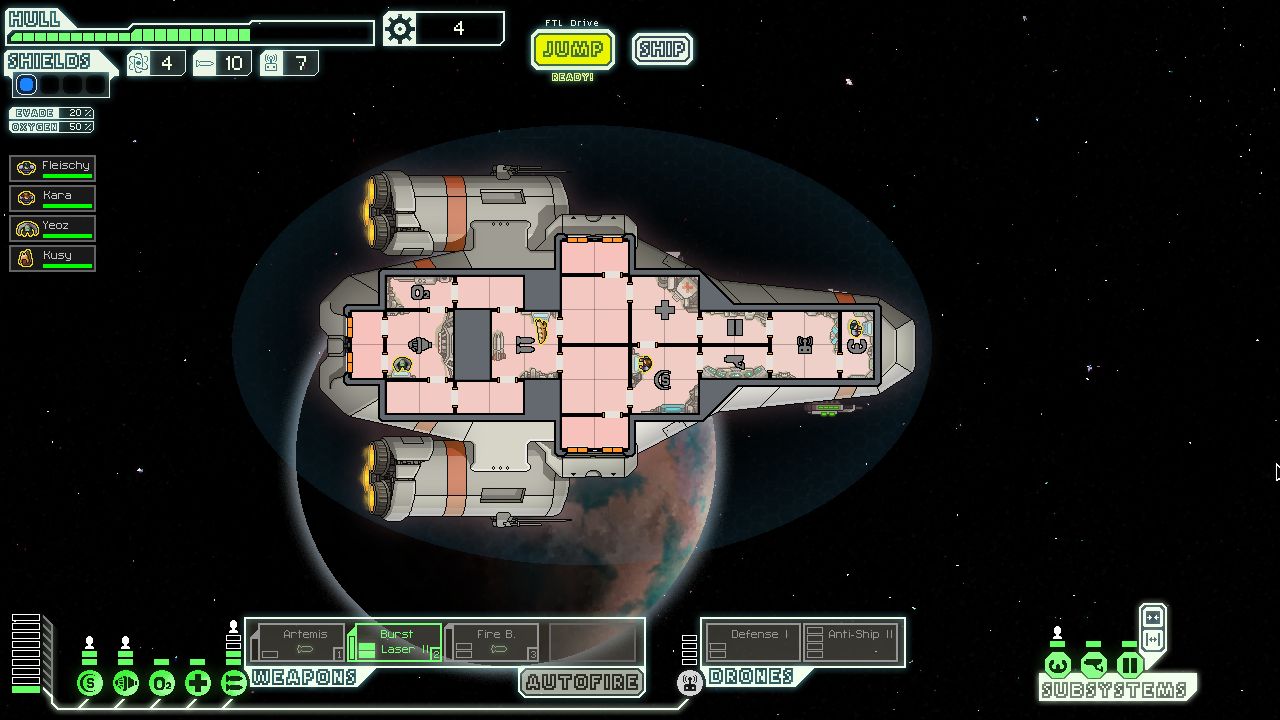
We spent a long time in a nebula. Nothing outside the ship except possibility and dark purple cloud. Radiation. Asteroids. Pirates hiding in the deep. It wasn’t all bad–we appeared at a node just as another ship was breaking apart, a hit and run by some unknown assailant. We pulled in close, hoping that the drive wouldn’t go before we could pull away. It didn’t, thankfully. We got a read on the sensors. We pulled the bay close and sucked the lifeform in–a slug named Kusy. It has been a great addition to our crew–his psychic ability to see the insides of other ships has proved invaluable in the nebula. I offered to leave it at the next station, but it didn’t want that. I got a warm feeling when I told it that we were doing something important. This mission makes sense; it is bigger than us. It fills me with hope.
Log 7: Accosted by a black market ship. Didn’t want to anger them, so I blindly bought a weapon that shoots incendiary bombs. It might prove useful–our repeating laser isn’t performing as well as it used to.
Log 8: Gunned down a Rock ship as it tried to navigate through a nebula. I don’t think it even picked us up on its sensors before we sawed through its shields.
Log 9: Remo is dead. We were searching a starship’s ruin, looking for salvage or living crewmembers in stasis pods. An asteroid cut between the ship and Remo. Kara boosted back, but Remo…he fumbled with his controls for too long. His line snapped. There was no way to retrieve him. I had to make a show of struggling to turn the radio off as he screamed. In truth, I understood the decision I had to make. It was hard, but there was nothing else. There was one way. He was closed off to us. There’s a mission to be done. The choice was simple.
Log 10: Things have turned around. We have been flooded with opportunities to help–it has erased the hole where Remo was, at least superficially. We encountered a planet ravaged by a plague, but Yeoz was able to help stall the disease’s advance. We found a marooned ship and guided them to the closest depot. Good things. Valuable things. The Federation would be proud if the Federation wasn’t disintegrating at the speed of light.
On top of everything else, we have hired on Matt, a Rock troop. He has experience with weapons systems. The crew will forget about Remo soon enough.
Log 11: We found another ship lodged in a cluster of space rock. I carefully explained to Matt how we had saved the ship at the beginning of our journey. He nodded. He understood. The rock disintegrated under the force of our laser, but large chunks broke off and slammed through our shield, scraping across the hull. There was no radio signal in the dust cloud. We waited for the debris to clear. There wasn’t a ship anymore. This doesn’t bode well for the rest of our journey.
Log 12: Another victory, this time over a slaver ship. They signaled us over radio and attempted to sell one of their possessions to us. I won’t have any of that, despite what Kara and Yeoz have to say about safety. The Federation does not allow slavery. I powered up all of our weapons–the laser blasted through their shield, and an incendiary bomb to their engine room kept them immobile. As soon as the battle began they surrendered, transferring the slave they had on board to us. Her name is Emma, a human.
We idled and waited for the slavers to use their drive. It didn’t happen. They never radio’d for help. A fire raged in their engine room, spreading over their entire ship. It crumbled as we watched out of the forward viewport. I kept my smile inside.
Log 13: Asteroid field. Hull breaches. Last log. We tried. We tried. Jettisoning this recording and the information. Pick it up. Take it whe–
Final Fantasy 7. Cloud, Tifa, and Barret have to save Aeris from Shinra. To do so, they have to make their way from the lower level of two-tiered Midgar to the top of “the plate.” The plate hangs over the lower part of the city. It blots out the sun, casting the slums into eternal night.
The first three or four hours of the game, depending on your speed, take place down underneath. Then, in a moment of dire need, you have to climb a up a pipe and then enter into the most confusing and poorly-designed moment in video game history.
Watch the video. You don’t need sound.
So what happens here?
You climb up a ladder that takes too long to climb up. You have to wander around in a Z-level confused screen that gives you multiple paths that lead nowhere. You can tell that the plane propeller animates, but it doesn’t respond to anything. In a very real way, and not as a metaphor, you lose the plot.
If you watched enough of the video, you know that you have to go back down the pipe. You have to go into the town, Wall Market, and methodically talk to everyone. Eventually you see a character who does not even appear to be interactive because he is behind a screen; the player cannot reach him. This character sells you a battery.
You need that battery to make the propeller move.
Honestly, I think it gets more complicated from there. A jump-timing puzzle follows. Then you have the option of picking up an item, but taking that option means that you have to do the timed jump again. Everything suffers the same Z-level problem. It is visually confusing, and it feels like a waste of time.
You’ll notice that the title of this post mentions that I want to praise something. I’m getting there.
So what does this long, terrible sequence do? Why is it in the game?
Remember the context of the sequence. The characters are having to make their way from the slums of Midgar up onto the wealthy top layer. The journey is difficult, confusing, and requires knowledge outside anything the player is ever told. It literally is a process of trial and error; alternately, you can be “in the know.” You can have a friend who knows the information. You can read a walkthrough.
The puzzle-that-is-not-a-puzzle is a metaphor.
One of the ways that poverty is entrenched structurally is through information control. There are forms to be filled out. There are tax documents to wade through. There are services that are never communicated to the people who need them because realistically servicing an entire population is prohibitively expensive. Poverty exists in loops–you never see a way out because you’re too busy making ends meet, or no one shows you, or no one tells you that you need to apply for scholarships by a deadline. To not be homeless, you need a job; to get a job, you need a permanent address. Infinite loop.
I’m not going to say how many of these I have personally experienced, but it is more than a couple.
So this section of Final Fantasy 7 is a translation of that real-world issue into the mechanics of the game. Instead of navigating structural or informational architecture, the player is literally forced to navigate a space that is mysterious and unclear. This gets achieved in a couple ways, all of which are really interesting. The game chooses this moment to begin navigation vertically rather than horizontally–so far, the player has been navigating horizontal planes and entering them from the left and the right. The move to pure verticality is a subtle way to suggest the difficulty of the actual movement (we’re climbing up a tiny pipe) and the difficulty of the mission at hand (invading the heart of power in the world; going into the lion’s den). Additionally, the player moves in and out of different z-planes. It is literally impossible to navigate in a purely visual manner. Instead, the player has to exhaust all of her potential spatial movement to even get the barest hint of the pathway that she is supposed to take.
Finally, and I think this might be the most important, this section of the game makes sure that the frustration comes only from the architectural difficulties. The battle system, which would generally interrupt the player every thirty steps or so, is suspended. That means that the game, in totality, becomes less challenging here. It is beautiful design; you aren’t stressed out or distracted by the battle system, or by ephemeral enemies. Instead, you a locked in a meditation between the self and the system; the act of navigation becomes all consuming. The movement from abject poverty, where the living being is literally reduced to that-which-can-be-killed, to the middle class is the all-consuming goal of the player.
It is in this environment that finding the battery takes on some real meaning. It becomes a silver bullet. The moment you can associate the small yellow box with progress, you can make your way through the section with minor annoyances instead of brain-busting frustration.
So what does it mean? It means that there are ways out of poverty, but that those ways are obscured from those who need them, and that they can only be discovered through massive polling, data accumulation, and time. In a video game, those are always-already present; you have access to infinite Final Fantasy time. Cloud doesn’t grow old and die, and he doesn’t have to get up at 6am to get on a bus to get on a train to get to work.
That’s the disconnect, the short circuit, and maybe the moment we need to focus on. The method of solvency, the way to get up and out of the bottom plate with its infinite night, isn’t accessible to the people who need it most. After all, Cloud, Tifa, and Barret get out, but there are still a lot of people living down there.
So this terrible design needs to be praised, but I find it lacking. Silver bullets don’t always work.
Yeti Hunter is a first person game where the player hunts a yeti. You begin standing in a large swatch of blood. Whose blood? Who knows? Equipped with the name of the game and a gun, you begin wandering. In most first-person games, you are equipped with sight; in fact, it is your main weapon. In Call of Duty, you ability to see to the edge of the map through your scope is critical to your ability to complete a mission. Yeti Hunter takes that away from you. There is snow, but there is also a very limited draw distance. Additionally, you are aware that there is a yeti out there somewhere, but you don’t know where.
The music, by KOZILEK, haunts. It drones. It tiks. It also changes dramatically at night.
Up until that point, I was wandering, constantly looking behind myself, waiting for the shock of a yeti. Night clicked over and I was immediately frightened. I said “fuck” out loud. Visibility goes to nil. The world is grey and black.
Then I saw a yeti.
2. Why Is It Horror?
Yeti Hunter is horror because it makes you infinitely vulnerable. When the game limits the visual to a bare minimum, it triggers a flight or fight response in me. The beauty of that process is that there is no possibility of a fight. There is a specter that never gives itself a physical presence short of small glimpses.
When I was a kid, I lived out in the woods. And several times in my life, I had the feeling that I was being watched, or that something or someone was in the woods with me. Then I would panic and run home. Yeti Hunter generates the same effect in a digital space; it is a simulation chamber for generating your own fear. And then there are yetis.
3. What Did It Do To Me?
There was a tingle up my back. I had to keep checking behind myself. Writing about the experience has made me turn back and look at the room behind me a few times, just to make sure. To make sure of what, I don’t really know, but it makes me feel better.
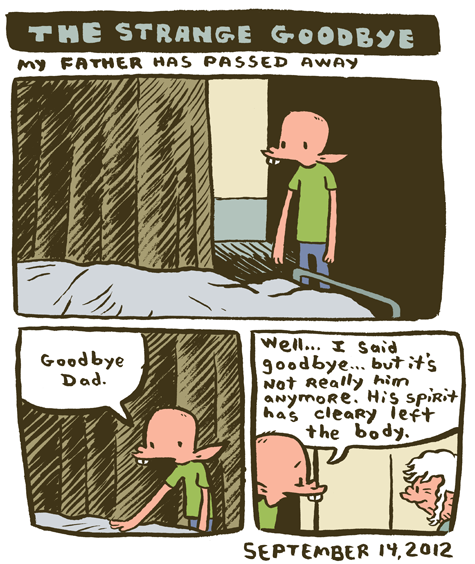
And this is a death that effects me in a weird way. I don’t know James Kochalka personally. But I have read every single published diary comic that he has released, short of some stuff in the past two years. I followed Amy’s pregnancies (and miscarriage). I have felt the elation at his children being born. I have begun to dread the day that Spandy dies (this is my real fear, that I will wake up one day and Spandy will be dead and I will just weep uncontrollably all day long.)
Like everything else in James’ life (I feel like I can call him James, like we are old friends), I knew about his father’s health issues. I remember when James first suggested to his father that he should get tested for Alzheimers. I remember when his dad first started getting things really wrong. I remember James’ shame.
Which is interesting, because I wasn’t there, of course. But I can narrate it to you. I have little, significant clips of James’ life. They resemble the same clips that I have of my own life. I have a terrible memory, and if I really thought about it, I could probably produce about four panels worth of memory about any event. My memory itself is a diary comic.
So the death of James’ father moves me. I liked him. He was an old elf, a withered version of James. A view into the future.
This moment, maybe more than any others, signifies a movement forward; it shows that these diary comics are moving at an increased speed. Time is passing. We’re moving on, into oblivion.
James Kochalka’s diary comics span the gap between early tech culture and our digital lives. Someone uses a payphone in an early comic; now they don’t exist. All in the same life continuity. For me, that is the same as the moment that Marcel looks up into the sky and sees an airplane.
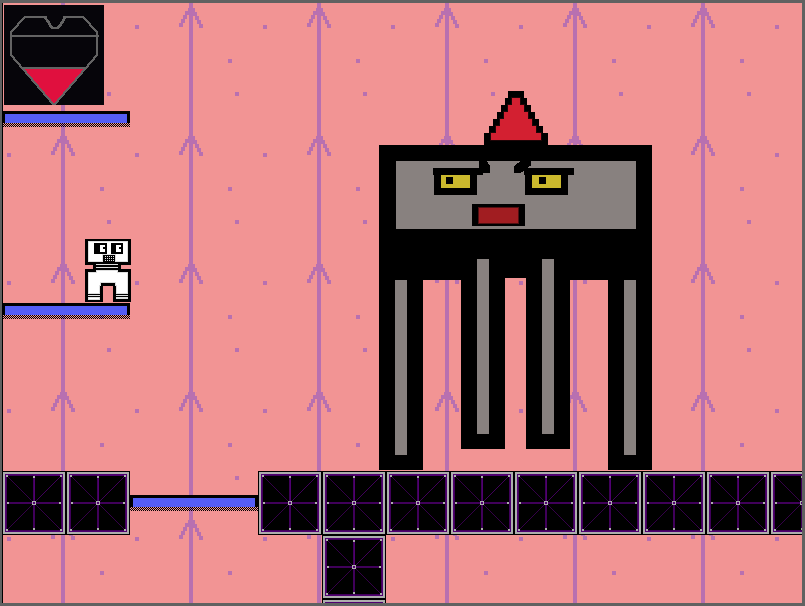
Humans and nonhumans alike who follow me on twitter know that Smash the Patriarchy! has been done for a few days now and I have just been playing through it and beta testing and doing all the things that you should probably do when you put a game together over a few weeks.
As you will notice, that link doesn’t take you to a game proper. Instead, it takes you to www.heylookatmygames.com, which is the new place that I have created from the nothing so I can host weird game stuff that I make. It is cool. You should love it, read it, and add it to your RSS. You will notice that you can play Or, What Is It Like To Be A Thing?there as well. I encourage you to do so if you haven’t–I am still really proud of it.
I don’t like artist statements about games. I think you should figure it out on your own. What I will say about the game, if you need a hook, is:
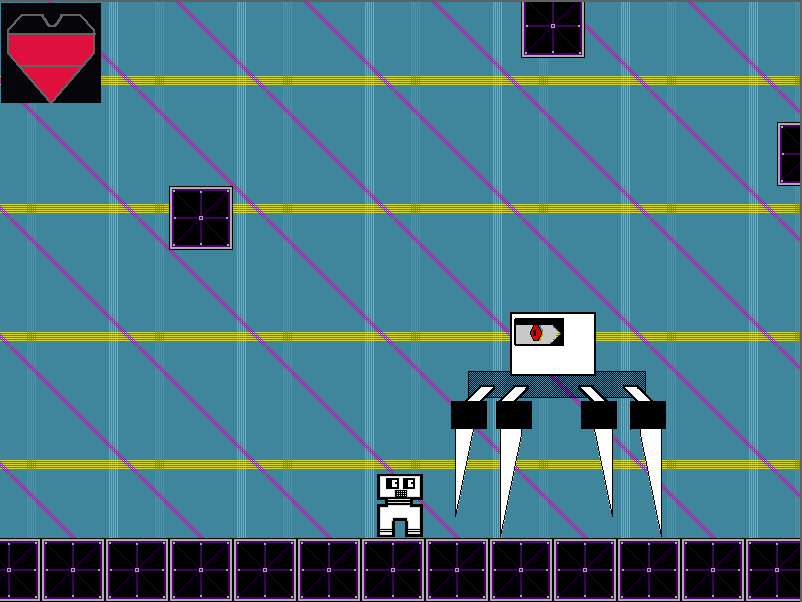
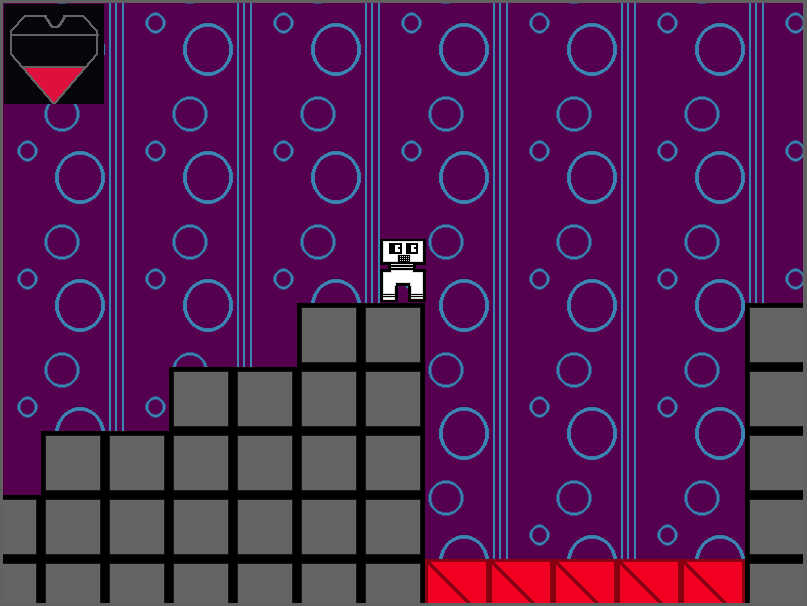
Smash the Patriarchy! is about a robot who frees feminist ghosts from their patriarchal robot captors.
The game is Super Mario Brothers-esque in that it does require a lot of platform jumping. A death takes you back to the beginning of the level. A single, perfect playthrough with no deaths takes +/- 20 minutes. A normal playthrough, with an average of 20 deaths or so, takes about 45 minutes. The game is significantly easier in this iteration than in previous ones, so beta testers should go ahead and give it a playthrough again.
In any case, I have enjoyed making Smash the Patriarchy!. It took roughly 40 hours over the past couple weeks, which really only turns out to a couple hours here and there and three or four five-hour sessions. I made the game in Construct 2, which I can’t recommend enough. I have quite a bit of experience tooling around with Gamemaker and the like, and I can honestly say that Construct has been a breeze of an experience compared to that–it is both simple to use/learn and very efficient-feeling (I don’t know if it is actually efficient.)
I made all of the visual and audio pieces of the game. You can blame me for their bad quality. I am not good at making art, but I try really hard, and I think that’s where it counts. The music for the game was made in musagi. The sound effects were made with Bfxr and Audacity. The sprites/backgrounds/everything visual was made in Photoshop. I wanted to use VoiceBand to make the music for the game, but I couldn’t get it to do what I needed it to. That said, you can make some really strange, haunting stuff with it.
And that is all I have to say. In a few weeks, I will probably write about the game and talk about why the game is like it is. Some people like to know those things.
The essay is mostly concerned with what it means to live guilty and to understand ethics inside of that guilt–for Stanescu, this becomes central to the question of human relations with nonhuman animals. The essay hinges on a reading of Tim Morton’s “beautiful soul syndrome” and how it applies to a lived ethics. Strangely enough, I was listening to Morton’s talk “Art Without You” recently, and there’s a resonance between Stanescu’s essay and what Morton says when he claims that we can do no right by the hyperobject–by that he means that there is no “answer” to large-scale problems, and that we, essentially, have to produce new modes of meaning and thinking in the face of the unthinkable. Similarly, Stanescu claims that living a post-lapsarian life–one in which we are complicit, and responsible for, violence all the time–means that we need new conceptions of ethics and politics. We need steps forward. We need to become a bit stranger.
I will be super honest with you: I’ve not had a chance to read the entire thing yet. It is super long. You will forgive me. But what I have read so far is stellar, enough that I think you should read it, and maybe I will do some better work on it later next week.
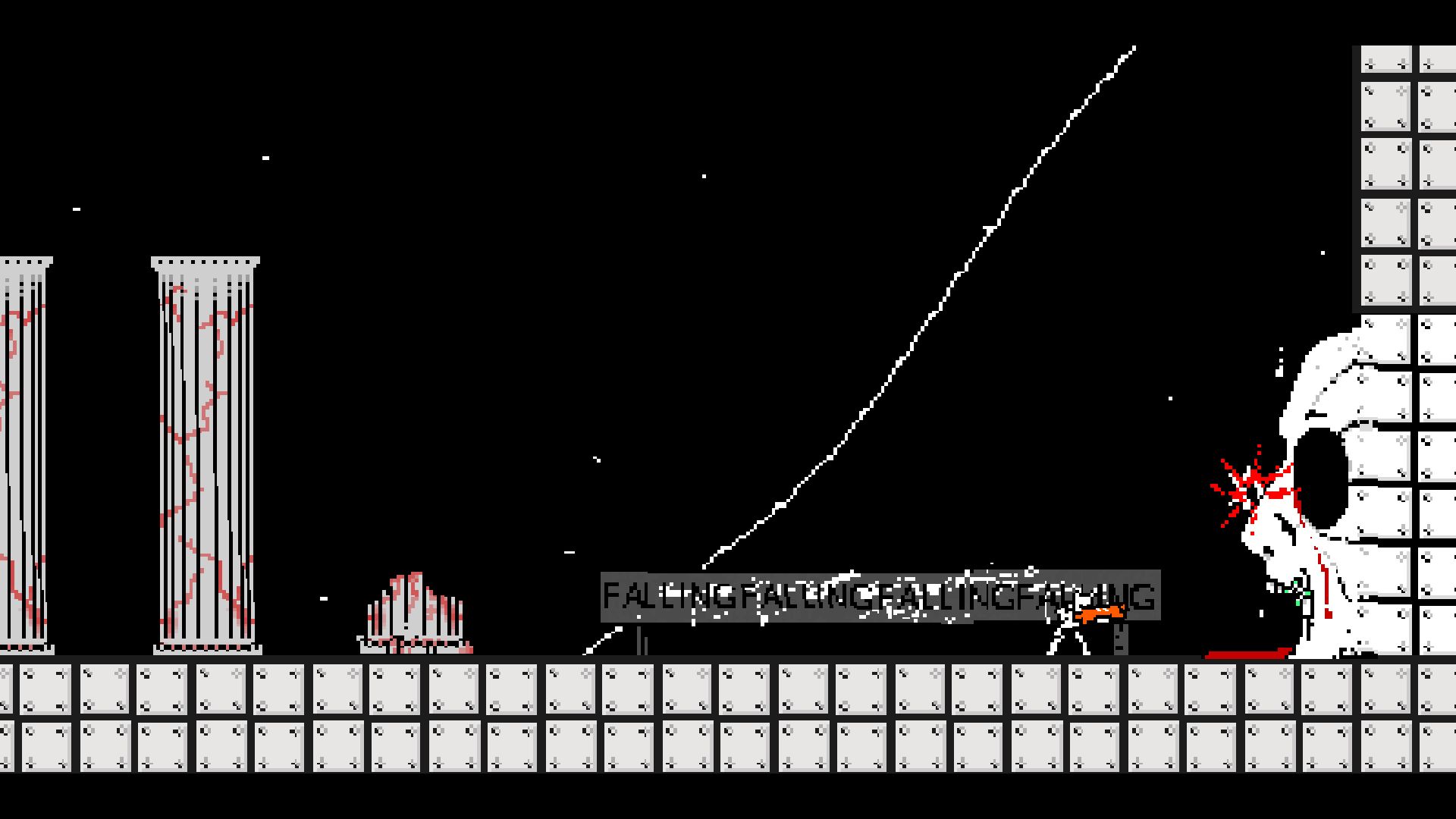
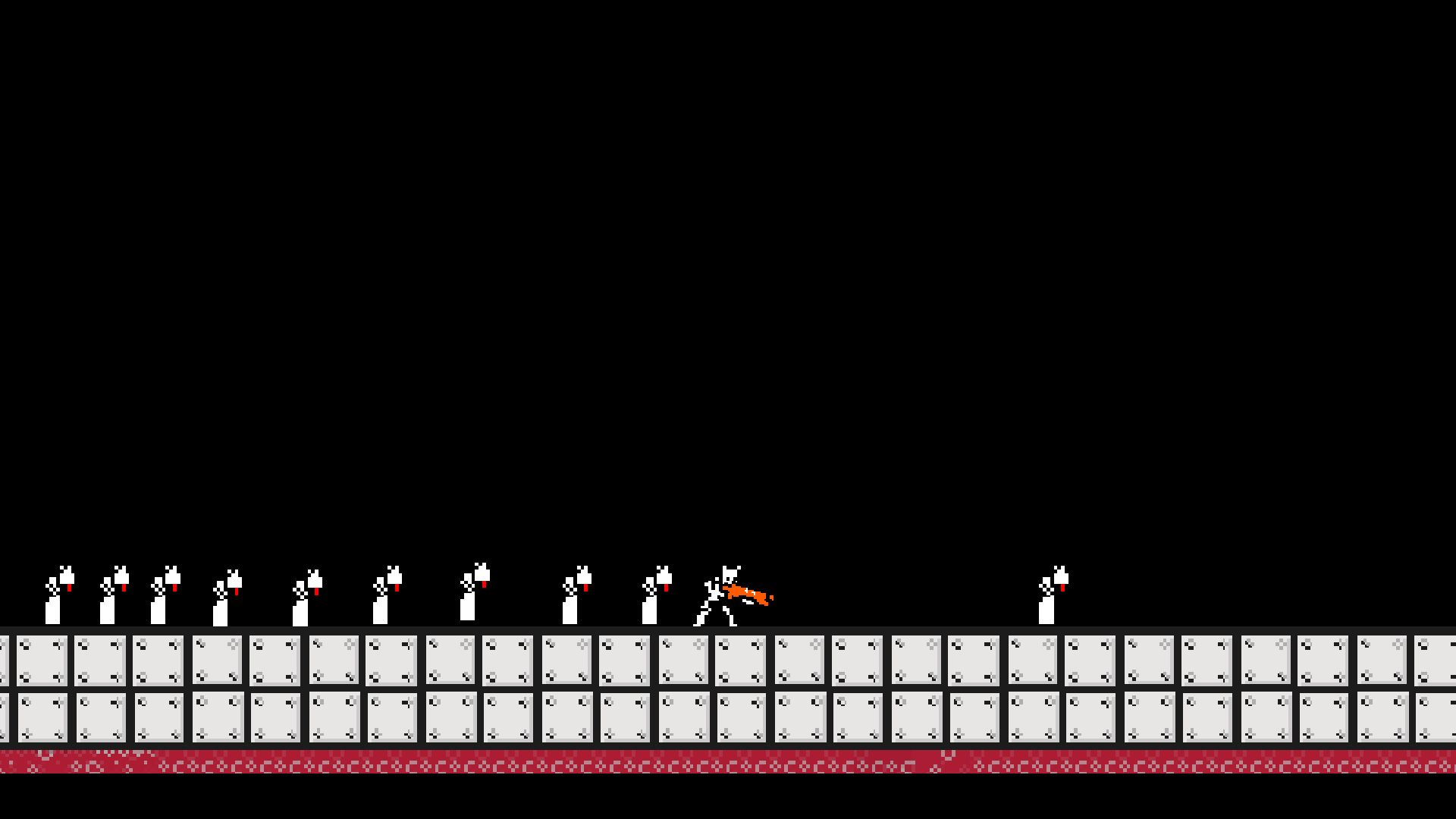
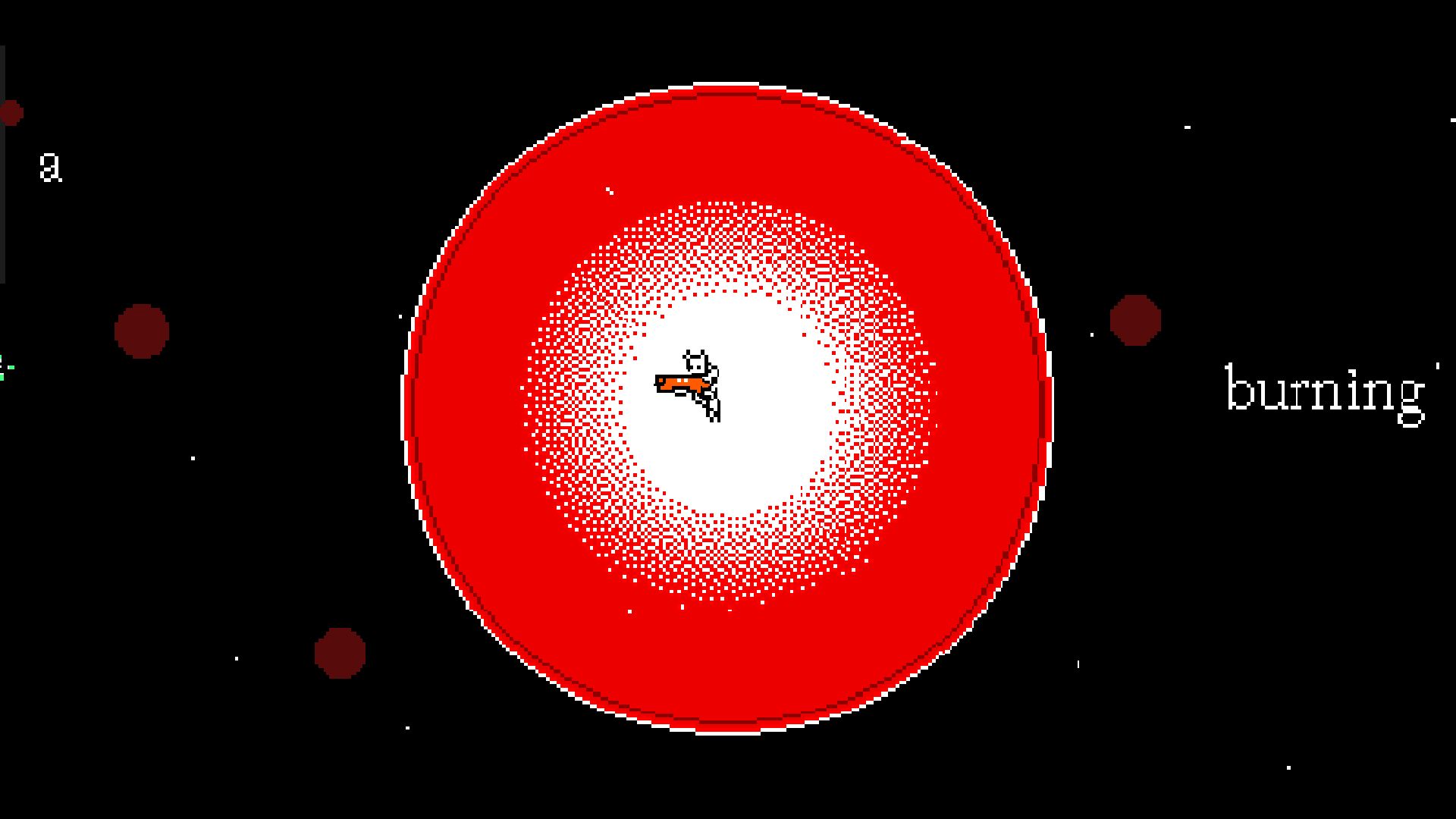
This game is horror because it slaps an aesthetic onto a shooter frame. There is a focus on scrambled text, strange writings, cyclopean structures, and deformed enemies in order to make the aesthetic resonate. Other than that, it isn’t horror in any way–it just wears horror as a way of making a shooting game more exciting.
When I say that, I’m not meaning to trash the game. The horror element addition feels sincere–they made a genuinely creepy world that isn’t explainable in any way. Then you roll through it and shoot enemies, a number of which just come back in the biggest “fuck you” possible when you try to jump across a chasm.
I’m open enough, and horror is a vague enough word (unless you do the etymology, which I will do for you one day) that anything can fit inside of it. All Of Our Friends Are Dead seems to be horror because of the imagery it deploys and the effect it seeks to generate in the player. It tries to make me uneasy. It tries to make me second guess myself, to be confused, and it tries to push me away.
It actively resists interpretation while hiding nothing. There isn’t anything obscured or mystical about it. There is just a horrible world and my act of navigation. That interplay generates the horror–“How could all of this be so terrible and never try to hide itself?” is the general feel. A great aesthetic experi(ence)ment.
2. How Does It Work?
All Of Our Friends Are Dead makes the player uneasy through its use of music, its visual aesthetics, and the movement of its enemies.
The music drones in the background, and I can’t find a YouTube video that does it justice. It seeps into you. The staccato rhythm of the firing gun is punctuated only by enemies dying with a inhuman cry. There isn’t any reason to it, and it is powerful because of that. Just like the visual, the audible presents itself as it is; there is nothing below it, it symbolizes nothing. It just is, and what it is is disconcerting.
The movement of enemies is unsettling because it isn’t predictable. Some of them also fire little balls of death that kill you on impact. The combination of the two is super-frustrating, but it also forced my to be hyper-aware of my environment. The game plays on this focus. For instance, there is a lot of red in the levels, and the enemies’ missiles are red–there is confusion about what is hostile (what will kill you) and what isn’t.
The result of that is a feeling that everything is hostile. Everything wants to hurt you. And this is a brilliant move for horror. Successful horror games have generally used possibility as a multitool–in Silent Hill, there is the possibility of something coming out of the mist; in Amnesia there is the possibility of something terrible as fuck being behind that door. All Of Our Friends Are Dead, by putting everything up front and attempting to make every single action, not just actions that “face the unknown,” a horror experience. That’s genius.
3. What Did It Do To Me?
It frustrated me. At some point, I fell down into a little cubby that needed a key, and I couldn’t backtrack. So I stopped playing.
Other than that, nothing much. The design was smart, but it didn’t pull me in. I felt about the same as I do when I play a game like Contra. I wasn’t horrified, that’s for sure.
I got a sweet desktop background out of the whole thing, though.
This is a blog about video games, comic books, film, and philosophy. It is mostly research-oriented stuff. The art in the current header is from Prophet #29. The blog icon was made by Tara Ogaick.




 this cage is worms