Swain on Dear Esther

So Eric Swain has an article up at PopMatters about Dear Esther. I have written about Dear Esther extensively on this blog.

Faithful readers of this blog will know that I have a particular weird love for Dear Esther. I’ve played it several times, listened to the OST more times than anyone should listen to any OST, and obviously I AM A TRUE, 100% PASSIONATE DEAR ESTHER FAN.

Or maybe all of that is nonsensical.

I like Dear Esther a lot, and I want to point out Swain’s article because a. it is engaging with the work still, which means that Dear Esther might have some staying power and b. It is a smart article, but I disagree with it, and I want to point out why.

On top, I think that the base assumptions that Swain makes aren’t supported by the text, quite on purpose. He writes that

The player is the narrator who is Esther’s husband and who has lost a part of himself in her car crash. That much is obvious. But there is so much more to the story than that. Donnelly, Paul, Jakobson, and the hermit all may or may not all be the same people given they way that the narration weaves in and out of his thoughts. The player is already dead, forever circling the island. The ghost story is about a ghost and that ghost is us. The player is haunting an uninhabited island off the coast of Scotland forever running in circles, using both his feet and his mind.

I don’t think there is a single “obvious” thing in the diegesis of the game. Additionally, I don’t think that these things can be separated off so easily from one another. Donnelly and Paul and Esther all slide into one another. Everyone is part of the same stuff, the same prematter of the “back then.” They are history.

Swain’s reading of the game then makes the jump to the fact that the player character, at the end of the game, instead of actually dying, just begins again. Which, if we’re going to take this seriously, is interesting. However, the only thing that separates this from every other game experience is that Dear Esther makes this somehow more poetic. Why isn’t every life, every restart, in every game the exact same thing? Games, by their very repetitious nature, are like Hell. Characters live in short bursts, die, and when their franchise is over they are eradicated from existence totally.

So I think that Swain is overreading for the sake of poetry. That is his prerogative  of course, and I would be a liar if I didn’t do it myself from time to time.

I am writing this response, and cautioning against Swain’s haunting/purgatory reading, because I think that it devalues the actual narrative we are presented with in Dear Esther. If the game is merely a haunting, then it is infinitely repeatable. First as tragedy, then as farce, as Marx said. The game, in repetition, becomes the enacting of a ghost’s life. There is no escape.

I have to read the end of the game, the throwing of oneself off of an aerial and into the sea, as a “real” event. It isn’t something being undertaken by an incorporeal ghost, poignantly throwing himself into the sea. It is the death act of a lived being. This is crucial to my connection with the game.

Swain writes

To me this is the horror of Dear Esther. Locked into a fate of eternal repetition and utter meaninglessness. It isn’t your traditional horror story because it isn’t within the work itself that the scares reside. It’s what you bring out of this ghost story into the real world that scares the most: the ceaseless doubt of one’s own actions and search for meaning. As the cold wind and moments of lonely contemplation leave their mark, we as the narrator haunt the island, and as a consequence, Dear Esther haunts us.

Which is a beautiful thought, but the possibility of repetition into infinity seems more beautiful than anything else. Infinite lives aren’t horror; they’re Groundhog Day. The knowledge that a man, broken, kills himself after dragging his diseased body across an island is much more terrible, and painful, than the idea that he merely haunts.

So when I am haunted by Dear Esther, it isn’t because I have slid into the protagonist’s shoes. It isn’t because I am playing over and over again. I am haunted because that pure blackness without end exists. When the camera moves out into the ocean and the sound of waves crashing exists alone–that is when I am haunted.

It doesn’t go on forever. It happens once and stops. There’s no way out. That’s the horror of Dear Esther.

(side note: I don’t think that horror ever resides in a work. It lives in the body of the viewer, in her relationship with objects in the world, even if those objects are fictions [like in video games].)
Posted in Video Games | Tagged , , , , | Comments Off on Swain on Dear Esther

Latour on Aramis

Nothing happens between two elements of Aramis that the engineers aren’t obliged to relay through their own bodies. The motor breaks down, the onboard steering shakes and shatters, the automatic features are still heteromats overpopulated with people in blue and white smocks. Chase away the people and I return to an inert state. Bring the people back and I am aroused again, but my life belongs to the engineers who are pushing me, pulling me, repairing me, deciding about me, cursing me, steering me. (123)

Latour, Aramis or The Love of Technology

Posted in Quote Time, Theory | Tagged , , , | Comments Off on Latour on Aramis

Quote: Metro 2033

It appears that the devastation we brought upon ourselves was complete. Heaven, hell, and purgatory were atomized as well. So, when a soul leaves the body, it has nowhere to go and must remain here in the metro. A harsh, but not undeserved atonement for our sins, wouldn’t you say?

Khan, Metro 2033

Posted in Quote Time, Video Games | Tagged , , | Comments Off on Quote: Metro 2033

Glissant and Opacity (2): Relation

This post, like a great many (all?) of the posts on this blog, is about my trying to figure something out for myself. What follows is the rambling that I need to do in order to work my way through Glissant’s Poetics of Relation. This book is hard for me, maybe the hardest book that I have read in a long time, and I think that I am going to be struggling with it for quite some time. But struggling is good; at least I argue that all the time. So, now you can see me struggle, in hi-def, right here on your screen.

At the end of Poetics of Relation, Glissant draws our attention toward the fact that he has used a number of different oppositions in order to explain the condition of the subject in life. The two that I am concerned with, which I think “govern” most of the rest of the oppositions, are “opacity/transparency” and “totality/Relation.” I am going to ignore the first for right now and run right into the second.

First, I think it is important to understand the metaphysics that Glissant is working under. As best I can understand, he begins from a fundamentally Deleuzian point: there is a virtual (or immanence), which Glissant calls “Chaos,” and there is the actual, which is Relation/totality. Glissant writes:

We were circling around the thought of Chaos, sensing that the way Chaos itself goes around is the opposite of what is ordinarily understood as “chaotic” and that it opens onto a new phenomenon: Relation, or totality in evolution, whose order is continually in flux and whose disorder one can imagine forever. (133)

This might be a good time to point out that Glissant is a poet who is fixated on transitions, translations, chaos, and opacity. For lack of a better word, he is slippery. In any case, what I see happening here is a movement from the virtual (Chaos) to the actual (Relation). Chaos is an ordered movement that realizes itself in the material world through Relation, which is wholly revolutionary, never standing still, never consisting of a totality. The words “opens onto” signify an existence in a material world, a movement onto a plane of existence where things are forced to interact with one another.

In other words, what Glissant is showing us here is that Relation is a force that makes things messy.

Totality is described in a similar way. Glissant notes that “Relation is active in itself” and that totality is “in danger of immobility” (171). Glissant’s language needs to be taken a step further–totality is the danger of immobility. If Relation is the immanent acting in the world, a pure movement that is not defined by objects but by force (you know it when you feel it), then totality is the power of a thing at rest. It is the opposite of revolution, the opposite of activity, the opposite of self-assertion, even.

Glissant complicates the language I have been using by suggesting that “only rest. . . could. . . be legitimately of totally virtual”  (171). What he means by this is that only an object at rest can be understood as incomplete, as able to evolve or change. That is because, definitionally, Relation cannot be understood to change because it is the very force of change, internal and external, in the real. The force of change cannot change; it is never stable enough to be given qualities, to be understood as having limits.

It does not precede itself in its action and presupposes no a priori. It is the boundless effort of the world: to become realized in its totality, that is, to evade rest. One does not first enter Relation, as one might enter a religion. One does not first conceive of it the way we have expected to conceive of Being. (172)

I don’t want to suggest that there is some primal liberation occurring when Relation is acting, however. Just as Deleuze and Guattari explicitly tell us that deterritorialization is not liberation, but merely a process in the world, Glissant wants to make sure that we understand that Relation is an acting force that has no particular goal outside of itself:

Relation relinks (relays), relates. Domination and resistance, osmosis and withdrawal, the consent to dominating language and defense of dominated languages. They do not add up to anything clearcut or easily perceptible with any certainty. The relinked (relayed), the related, cannot be combined exclusively. . . . What best emerges from Relation is what one senses. (173-74)

Glissant has an entire chapter of aphorisms that “generalize” the book toward the end of it. One of the aphorisms is

Someone who thinks Relation thinks by means of it, just as does someone who things he is safe from it. (185)

I think this is a good place to end.

Posted in Theory | Tagged , , , , | 2 Comments

Designing Horror: Deep Sleep

This post is part of the Designing Horror series.

Game: Deep Sleep by scriptwelder

Deep Sleep is a game about a person having a dream. Things connect. Things fall apart. There are mysterious dark forces; a phone whispers over the driving drone of a refrigerator somewhere. Based on the horror games that I have been playing over the past few weeks, this is the state of contemporary horror video games. Deep Sleep doesn’t change any of that.

But it does adapt all of those things into the point-and-click interface, no small feat, and it also won the 10th Casual Gameplay Design Competition (I have no idea what that actually means.)

1. How Does It Work?

So, frontloaded: the aesthetic is a dream aesthetic. Things change before your eyes. Objects that have no business interacting with one another do, in fact, work together (a net and a hook?). There is no reason for being in a place and doing a thing except for the fact that it is the thing to do at the time (dreams work a lot like games, come to think of it). So Deep Sleep gets to have its creepy aesthetic and strange aural landscape be as weird as it needs to be because we all implicitly understand that dreams are just like that.

On one hand, it feels a little lazy. Of course an inherently unstable state creates unstable aesthetics, which neatly elides into horror (this is why David Lynch can be so goddamn scary sometimes.) On the other hand, that is exactly the point, so I have to commend the designers. It is a dream gone bad; literally a nightmare machine that produces itself in front of you.

That, in essence, is how Deep Sleep works. It makes you believe that everything is going to be okay. It is a liar.

Point and click games often have a difficult time making tension work. Everything works at the same speed as the player, and if that is true, then the player has all the time in the world to make the right decision.

Deep Sleep changes this. The game introduces enemies in the game that are not at the beck and call of the player. The world does not merely exist for the player to manipulate; there are beings that are not mere pickups to be used at the right moment. These entities charge. These entities kill.

So how does it work? It works by presenting itself as an experience that is centered on the player and then revealing itself as much more complex. Time is not on your side. The world is not meant for you. And it pushes the player away.

2. Why Is It Horror?

It is the last point above that solidifies Deep Sleep in the horror genre. I would even suggest that it is in that deeply-influenced-by-the-19th-century camp of horror games. There is a distinctly Wells/Lovecraft approach to horror here; the world is decentered. There is bigger shit in the universe.

Feel fear.

3. What Did It Do To Me?

It gave me chills. It made me afraid to move ahead in the dark. It gave me a terrible sense of panic when I knew that I had to click faster than the dark shape could move.

It made me worry.

Read about other games in the Designing Horror series. 

Posted in Designing Horror, Video Games | Tagged , , , | 2 Comments

On Spec Ops: The Line

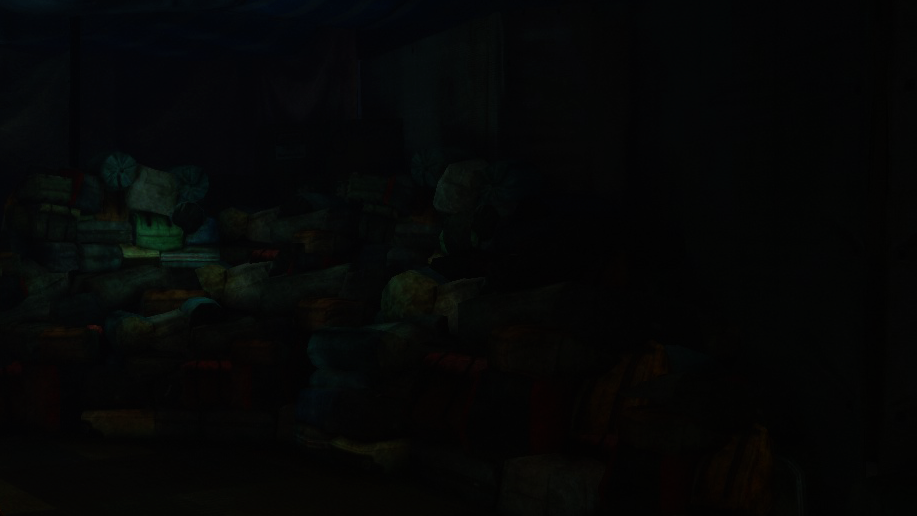
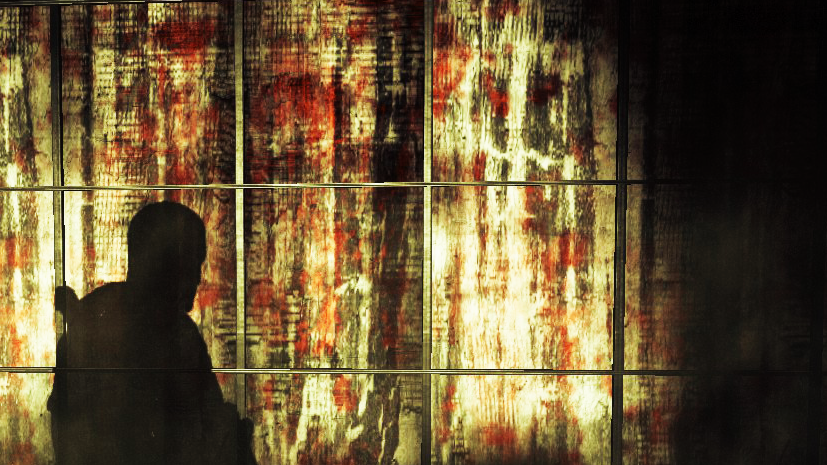
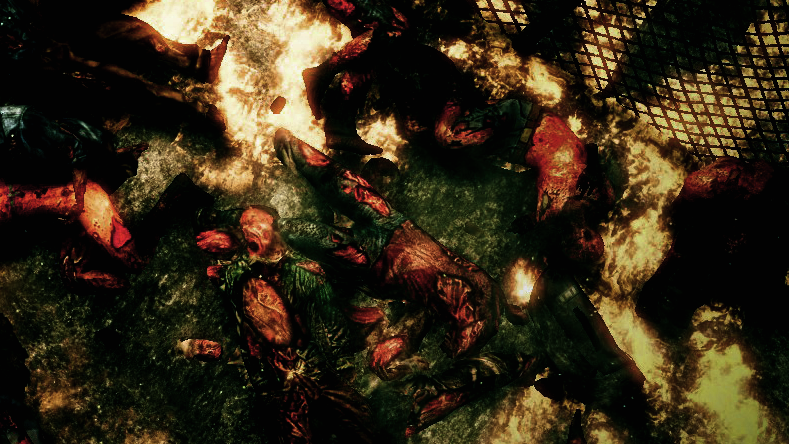
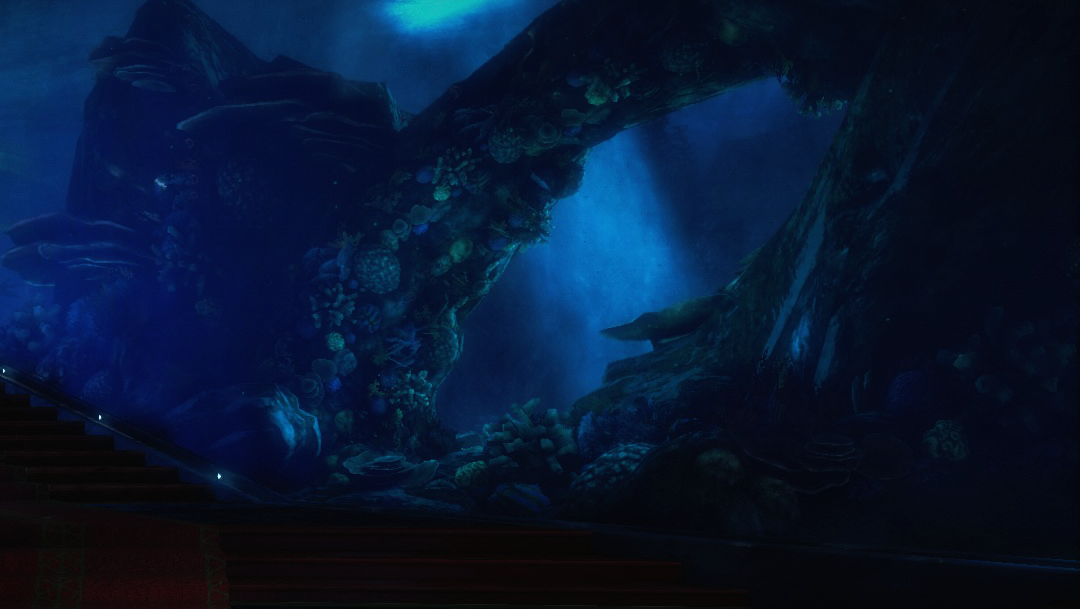
My thoughts on Spec Ops: The Line in short: the art department is brilliant. I think that the plot, the “twist,” and the gameplay were all generic whatever fare. I think that the aesthetic is inspired, and I honestly believe that those people need to win whatever the hell award people give out for best art in a game. True beauty.

So here are some photos, to celebrate that art.

Posted in Video Games | Tagged , , , , | Comments Off on On Spec Ops: The Line

Comics vs. Games

TIFF Nexus, possibly the worst-named entity of all time, has been sponsoring or holding or doing something with game jams in Toronto. Even though the guy explains it in the video, I am really confused about the whole thing–but my confusion is beside the point.

Anyway–Comics vs. Games was a game jam that was set up to pair comics creators with video game creators. They made interesting things. Two of my favorite artists, period, were involved: Emily Carroll and Christine Love–so I really think that the artistic productions that came out of the the jam are important.

But honestly, this is just a way for me to segue into a short discussion about the qualities that video games and comics share. They both have indie scenes that are all about taking the means of production into your own hands–video games, in particular, in no small part due to the fact that Anna Anthropy published a whole book that pushed a DIY ethic of games onto the public.

Anyway.

Games and comics. People coming and making things work–literally creating the illusion of time in a comic, pushing real motion into static images. Making them live. Or even completing a game, not by 100%ing it, but by entering into an assemblage with it so that it can function. Both mediums are about the meetings of soulmates, not to create offspring, but to generate the status quo. To retroactively create a world where only fragments were before.

Sometimes you have to go autopoetic.

Posted in Comics, Video Games | Tagged , , , , | Comments Off on Comics vs. Games

Glissant and Opacity

So I have done a little work with Glissant in the past, but I’m now sitting down and working through Poetics of Relation. It is amazing stuff, and it is really informing the stuff that I am doing right now on the desires of nonhumans.

So that kind of stuff is going to be forthcoming in the very near future. I hope you like that.

In any case, a Glissant quote:

This same transparency, in Western History, predicts that a common truth of Mankind exists and maintains that what approaches it most closely is action that projects, whereby the world is realized at the same time that it is caught in the act of its foundation.

Against this reductive transparency, a force of opacity is at work. Now longer the capacity that enveloped and reactivated the mystery of filiation but another, considerate of all the threatened and delicious things joining one another (without conjoining, that is, without merging) in the expanse of Relation. (62)


Posted in Theory | Tagged , | Comments Off on Glissant and Opacity

Designing Horror: The White Chamber

This post is part of the Designing Horror series.

Game: The White Chamber by Studio Trophis (which doesn’t properly exist anymore.)

The White Chamber is about a woman who wakes up in a coffin on a spaceship. The station is abandoned (seemingly) except for her, and as the narrative unfolds the player is given glimpses into the back story of the game. Creepy things are happening in space. Now it is time to adventure game your way around the station to…get on an escape pod? Leave the station? The game ends there, so obviously it is what you’re looking for, but there isn’t a lot of information to get you there.

1. How Does It Work?

The game is a point and click adventure mystery game. There are two predominate ways that I found it “working” on me: the first was through the sound design; the second was through the slow camera panning.

Of course, the visual aesthetic is also there. The station will occasionally flip into a strange, alien place covered in meat/blood/monsters/whatever. The Silent Hill series shows through; The White Chamber gets zero points for originality there. So I don’t find that scary, and I don’t find it horrify–by that, I mean that it isn’t arresting. It doesn’t capture me and hold me.

So, sound design. It isn’t amazing, nor is it different from other horror games, but it doesn’t come off as trite in a way that the shifting visuals do.  There is one sequence in particular that has stuck with me–the main character walks down a hallway toward the camera. When she reaches the end of the hallway, she starts again, walking down the same screen. The only difference, short of some small visual changes, is that the audio turns into a constant murmur. Every time the player completes the screen, it gets louder, eventually drowning every other sound out. In that moment, there is nothing to do other than walking away, trying to escape, but you are forced to complete the same task over and over again. A literal entrapment in gamespace purgatory. Sublime.

The camera panning is the second effective design strategy of the game. Like previous games in the Designing Horror series (Yeti Hunter in particular), The White Chamber establishes a sense of unease through a limitation of the visual field. Part of this is the changing of areas outside of the field of view of the player e.g. when the player moves from one room to another, suddenly everything is covered in blood. There is nothing dependable or reliable outside of that which is immediately invisible and experienced (this is something that exists in adventure games as a genre, too.)

The White Chamber takes the extra step here by delaying the camera pan until the player character reaches the side of the screen–the player is not kept in the immediate center of the screen at all times. This achieves two effects simultaneously. First, the world outside of the frame seems to make its way into the screen–I was always anticipating, waiting, scared to know if something was going to suddenly appear onscreen, dreadfully close to my walking self. Second, it establishes that the player is not at the center of the game world. The space station, and its terrible secrets and scary things, are as ontologically sound and stable as the player character. Why would the camera follow her? She is just another piece of a large, strange puzzle with a number of actors. And maybe that is horrifying in and of itself.

2. Why Is It Horror?

It is horror because it is attempting to implant a sense of dread and mystery into the player. It is horror because it wants to hold you enrapt in the puzzle itself, in the strangeness of the severed body parts, the insatiable mouth, the shifting landscape. It wants to keep the player inside itself.

3. What Did It Do To Me?

It didn’t do a lot. This game was much more intellectually stimulating than it was actually horrifying, though there was a despair-effect from the slow camera pan.

Read about other games in the Designing Horror series. 

Posted in Designing Horror, Video Games | Tagged , , , , | 1 Comment

McCloskey on Rhetoric

The trick of claiming certitude as a way of avoiding serious persuasion is Plato’s Trope. I hold in my hand a proof, such as they have in mathematics–not the wretched opinions they trade in the courts of law–that kings should be philosophers and philosophers kings. “Don’t you know that first-order predicate logic is enough to build a world upon?” the Platonist will ask in 1920. Or, to give examples from economic rhetoric, “Don’t you know that market capitalism is optimal, according to the blackboard proof?” These have all been presented as demonstrative, but in each case the so-called demonstration has been merely an excuse not to argue on grounds that would persuade reasonable people.

Donald McClosky, “Rhetorical” 1993

Posted in Quote Time | Tagged , , , | Comments Off on McCloskey on Rhetoric