On Spacefaust

The developer of Spacefaust pointed me to the game, and I think it is a neat game.

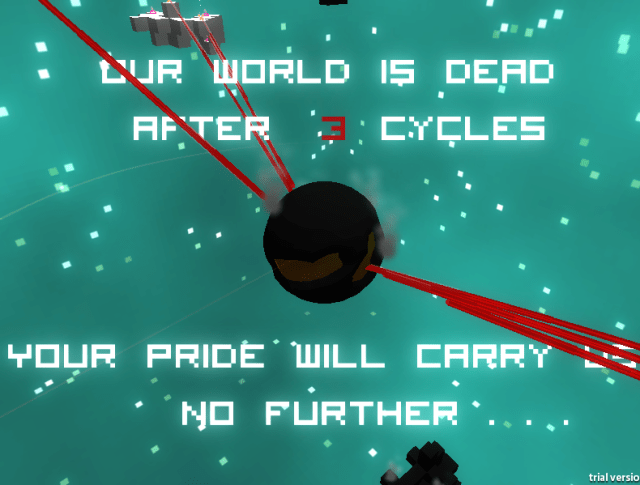
It is a jam game made in Unity where you fly around and shoot little thingies that shoot at you, but it is all bound up in a haunting tune and impressionistic language that fails to cohere into anything other than vague sadness and a feeling of loss. A really strange package. It is worth spending five minutes playing here.

spacefaust

Posted in Video Games | Tagged , | Comments Off on On Spacefaust

On Kingdom Hearts

1.
Kingdom Hearts is a game about a child name Sora who has a giant key who pals around with Goofy and Donald Duck. He goes to different worlds based on various Disney properties and bludgeons Heartless to death with said key. Heartless are minimally self-aware people who have been attacked and turned into monsters against their will. At the end of the game, the power of friendship is invoked and Mickey Mouse helps seal a giant door that has some kind of significance for a universe held in the balance.

I did not understand Kingdom Hearts.

2.
Kingdom Hearts is a game with an amazing combat system. Sora is a child with a giant key who bludgeons Heartless to death with a poetic amount of skill, dodging from enemy to enemy via an incredibly finicky targeting system that seems to actively work against the player in some kind of unholy alliance with a camera that never seems to work quite right.

Despite that alliance, I control Sora as well as I can, and we hop up into the sky and hit a flying pirate ship three times before landing and hitting a fireball back at some flying mage thing and then dashing into a group of lackeys after which Sora explodes into a giant dome and dazes everything around him. It is absolutely chaotic. I can rarely, if ever, predict what the enemies are going to do, or even what I am doing, and yet everything also seems to hang in a precarious balance where every move I make either saves me or puts my health in a red fire alarm status.

3.
Kingdom Hearts is my Dark Souls. It is the game where a moment of mastery means everything, even at the cost of a thousand failures. It is an exercise is futile repetition where I live in hope that a combination of luck and slowly advancing skill will allow me to beat Ursula or Ansem or any of the tens of battles that sap my health points in various untelegraphed and unclear ways.

I am bad at reading the information the game gives me. I feel like it is very good at understanding me.

4.
Moments of extreme beauty:

a. keyblade battle where the AI is programmed so perfectly that you dodge, roll, swing past one another almost constantly and you feel the stress and you feel like you’re at the peak of your ability as a player and then you parry a swing and you and the other are both recoiling and it is a race to see if you can hit the button fast enough to swing and hit before the computer does the same

b. you’re flying around Big Ben and there is nothing to do here now other than listen to the music and fly around and experience this moment in a game of an eternal list of things to do

c. you listen to so many stories of loss and brutality and you reach the end of the game and you realize that the only way you can go forward is to annihilate everything that has happened and ensure that the same loss is incurred on the same people but things will be the same as before and the credits scroll and of course things can never go back to the way they were

5.
You can slide down a banister for no reason. It is an animation used occasionally in combt and in the Deep Jungle. I did it over and over again.

6.
Kingdom Hearts is a game that is designed poorly more often than it is designed well. There are moments where the crunch of development is incredibly apparent–the seven or so small areas in Halloween town, the five or so smaller areas of Captain Hook’s pirate ship. The core loop of fight=>short puzzle=>boss is rarely interrupted, but it is also rarely fun, and more often than not it feels like two or three smaller design teams were forced to just smash their content together and hope that it worked out. Some bosses require extensive care to avoid, dodge, and parry attacks while moving around other obstacles or hitting totally tertiary goals in order to bring down defenses. Others just expect you to stand on their faces and smash the attack button as much as possible for three minutes.

7.
I don’t know what my final feelings are about Kingdom Hearts. It is one of the very few games that I’m only in for the combat and the set pieces. If we removed the story and every voiced and unvoiced cutscene, I doubt that I would care or notice. I experience it like I experience poetry; pure form placed in front of me, and I roam between those forms raised like monoliths, trying to avoid meaning and pushing everything until it breaks. Also I’m wailing on dudes with a big key so whatever.

Posted in Video Games | Tagged , , , | Comments Off on On Kingdom Hearts

Lyotard on the human in humans

What shall we call human in humans, the initial misery of their childhood, or their capacity to acquire a ‘second’ nature which, thanks to language, makes them fit to share in communal life, adult consciousness and reason? That the second depends on and presupposes the first is agreed by everyone. The question is only that of knowing whether this dialectic, whatever name we grace it with, leaves no remainder.

Lyotard, “About the Human” The Inhuman p.3

Posted in Quote Time, Theory | Tagged , , , | Comments Off on Lyotard on the human in humans

Keighley on the Life and Death of Trilobyte

“I think Graeme’s e-mails got a little harsh at times,” explains artist Mark Peasley. To many inside the company, the e-mails were downright caddish. Devine admits he went through an “acid period” after his migraine attack in late 1994, and his e-mail exchanges were in part mandated by the fact that his hours were usually 4pm to 4am, quite different from the normal 9-to-5 schedule of some employees (making face-to-face communication difficult). “I really don’t think Graeme meant any harm with them,” explains programmer Sherman Archibald, Devine’s best friend. “I think he was just dealing with the stress in his own way.”

However, the e-mail exchanges were troublesome to Landeros, who admits he and Devine had different opinions of how to run a company. “I was more of a stickler for running the company on a more professional level,” explains Landeros, “but Graeme wanted a more friendly collaborative environment – sort of a mini-utopia. I don’t think his mode of operation is necessarily wrong, but it was tough for me to handle.” Indeed, this difference in protocol was something that came out of the woodwork as Trilobyte grew. With some 50 employees at the company, Trilobyte was even publishing its own glossy newsletter – Devine had a large audience over e-mail. To Mitsu Hadeishi, 32, project leader of Dog Eat Dog, it was a clear generation gap fueled by the 17-year age difference between the founders: “Rob wanted to do things in a very old-fashioned hierarchical way, and Graeme wanted a more consensus-driven business.”

Geoff Keighley, “Haunted Glory: The Rise and Fall of Trilobyte

via the internet archive. The article is about Trilobyte, developers of The 7th Guest. It deserves a good Aramis-style analysis.

Posted in Video Games | Tagged , , , | Comments Off on Keighley on the Life and Death of Trilobyte

Indie and AAA and a Complex Relationship

I have some feelings about a recent sentiment expressed by Patrick Lindsay on twitter. He told me that I could quote him here, so I’m going to for brevity’s sake:

https://twitter.com/HanFreakinSolo/status/397743576282841088

I want to be clear here that I like Patrick and I think he is a #dopedude, but I’m wary of this kind of sentiment. I’m deeply, deeply critical of AAA, or just generally big budget, development for a number of different reasons.

The biggest reason that I am critical of these huge game releases is that I think that those games, like all media, speak to viewers and users in very particular ways. Everything has a message, and as McLuhan said, that message is always embedded in the modes of interaction that humans have with those things.

Patrick’s sentiment, shared by a lot of friends (and not-friends), is that AAA games are so diffuse as to never really speak to the lives of people. This is bitterly ironic in the context of some of the major releases this year–The Last of Us is a meditation on interpersonal relationships and what it means to care about another human being; Bioshock Infinite is about the very nature of the social and how one creates oneself in the world. I definitely think that both of those games are failures at what they’re trying to accomplish, but there’s definitely a strong strain of trying to say something important in those games.

At this point, I’m in agreement with Patrick. These games are attempting, and they fail, so…

Except I don’t think that a failure at a grand theme necessarily means that a work of art is a failure. These games offer glimmers of strangeness, moments that somehow manage to escape the overcoding nature of their Hollywood narratives stretched to ten hours. To crib on Dostoevsky in a way he probably wouldn’t agree with: there can be beauty in Sodom.

So firstly, to say that AAA games are devoid of value, or that they say nothing, is to assert that AAA games cannot sometimes escape their own shortcomings, their own giant apparatus nature, in order to produce something wonderful.

Secondly, I’m deeply critical of AAA games because I think they’re speaking to us and telling us awful things. The Call of Duty rhetoric of impassioned surgical-strike forces who always save the day, and are always right, fills me with a deep unease. The racist and sexist tropes that games use as a ground to build their stories on, and how ubiquitous they are, and how angry people get when you simply point those tropes out–that bothers me. The treatment of players as badly-behaved puppy dogs who have to be led around and told the exact meaning of every piece of symbolism and plot point is gross.

But my analysis of those ideological pieces of AAA games has to come first from the assumption that that game can speak to me and others. Maybe that speech is diffuse, difficult to understand, and lands in a hundred different ways, but at the end of the day it is palpable and interpretable.

For me to assume that AAA games can speak negatively with their design and narrative and not to assume, in a hypothetical if nothing else, that games can also speak positively with those same design and narrative tools is disingenuous.

There’s a response to what I’ve written so far that goes something like: “Speaking about personal narratives is different from the way this piece frames speaking.” This is absolutely true. I think we need more and better narratives from parts of the social that aren’t represented in the technology sector that produces AAA video games. Honestly, that might never change–it does not seem to me that AAA development is changing quickly, or at all.

But there isn’t a political equivalency between AAA games and more personal, indie games. They are not sectors with equal power that we are choosing between in a zero-sum political and economic sense. They do not trade off monetarily in the public market of games. If the new Call of Duty  disappeared from the earth, people would not be flocking in the millions to go buy the latest indie darling. The AAA games world has created a userbase from nothing and exploits that userbase for as much money per-year as possible. Additionally, the political commitments of the large AAA userbase do not compete with indie games in the sense that the AAA userbase doesn’t know about small, personal indie games. The large chunk of those day one adopters don’t know about Castles in the Sky or Triad.

When we talk about a dichotomy between indie/personal (I recognize the complexity here) and AAA, we’re doing a massive disservice to thinking about the complex political economy that surrounds both of these systems. At the end of the day, I think there need to be more moves toward alliances across these development perspectives. While there are a great many “bad” people in the tech sector, I do think that alliances with workers on the “factory floor” of AAA production is productive and helpful for small games creators. They’re natural allies in that they are alienated from their labor which is extracted from them through long hours of crunch situated in incredibly abusive cycles of storm and stress that shave years off of their lives and provides incredibly poor (but decently compensated) lifestyles.

I understand that the strict division of indie and AAA is political useful sometimes, and I’ve played into this as much as anyone else. But increasingly I have recognized, and want others to recognize, that there’s something to be gained by looking to those who are in the trenches/hives of AAA development as political allies. As Joel tweeted earlier,

I want to have some fidelity to that relationship, to do it justice. I want to recognize our already-interrelated nature and find the most useful, productive parts of it to focus on, to grow, to push. And maybe that’s hopelessly romantic (something I have never really been accused of), but there’s something there. It is worth looking into. It is worth developing.

Or if it isn’t I am wrong and you can tell me I am wrong. There are so many systemic issues with what I’m talking about here, both along the lines of identity politics and the inherent political conservatism of the tech industry, but maybe this is at least productive to pointing out there isn’t a clearly-cleaved line of distaste that we should be experiencing.

 

Posted in Video Games | Tagged , , , , | 1 Comment

Castles in the Sky review at Paste

Castles In The Sky puts that front and center. It is not a game that you play and then reflect on later. It is the coffee, the cello, the cornbread of videogame experiences. It is meant to be taken in the moment as a wholly unique and beautiful experience that is wholly available to you in its entirety at the moment you experience it. Other games based on the beauty of experience, like Gone Home or Dear Esther, work because they resonate with you. The player is meant to be marked and marred by the pieces of those games. Idle moments in daily life become instances of piecing together and parsing the narratives and what those games can mean. Castles In The Sky doesn’t want you to do that work at a later date. It needs you to take the moment of play and embrace it, enjoy it, and leave not with fragments but with feelings that drift into the back of your mind and sleep there, sated.

Read the whole thing here.

Posted in Video Games | Tagged , , , | Comments Off on Castles in the Sky review at Paste

Joe Culp Played Through C.A.T.H.A.R.S.I.S.

pic2fencebattle


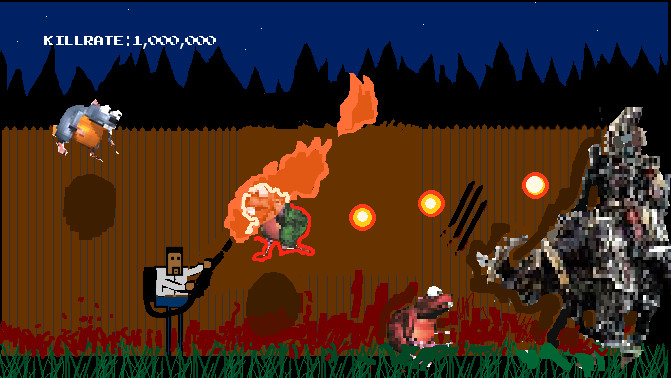
Over at Gamervescent, Joe Culp has done an extensive playthrough of CATHARSIS, a brand new game from me, apparently.

Posted in Video Games | Tagged , , | Comments Off on Joe Culp Played Through C.A.T.H.A.R.S.I.S.

Alex Myers – VoIP #1

Alex Myers talks about his work and IT IS NEAT

Posted in General Features, Theory, Video Games | Tagged , , | Comments Off on Alex Myers – VoIP #1

I Started Playing Rift, or The World is Awful

2013-10-30_000012013-10-30_000022013-10-30_00003

Posted in Video Games | Tagged , , , | 3 Comments

Cookies Clicked (forever)

cookie clicker cookie clicker2 cookie clicker3

Posted in Video Games | Tagged , | Comments Off on Cookies Clicked (forever)