
As I get closer to releasing Epanalepsis, I am going to be making posts over at the official Epanalepsis blog about what I’m thinking about, how I’m designing the game, etc etc etc.
The first is called “Narrative Lessons from Anton Chigurh.”
As I get closer to releasing Epanalepsis, I am going to be making posts over at the official Epanalepsis blog about what I’m thinking about, how I’m designing the game, etc etc etc.
The first is called “Narrative Lessons from Anton Chigurh.”
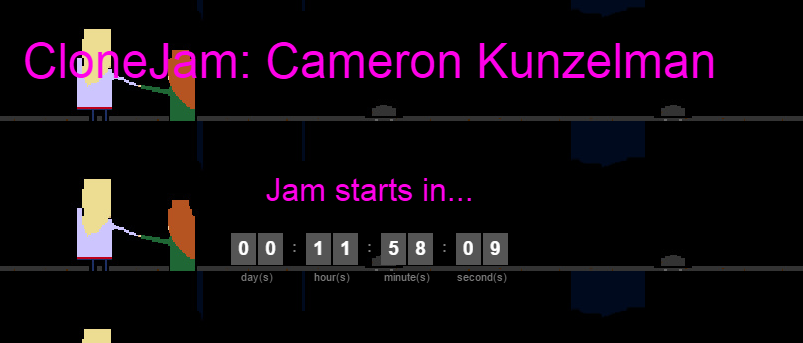
James Earl Cox has been running a series of game jams where the goal is to “clone” (in style, tone, etc) the games of independent developers. I feel super lucky and grateful that he has put me on that list with a group of people who are far more creative and clever than I ever hope to be (a lot of the time I feel less like a creator and more like a tinkerer. Everyone else on that list is a CREATIVE GIANT.)
In any case, #clonejamCMRN is going this weekend. You can sign up for it here. Apparently ludum dare is also going on, and there’s no reason that you can’t make a game that covers both bases (you should do that!)
In any case, I’m hyperinterested in anything that comes out of this jam. I will definitely make a post next week where I play and talk about the games that come out of this jam. Happy jamming!
Last night I finished the first book of The Lord of the Rings (meaning the first half of The Fellowship of the Ring), and I think this is a good moment for me to write down a couple thoughts that I’ve had about the book-as-a-book so far.

1.
Tolkien has strange instincts when it comes to writing dialogue for characters. His prose outside of speaking is generally good, and almost always interesting. Tolkien understood how myths functioned to make the world around a culture seem both vitally alive and historically dense, and so the moments when no one is speaking (or when we’re not being primed to listen to someone speaking) are the best.
What’s the problem with his dialogue? Tolkien is always writing to deliver information. He was clearly preoccupied with fleshing out his universe (or worldbuilding, as we’ve come to call it). The way he goes about this is to make every single conversation deliver some kind of information about the plot as well as the world at large. That’s successful if you’re concerned with building a world, but it isn’t successful if you want to avoid being incredibly boring. I’m reading the book each night before bed, and I’ve quite literally nodded off during longer sections of conversation about the history of a place, or Weathertop, or these fields, or the men of the Westernesse, or some song about history, or whatever.
A part of me wonders if Tolkien had been rendered immune to recognizing these problems through his work in the British academy. Gandalf holding court about the world feels a lot like someone talking about their research.
Another part of this, as I’ve spoken about on Twitter, is that The Lord of the Rings is a 19th century novel. There’s clearly a mythological bent–he’s creating a world that still contains wonder in a reaction to modernity–but it doesn’t ever hit a medieval-or-before tone. It thoroughly lands in the realm of Dickens–the huge cast of interrelated characters, their willingness to express their inner feelings in leaden monologues, and the inherent traits of the different peoples and locations. If Frodo rolled up on Old Hell Shaft, I wouldn’t be surprised.
2.
I’d never realized how pieced together Tolkien’s world is. After I read the section on Tom Bombadil, I went and did some research and realized that he existed far before Middle Earth did. His insertion into the plot as this hyperpowerful tree wrangler–a wyrd being inside of a plasticine doll body, for all intents and purposes–is such a strange move and doesn’t do much other than stall out Frodo and party for 80 pages (well, I guess that section makes sure that they are armed with knives).
An aside: I completely understand why the movie cut that section out completely.
I love the idea that Tolkien had thought so much about Tom Bombadil that he just had to insert him into The Lord of the Rings. My understanding of the worldbuilding of Tolkien from LotR fans and fandom itself over the years has been the Tolkien was a bit of a watchmaker–everything in the system he created can either be directly reckoned through charts, appendixes, and maps or it can be inferred from the substantial information that we do have about this world.
But right there, smack at the start of the story, Tolkien has a real “oh fuck it, I like this guy, he’s going in” bricolage moment. It’s wonderful.
Disability is everywhere in animal agriculture, and especially factory farms. The animals people eat are largely manufactured to be disabled. Animals are bred to have too much muscle for their bodies to hold, cows and chickens develop broken bones and osteoporosis from the overproduction of milk and eggs. Very often the very thing animals are bred for is, or leads to, disability. They are also disabled through mutilation, through abuse, and through dangerous and toxic environments. Even my disability, Arthrogryposis, is found on farms. In cows it’s known as “Curly Calf.”
Of course the first thing these issues bring up are ethical concerns over the use of animals for food. But they also raise a lot of other sorts of questions for both animal ethics and disability studies. For instance, what happens if we try to view disability in this context through a social model lens of disability? The social model understands disability largely as a consequence of discrimination and inaccessible environments. Well, there is no doubt that the environments these animals exist in disable them, even more than their physical impairments do. But simultaneously it is challenging to understand disability in this context as anything other than suffering, which is another thing that disability studies has really tried to theorize. So thinking about disability in animals raises important questions about what disability is—questions about such things as vulnerability, normalcy and suffering.
– Sunaura Taylor in interview with Erica Grossman in JCAS 12:2, Spring 2014
The prologue for The Lord of the Rings plays a little bit of catch-up. The world of the novel (and Tolkien’s universe more broadly) is so god damn complicated that the writer needs to perform a huge info dump before the book starts so you can actually figure out what the hell is going on.
The first section of the prologue is “Concerning Hobbits,” a completely unnecessary history of hobbits, where they came from, what they did one time, and the wars they did not fight in before taking over land that they did not win in a war.
What struck me when I was reading this section was the sense of “racial destiny” (I think this is a phrase that I first heard from Sparky Clarkson and thought about when I read Austin Walker’s piece on Shadow of Mordor). That is to say that the different races (or species, it is very unclear) in Middle Earth have some inherent differences between one another that are not cultural but rather ontological.
Tolkien writes of the hobbits:
They possessed from the first the art of disappearing swiftly and silently, when large folk whom they do not wish to meet come blundering by; and this art they have developed until to Men it may seem magical. But Hobbits have never, in fact, studied magic of any kind, and their elusiveness is due solely to a professional skill that heredity and practice, and a close friendship with the earth, have rendered inimitable by bigger and clumsier races. [10]
How do we reconcile “heredity” with “practice” in that selection? And what about the “friendship with the earth”? It’s worth remembering that Bilbo Baggins is chosen to go along with all those dwarves in The Hobbit because hobbits are a crafty, sneaky people; it’s also worth remembering that we’re told over and over again that hobbits hate doing anything that isn’t eating, sleeping, and generally chilling out with some pipe weed.
With that in mind, “practice” seems like an absurd addition to that section. There’s no practice involved. Rather, hobbits have a destiny co-constituted with “elusiveness;” the hobbits are racially destined to have certain skills that other, “clumsier races” cannot hope to have.
How could one change that destiny? Weirdly, in this prologue we are presented with some kind of strange Lamarckian evolution. There are subgroups of hobbits. One of the subgroups, the Fallohide hobbits, have spent a lot of time with elves, and so are fair-haired and good at singing. There are shorter, more brown-skinned hobbits called Harfoots, and they’ve been spending a lot of time with dwarves. For Tolkien, there’s a transitive property of species qualities–if you and I hang out long enough, my children might have hair like yours.
When I was reading this the other night I couldn’t get over it and I had to write something to get it out. More posts about The Lord of the Rings will probably follow in the future. It is going to take the next fifty years of my life to read this.

If you’re a frequent reader of this blog you know that I have a healthy fascination with Slavoj Žižek, the famed Slovenian philosopher whose work on Hegel, Lacan, and contemporary capitalism has spread across the world and the internet like wildfire over the past twenty years. You might also know that I love to make silly games.
I have combined both of those interests into my new game Welcome To the Dress-Up Of the Real. Drawn by amazing artist James Wragg and scored by Chris Hunt, it is a game about dressing up Slavoj Žižek. Did you know that he loves movies? This game allows you to see how much he really loves them.
You dress him up in clothes from movies.
Additional infos:
1. You can click this link to go to an itch.io page where you can pay what you want for a desktop copy of the game for PC, Mac, and Linux. This will help us to make more weird stuff like this in the future.
2. Clicking the SAVE button in the top right corner will give you a nice, clean PNG of whatever clothes arrangement you have. Right now this works best in Chrome.
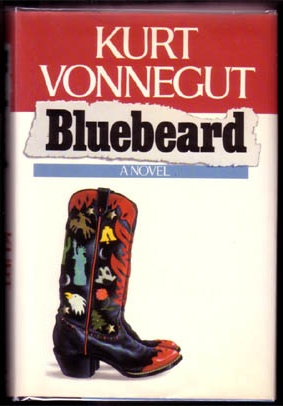
I first read Kurt Vonnegut’s Bluebeard in middle school when I ripped through all of his books that I could get my hands on in a whirlwind from Hocus Pocus to Slapstick to Deadeye Dick and beyond. I found them in rural bookstores, at flea markets, at “trade day,” and they always delivered something new and weird to me. You’ll notice that I didn’t mention his supposed masterworks, Cat’s Cradle and Slaughterhouse Five, in that list, and that’s because I didn’t read them until a few years later. My introduction to Vonnegut were what are considered to be the misfires or the duds.
I picked up Bluebeard on a whim. I remembered the plot–old Armenian man tells his life before revealing his masterwork–but not the specifics, and so I grabbed it off the shelf.
The novel tells the story of Rabo Karebekian, the son of Armenian immigrants. His parents survived a genocide before moving to the United States, and they press the American dream into Rabo at every opportunity. To pursue this dream, his sends a letter to Dan Gregory, a fictional version of American representational masters like Norman Rockwell. Through this letter, Rabo enters into a friendship with Gregory’s wife Marilee. He moves to New York, begins to learn from Gregory, and eventually goes to and returns from the second World War. Postwar, he becomes an important member in the Abstract Expressionist school of painters, alongside real painter Jackson Pollock and fictional painter Terry Kitchen. Time goes on. These painters die off, often through suicide. Eventually, Rabo is an old man with a home that contains the most extensive and expensive collection of Abstract Expressionist paintings in the world. His wife passes away, and out of grief he paints a massive scene of the final moments of World War II–a giant valley full of people released from camps, armies, and the European countryside. Then, at the behest of a widow from down the beach named Circe Berman, he begins to write his autobiography.
That’s an incredibly long summary, but it gives a sense of how the novel sprawls through time, location, and medium. It is a novel about Turkey, the United States, Europe, painting, the genre of autobiography, and the various artistic and cultural revolutions of the 20th century. It just keeps going and even though it ends after the big reveal of Rabo’s masterpiece, it doesn’t really end. It merely stops.
The reason I’m writing this piece about the novel is that I spent the entire time I was reading it awe-struck by the intimacy of it all. Vonnegut’s strength as a writer was in his ironic distance from a horrible subjects, a kind of sing-song affect to the most awful things that humans can do to themselves and others. That same kind of sardonic posture is definitely in Bluebeard, but it also drops away in strange moments, giving us a sincerity in Rabo Karabekian that is missing from a lot of Vonnegut protagonists, especially when he’s thinking about his friend Terry Kitchen.
There’s a tenderness to Rabo’s writing about Kitchen, and despite the fact that I came away from the novel feeling this so strongly, I only marked two places in the novel for reference. The first:
What he would do to his father six years later, in the front yard of Kitchen’s shack about six miles from here, was take a shot at him with a pistol. Kitchen was drunk then, as he often was, and his father had come for the umpteenth time to beg him to get treatment for his alcoholism. It can never be proved, but that shot had to be intended as a gesture.
When Kitchen saw that he had actually gunned down his father, with a bullet in the should, it turned out, nothing would do but that Kitchen put the pistol barrel in his own mouth and kill himself.
It was an accident.
And much earlier in the novel:
Birth and death were even on that old piece of beaverboard Terry Kitchen sprayed seemingly at random so long ago. I don’t know how he got them in there, and neither did he.
The work of the Abstract Expressionists, or the work of their work, is at the heart of Bluebeard. In some sense, they were attempting to deal with a massive wound, a schism and time and experience ripped in the fabric of the social by two back-to-back world wars. Vonnegut is attempting to capture this general affect through Rabo’s descriptions of his painterly friends, especially Terry Kitchen. It isn’t a leap to read the passages above as particular kinds of metaphors–a man who wounds his father and purposefully self-destructs because of it, but not before capturing a little bit of life and death on a cold canvas.
Driving this home even further is Rabo’s own work, created with colored tape and a paint called Sateen Dura-Luxe, which eventually falls off of any canvas it is applied to. Thus, halfway through his career, Rabo’s works all fall apart, rendering him into a mere footnote in art history. More interesting than that very Vonnegut scenario is how those initial paintings are described–fields of color with the colored tape arranged on them. Two-thirds of the way through the novel, the narrator lets us in on a secret: while the tape was supposed to be abstract, it really was not. Each strip was meant to represent a soul, and each painting was a story.
This drives the postwar narrative home even more explicitly: the field of color, of affect, that these souls rested on literally disintegrated. There is no ground, and disenfranchised, they fell to the ground as discarded trash. Terribly disconcerting as a metaphor, for sure.
Bluebeard indirectly sums itself up through a minor character–a novelist named Paul Slazinger. He experiences a mental breakdown during the latter quarter of the novel and largely disappears from the proceedings, but not before elucidating his theory of revolution in a book titled The Only Way to Have a Successful Revolution in Any Field of Human Activity. We’re not granted any insight into this particular volume, but there’s intimations into what Slazinger thinks is necessary for those revolutions to take hold:
Slazinger claims to have learned from history that most people cannot open their minds to new ideas unless a mind-opening team with a peculiar membership goes to work on them Otherwise, life will go on exactly as before, no matter how painful, unrealistic, unjust, ludicrous, or downright dumb that life may be.
Although this is pretty strange for Vonnegut, Slazinger’s “successful revolution” requires a metaphysical turn. The “mind-opening team” that we’re supposed to identify in the text is the Abstract Expressionists themselves. Inside of that team, we can most easily identify with Rabo Karebekian and Terry Kitchen. The only one we get any kind of interiority of is Rabo, of course.
So, as quickly as possible, the two metaphysical statements that structured the Abstract Expressionists in Bluebeard.
The first is Karebekian’s idea of the soul in his paintings. These random assortments of tape and paint were stories, and those stories have meaning for an observer, but they ultimately degrade into nothing. In this model, the “mind-operating team” can show you the slow slipping away of the universe. There are things, and those things are beautiful for a while, but nothing can stay.
The second is Terry Kitchen’s absolute ungrounded being. He sprays paint on canvas and he drinks. There is no rhyme or reason to it. There are no stories. There’s nothing beautiful right beyond the surface if you would only look for it, and because of that it is eternal. The roiling void will make an infinite number of Terry Kitchen; every Rabo Karebekian will be ground to dust by time.
Paul Slazinger again:
“And what is literature, Rabo,” he said, “but an insider’s newsletter about affairs relating to molecules, of no importance to anything in the universe but a few molecules who have a disease called ‘thought.’ “
Terry Kitchen:
It was an accident.
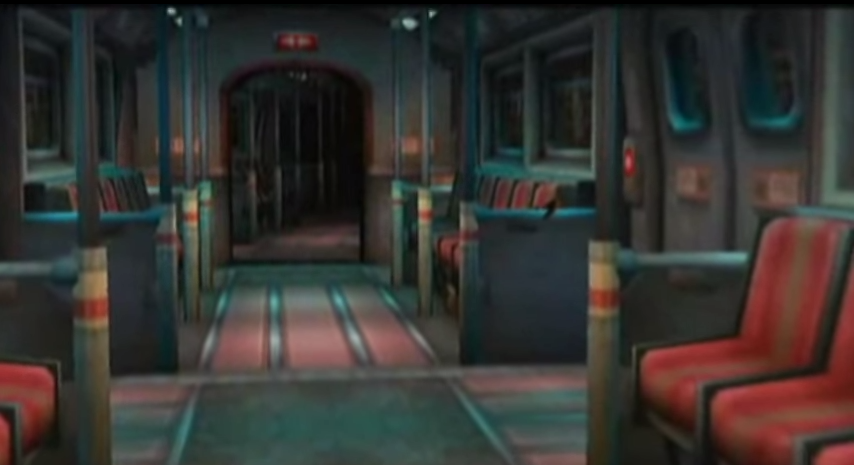
A little while ago I wrote about Timesplitters, the Playstation heir to the design minds and concepts that delivered the ultimate party game of the end of history (the 1990s), Goldeneye. Now, based on some voting from my Patreon users, I’m taking you down the garden path into the world of Timesplitters 2.
1.
Timesplitters 2 begins in medias res, in a moment critical to the Timesplitters War. The Timesplitters, a strange species of monster, travel back and forth in time to eliminate humans and disrupt critical moments. They find crucial, small achievements and make the bad guys win, eliminating their enemies in the future. They decimate humans by controlling the time stream, and so we see two science fiction heroes coming to save the day. They take over a time portal. A bald man jumps into a big blue circle. We’re off into a game where you appear in a time period, taking the body of a “universal hero” sort, and you achieve some provincial mission of theirs before retrieving the time crystal and hopping on to the next time period.
2. Siberia 1990
In stark contrast to Timesplitters, there is a cinematic opening to each of the levels in T2. You get a small bit of plot, a little setup that bumps you on down the road in order to help you understand why you’re living this strange life. In Siberia, you merely pop out of a portal in a new body. Time travel involves possession.
Each level of the game is focused on a particular kind of story, with the idea that all of these kinds of stories are synthesized into the human experience. Thus, Siberia in 1990 is a strange collection of tropes that lean into zombie films, the mysteries of Russia, The Thing, and the HIND from Metal Gear Solid. You experience all of this in a first person shooter frame. Timesplitters 2 is a weird, experimental game.
3. Chicago 1932
You take to the streets of Chicago and you walk through those streets listening for phones to ring. Gangsters attack you. Informants scuttle in front of you, protected by your bullets, before they hide inside of the newsstand. Every junction is a crossroads that looks like something out of a Tim Burton film. Everyone looks too chunky, and when the speakeasy opens to let you into the backroom club, you murder the villain you’ve been after the whole time. With very few exceptions, Chicago 1932 works the same as every other level in T2. It’s structure reigns monolithic throughout the game, but that structure is a wonderful container that gets filled with a lot of strange content. Siberia 1990 foregrounded the synthetic side of T2, and Chicago 1932 presents us with the dialectical opposite. Siberia was chaotic; Chicago is ordered.
4. Notre Dame 1895
“The rivermen talk of a crazed madman leading a cult of undead followers,” the intro says, and we come to life in the basement of the cathedral with the played mission of rescuing some maidens tied up around the building. Sometimes zombies will spawn in the corners of your vision and make their way directly for the maidens, killing them before you even reach them. If the maidens die, the level doesn’t automatically fail. It just tells you that you’ve failed your mission and cannot proceed. You could live in that basement with all those corpses forever if you wanted.
5. Cybertokyo 2019
This is the strangest mission in Timesplitters 2. You track a hacker through cyberstreets and follow her into a cybervault before disabling a machine that’s converting a Timesplitter into some kind of strange cyberSplitter. The wonder of the level is based on the tracking itself — you have to keep her in sight while peeking around corners. You have to avoid cameras, avoid breaking windows, and make sure that there’s no one around to give you up. I don’t often see it in lists of “noncombat” first-person shooter levels (because there’s combat, but only at the end) but I strongly suggest that people take a look at it.

6. Little Prospect 1853
Two beautiful things that need to be replicated from this level of the game:
– Playing this level in co-op story mode means that the second player starts in a jail cell. They need to be rescued by the other player, who has to player the first quarter of the level solo. I’ve never encountered another game that tries this.
– To break the second character out of jail, you need to pick up a barrel of gunpowder and draw a line between an explosive cart and a lantern. Then you use your six shooter to knock the lantern off the wall in order to set the trail on fire which blows up the cart. This mechanic is never used again in the entire game, and there are no hints to help you know how to solve this puzzle. It is one of the most brilliant and infuriating things I’ve ever seen in a game.
7. Atom Smasher 1972
This is a James Bond level. I hate it. Its only redeeming quality is that you can fail the mission in the last 30 seconds by aggressively killing the last couple enemies of the level. You see, there’s a mechanic that requires you to save some nerdy scientists so that they will disarm some bombs for you. The last bomb has two separate scientists standing around to disarm it, but if you kill the last couple enemies in the level with grenades, you can accidentally murder those scientists too. Cue a restart and spending 20 minutes running through the level again. Do that, you know, three separate times.
8. Aztec Ruins 1920
The first enemy of note in this level is a wood golem that cannot be harmed with any of your traditional weapons. It chases you around until you figure out that you need to equip a crossbow and light its tip on a wall sconce. Then you shoot the golem and it dies, screaming. I have a lot of complicated emotions about all of this.
9. Spacestation 2401
It ends here, with the death of a woman and a difficult time trial to escape the space station. Everything blows up. The time crystals are reclaimed from the Timesplitters and we hope that things will be okay. You solves several small puzzles, you shoot a lot of enemies, and you reach a goal on time. You travel through linear time; most levels end with you finding a time portal and traveling back to the mission selection screen. You hop out of sequence in order to repeat the ludic process over again. The final level presents you with an authentic out–it isn’t about doing all of this again but rather making sure that you don’t even have to. The only way to escape is to blow it all up.
TVWhat makes the project of the nomadic programmatic, or utopian?
Rosi Braidotti: Let’s call it programmatic; maybe that’s a better term than utopian here. I call to actively embrace this ethic of affirmation. We need to borrow the energy from the future to overturn the conditions of the present. It’s called love of the world. We do it all the time, not perhaps in philosophy but in our daily lives. Picture what you don’t have yet; anticipate what we want to become. We need to empower people to will, to want, to desire, a different world, to extract – to reterritorialize, indeed – from the misery of the present joyful, positive, affirmative relations and practices. Ethics will guide affirmative politics.
For some reason I forgot to post this over here, but Connor Sherlock and I recently released a Dear Esther-like horror game about temporality, longing, and loss called Marginalia. Also, some real creepy feelings (but no jump scares!)
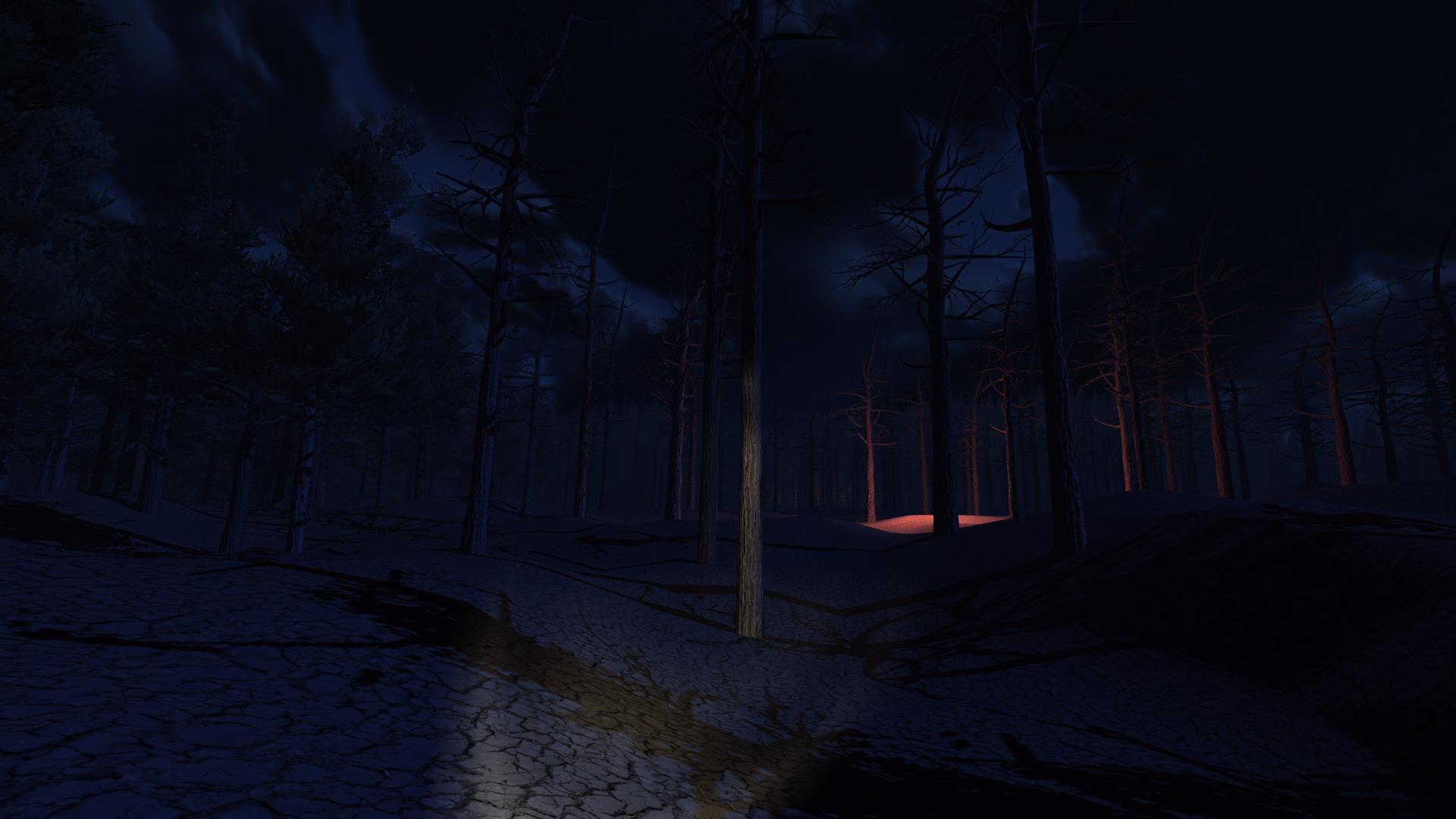
There are two different “plots” that you can follow, and I wrote it in a way that (I think) really delivers a special kind of world. I hope that we can return to the world of Kestlebrook, or at least of these characters, in the future.
You can purchase Marginalia for PC, Mac, and Linux on itch.io for $5.
 this cage is worms