
One Finger Death Punch is a weird little game that I ended up enjoying a lot more than I thought I would, and this video is all about explaining the enjoyment I get out of it.
One Finger Death Punch is a weird little game that I ended up enjoying a lot more than I thought I would, and this video is all about explaining the enjoyment I get out of it.

You might remember the standing offer that I have had going for a few years: if you buy a game for me on Steam, I will play it for at least an hour and then write something about it. You can see some of the previous pieces of writing that have come from that process here.
In the previous rules, there were are a lot of explicit notes about what that process looked like. It was going to be playing with the intent to complete alongside the explicit notion that I would write as opposed to, well, do something in any other medium. As time has shown, that’s mega hard, especially within the bounds of games that people have chosen to give me for the previously-titled You Buy It, I Write It.
I really enjoy the mystery of the process, and I’ve slowly-but-surely working my way through the list that has continually accrued over the past couple years.
◊
So, with all of that said, some new rules for the future:
1. If you purchase a game for me on Steam, itch.io, Humble, GOG, or any other store from which you can send me a link, I will play it.
2. I will put at least one hour into the game. If the game is an interesting object to me, I will make a good-faith effort to complete it or at least play more than that hour.
3. I will write at least 500 words in essay form about the game or I will make video about it and put it on my YouTube page.
◊
These new rules are really just a small shift from the previous rules, but they give me some maneuverability when it comes to the writing (some games just don’t produce anything at all for me) and explicitly mentions the video.
You can read some of the writing I have done in the You Buy It, I Play It series here.
You can see some of the videos I have made in the You Buy It, I Play It series here.
For any information, please contact me on Twitter.
My Steam id is “kunzelman”.

I write an article called “Sportsman of the Year” for Paste, and I recently played MLB 15: The Show and wrote about it. Read it here.
I sat down over a few nights last week and destressed by playing through a large chunk of Rollercoaster Tycoon, and it’s been a really great experience. The first level, Forest Frontiers, was a real doozy since I haven’t played this game in literal years, but you can watch the very chill videos and listen/watch me learn how to make the rollercoasters again.
There’s something really beautiful about this game, and I can’t quite put my finger. You have to be on top of the numbers of the game constantly, but it also kind of just moves forward at a direct pace. You can only react and build in response to the unnameable forces that are operating on your park, and I think that strangeness from on high to be really engaging.
It’s the time of year when you’re panicking because you haven’t gotten a gift for that special someone in your life, and I’m here to tell you about five different books that you can buy for someone to make them have good/bad feelings while you have a sense of safety implanted into your being from having done a good job.

This book is the most affecting thing that I have read in recent memory. Zambreno writes about the women of literary Modernism within the frame of her own life: like them, she follows her husband when he gets a job. She performs a literary genealogy of the accomplishments of these women and paints a very powerful picture of the structures of access available for both her as the “wife” of a college librarian and the women of Modernism as “wives” of famous men. It’s a haunting book, and the amount that Zambreno knows about these figures she is writing about is staggering. I read 90% of it on a plane to Tucson, and I immediately went to a family-friendly bar and got a little drunk while finishing it up. It’s that kind of book.
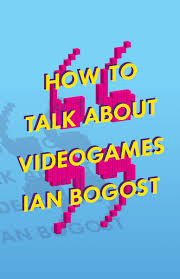
How To Talk About Videogames by Ian Bogost
This is a little bit of a greatest hits collection of Bogost’s most recent online magazine work, and for that reason it’s a great choice for a gift for the person in your life who kind of cares about videogames but not enough to read a book with faux pixel art on the cover. It’s a solid look at the bounds of videogames in our contemporary period, and I actually see this book functioning as a kind of time capsule: Bogost accurately captures what big ole capital letter VIDEO GAMES are right now and that’s a valuable thing.
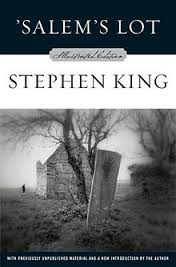
The last time I read this book I was in the fourth grade, and I read it over and over again while thinking about how fucking scary these vampires are. A million years later, reading it again, I can confirm: these vampires are scary. It’s a well-crafted novel, and I don’t think King has ever quite gotten the mixture of “evil figure in a town” this perfectly measured out again. Seriously, buy this book for someone. It’s a rad book.

Campus Sex, Campus Security by Jennifer Doyle
I’m only halfway through this book, but I can already say that it’s one of the best things I’ve read this year. It’s a difficult subject — Title IX, the securitization of the college campus, and the shifting walls of blame around women and sexual violence. Doyle doesn’t try to cut the knot with a simple solution. Instead, she communicates the shape of all of these things in snippets that outline the violence of an institution that manages and bullies its subjects as a part of its normal operations. The book is unflinching in its discussion of all the possible topics it could cover, so let the person you get this for know before going in.

Annie Sullivan and the Trials of Helen Keller by Joseph Lambert
I read this comic when it came back, and it’s always stuck in my head. It’s just a pretty straight-up telling of the life of Annie Sullivan and her relationship with Helen Keller. It’s a powerful visual representation of what that sense experience could be like (not sure how you could really know without knowing), and I think it’s a comic that you could comfortably get for a teen that might get them to read a damn book every now and again. These millennials with their iPads and their Marilyn Mansons I mean my god.
I’m making a solid effort at trying to work through the backlog I have of You Buy It, I Play It games, and this one is a real funtimes experience. Marlow Briggs is a weird mashup of something like exploitation cinema and the God of War games, and I can’t say that I hated playing through the first little bit of it.
As you can see in the video, I have some real nostalgia for a certain kind of shooter mechanic, and I discovered a yearning for turret shooting that I would never have imagined that I have. The more you know!

1.
“Rumour” is predicated on Chlöe Howl’s gaze returning back to us. I don’t mean this in a familiar register — this isn’t warmed over Laura Mulvey with a reflective moment stapled on. There might be fertile fields here to understand how that look is agential, important, or whatever liberatory quality we want to claim that it has. What strikes me about this gaze isn’t its performance of power, but that it is a pure surface.

2.
In 2013, I wrote this about rapper phenomenon RiFF RAFF:
Riff Raff’s body is pure surface; it is pure aesthetics. He stands in front of us. He dances. His famous “wardrobe changes” happen in front of us, in split seconds. Riff Raff takes on the persona of a biker. He takes on the persona of a basketball player. He takes on the persona of someone who actually wears a shirt. Riff Raff adapts and changes; he doesn’t take on those roles–he is them all, concurrently. Each of them is the “real” Riff Raff. It isn’t a coincidence that he repeatedly claims that he could have played for the Lakers, or the Seahawks, or any other sports team. Riff Raff is pure potential.
Rethinking the claims here, we can summarize that quotation with something more simple: Riff Raff is presenting us with a Deleuzian virtuality. He is literally pure potential, able to do or become anything in a contingency with what has been actualized in the world with, and around, him.

3.
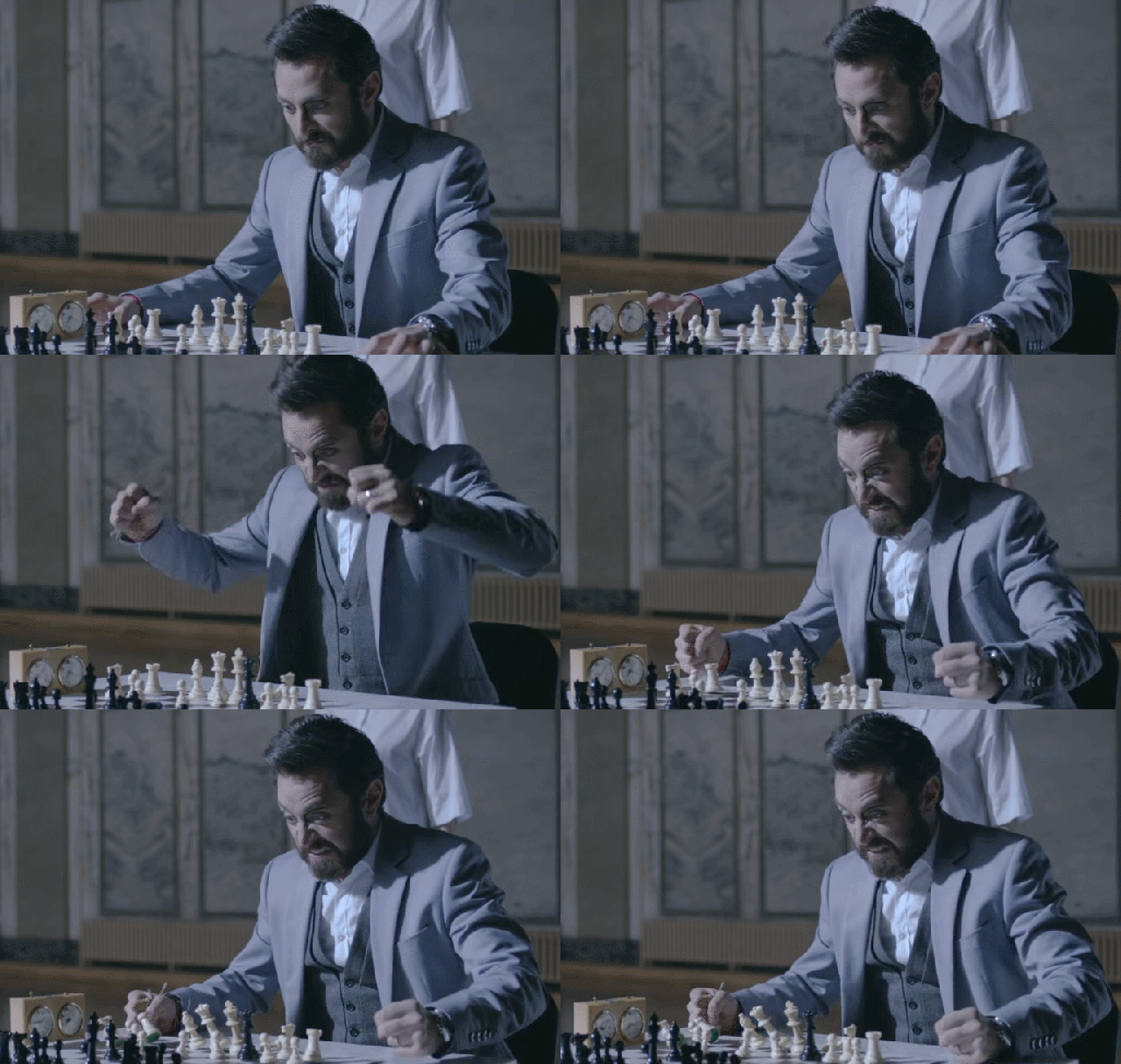
“Rumour” is the visual opposite of “Neon Freedom.” The sole narrative environment of the music video is a grand, British-esque hall. “Rumour” has baroque and historical where “Neon Freedom” was violently decontextual, and we can imagine some real Hogwarts shit going down in the “Rumour” space (but the weird old man on the stage is a chessmaster instead of a wizard). There’s some bondage going on, perhaps allegorically in a world where you want to read allegories, and we see unbound chess players winning games as tied and gagged losers are taken away in protest.

Of course, in the spirit of the radical rock n roll difference, Chlöe Howl shows up to mess this whole business up. She plays chess, laughing and performing indifference, and the establishment can’t handle it. The chessmasters become infuriated, lose, and then are hauled away by their own system. It’s the perfect dream of the liberal youth. Hope, change, and things’ll be better when I’m in charge, man.
4.
Chlöe Howl is always looking at the camera in a tableau. She gazes, and in gazing in presented as part of an apparatus that is looking directly at us.

While it seems like the intent here is to create a forceful gaze that decenters us, or decenters the ability to merely look at persons like objects, my experience is that it does something directly opposite of that: Howl becomes part of a landscape. The gaze is much like an apple staring back at me from a fruit bowl, unable to differentiate itself from the mass despite clearly being separate from it. Howl’s persona here is eerily similar to Riff Raff’s in the “Neon Freedom” video, despite the world around her being quite different. Relationally, she is defined through the surface that she is a part of–Riff Raff was amongst a play of surfaces; she is merely the metasurface, part and parcel with all other objects.
Despite seeming more actualized, more real, than Riff Raff’s ephemeral surface-being, Howl is further into the virtual. Part of everything, pure potential to cause things to happen, she recedes into the landscape painting of existence.

There’s spoilers for Metal Gear Solid V: The Phantom Pain in this article. Sorry.
In nature there is no such thing as boundless slaughter, there is always an end to it. But you, Snake, are different. The paths you walk on have no end, each step you take is paved with the corpses of your enemies. Their spirits will haunt you forever. You shall have no peace.
– Vulcan Raven, Metal Gear Solid

Huey Emmerich is screaming at the Diamond Dogs as they put him on trial. He’s yelling that he’s one of them. We know that Kazuhira Miller and Revolver Ocelot are torturers, murderers, wet work mercenaries for the highest bidder, international operators beyond the law, and every kind of Soldier of Fortune fantasy that one could have during the height of the Reagan era. They’re bad people. They’re our heroes. Huey Emmerich is screaming that he’s one of them, but that doesn’t do him any favors.
The Metal Gear Solid games used to be separated up into screens. They had doors in and doors out, and whatever happened in the middle added up to something like a puzzle that you had to solve with stealth, gadgets, or guns. As the games went on, those screens got larger, and you had more room to sneak or shoot around enemies with AI routines that became more complex as the series proceeded.
The open world of Metal Gear Solid V drops the puzzle screen structure, and it gives us what every gamer wants these days. It’s an open world where you can do anything you want. Following the pattern of Grand Theft Auto V or Far Cry 4, you can do whatever you want in this open world. You are beyond the law, fully immersed in an experience where doing the goofiest things the simulation will allow while also pulling off lethal headshots on mercenaries is the name of the game. You can look at YouTube and see thousands of hours of it if you happen to get bored of it yourself.
Unbounded from the past screen-based structures of the designer-god, you can do whatever the hell you want in war-torn countries during their tailspin out of colonial control. You’ve been given the playground you’ve always wanted. Unshackled by morality, you can live life the way you see fit. Watch it happen in slow motion. You’re one of the good guys.
There’s a lot of rage in Metal Gear Solid V. Volgin, resurrected from the grave that Big Boss put him in, is controlled by a literal child. He takes everything that can be thrown at him (bullets, an RPG rocket, tank shell, more) and throws it right back out in a horrifying blast of fire. The child manipulates him like a puppet. The Third Boy, young Psycho Mantis, the pathos-spewing psychic literally scarred by the oppressive world outside his own head, directs Volgin around. We never find out quite how direct that control is.
Is he merely a puppet controlled by a faceless child?
The Metal Gear games play in a middle space of showing you everything and hiding it all. Is there any other series that has inspired critics, forumgoers, and people at bars to attempt to clarify and elucidate things that are directly told to them in the game? I can’t tell you how many criticism pieces I have read about the series that have literally just stated what happened, in what order, and what the game says that those things mean. The game is complex enough that the act of just laying it all out feels like a challenge, but it draws us into a necessary conclusion: the game does the work. What’s the point of doing critical work on an object that does the work for you? Worse yet, what does it mean when the thing does the work better than you could in the first place?
Hideo Kojima, David Cronenberg, Michael Bay.
This game wants to knit the series up, and it’s been a terminal problem that nearly every game in the series has done the work of knitting it up. Kojima’s team always proliferates threads. The knitting never goes quite right. An answer never quite feels like a proper one.
After you wade through hell and complete the game, you’re presented with an audio tape of “The Truth.” It features one of the primary movers of the series, Major Zero, talking to various characters from the series’ history. You figure out their place, or you figure it out a little better, and that’s it.
It feels better that it’s an audio log. There’s no room for artifice here, or at least Kojima and his team and much worse at being artful within the pure audio format. The big budget filmmaking mimicry and the slick camera movement doesn’t translate to a text-based locked room scenario, and it feels more real because of it. You’re being given The Truth. Everyone is hooked into everyone else. In the future, forty years from now, the systems that Zero, Ocelot, Big Boss, and Kaz put into motion will have lives of their own, and Ocelot’s efforts to interpret his mother’s dying wishes in relation to those systems with turn him into a worse villain than his is already. Or we’ll treat him like the villain he already is.
It feels like things are more wrapped up this time.
Quiet is the most competently plotted and written character in the Metal Gear Solid series. It’s purely an effect of how she functions in the plot. She cannot speak English for fear of infecting everyone. She sacrifices herself. She puts herself in harm’s way for Big Boss. She understands the global stakes of the conflicts at hand, and she makes a choice not to embrace the Diamond Dogs’ military apparatus, but instead to care about Big Boss as a person.
There’s an erotic tension between Big Boss, Kaz, and Ocelot. The latter two are constantly at odds, and in the long arc of the series the latter has the former killed, but you feel that it’s almost structured as a jealous dyad. They need the Big Boss’s attention because that attention gives them access to the dreams of the dead Boss–they can build a new world if only they have the right amount of super soldier muscle.
It seems like that’s the story for Big Boss. He’s a vehicle for a verbal meme, a dying wish, and Quiet is the only person who cannot speak her interpretation of that meme. Her story does not need him, and yet she chooses to be involved. Short of the Boss, she might be the only person who generally cares for the man named John in his entire life after the Virtuous Mission.
I’ll defer to Leigh Alexander for the comprehensive read.

Brendan Keogh highlights “magical militarism” in the game. He explains that the game infuses a weird occultism of psychics, pseudobiological explanations, and military logistic implementation in a weird synthesis, and that it might be a cornerstone of the series.
On the other end, I might argue that the games are meant to show that the military form can adapt to anything. The very way that an atom bomb functions is basically magical to the average person, doubly so for the people alive when it was being developed, and the magical quality of the series gestures at just that thing. We live in a world of escalating technology sometimes indistinguishable from magic, and so much of it is geared at killing us. The United States can pinpoint the location of people from around the world, and it’s mostly for extralegally killing them from a mile above the surface of the planet.
CIA tests, Nazi occultism, and chemical investigation into the structure of human bodies. The military apparatus will eat anything to produce death, and if there was a psychic child in a mask that could control a giant weapons platform, you can be damned certain that we’d police the world with it.
The Mother Base gets blown up? You make a new one. The ideology of where you are doesn’t suit you? You make a different kind of heaven. The government you work for is escalating the world toward death? You deescalate the conflict with trickery. Can’t recreate a supersoldier? Generate a system for generating supersoldiers. Can’t solve the conflicts of the world? Override it all.
Metal Gear Solid has always been about management, or managing what appears to be unmanageable, and that stretches from spreadsheets to nanomachines to language itself. It’s about attempting to control things on your own terms before things begin to control themselves, and the long 20th century of the games suggests that the things of the world, the networks and information systems, have a much easier time of control than even the most super of soldiers.
If we wrangle it, if we control it, if we set it up the way we want to, what does that do to us? Kazuhira Miller says a lot of horrible words, but they’re words that could have been put in the mouths of lots of different characters in the series. They aren’t only his.
“I chose the language of gratitude instead, and go back to silence.”
The things that are different are merely parasitical developments from other massive first-person shooter games of the contemporary period. You can do some boosting, which feels much likeAdvanced Warfare’s exo suit boosting. You can jump and climb onto something, which adds a bit more strategy to the experience of play. You can now aim down your sights with all weapons, which the game calls Smart-linking for some reason, but if you get shot you’re pulled out of it. Those mechanical changes, as big as they are, are merely changes that bring this game in line with another franchise. We’re barrelling toward some kind of ur-shooter with these franchises, but the decision to add these particular mechanics to Halo feels almost cynical. There has always been something charming about a military-affiliated Master Chief who just runs around and shoots things like he’s living in Unreal Tournament world, and the addition of Call of Duty-style “tactical combat” invites a tone that the game neither wants nor can support.
I recently finished Gerald Bruns’ On Ceasing To Be Human, and I just wanted to jot down a few notes about it. I’m going to put those notes here because why not?!
1. Ceasing is a wonderful summation of a particular strain of posthuman gesturing coming out of the 20th century. It’s a theory Greatest Hits album when it comes to discussing the big theorists of the last hundred years and their relation to thinking about the limits of the human. Bataille, Blanchot, Foucault, Agamben, Deleuze, Guattari, Derrida, Levinas, and more make appearances both minute and extended in this volume, and Bruns has a way of condensing each of their thoughts on the delimited human down to a couple sentences. It could be a real nightmare scenario, but it isn’t, and we’re given a meaty gloss of lots of different viewpoints on what happens.
2. My interest in what has been (was?) called “the nonhuman turn” is ethical. I’m interested in how to construct ethical systems that resist hierarchies between humans, animals, and machines while also recognizing differences that make a difference between the seemingly-infinite variations between those registers (and differences within those broad categories such as Sunaura Taylor’s complications of human/animal and Alexander Weheliye’s reconfiguration of human life).
Bruns does a beautiful reading of Derrida’s The Animal That Therefore I Am that doesn’t deliver much beyond the essay. However, the reading is so concise and excellent at drawing out the salient points of the essay, and that concision really helps to elaborate the ethical paradigm that Derrida is trying to elucidate in explaining his cute little (very real) cat that see him naked. There’s something about the way that Bruns collapses all of the big, difficult theory into an understandable chunk that needs to be celebrated, and the fact that he’s not having to “file the edges off” in order to make it concise is laudable. The concision of the point to get to ethics is helpful, and it makes me think about concision-as-ethics.
Yes, Derrida wrote about his cat seeing him naked. It’s worth reading the book.
3. It makes me feel good to see Bataille and Blanchot showing up in the “nonhuman turn” literature, especially because I feel that Colette Peignot, whose work Bataille was riffing on for much of The Accursed Share and his other “big” work, gets very close to a comprehensive description of what is occurring on a physical level when humans and nonhuman-yet-agential objects become proximal. Peignot has a wonderful prose poem/essay about (or I read it to be about) the agency of a church fire and how it has a particular kind of effect on a group of people. More and more I think about assemblages (or actor-networks) as also needing a complementary theory of competing sovereignty, in which objects are often at odds with each other over which has the most impact over a particular local ecosystem (or, my preferred, body). To get there requires a heavy dose of Peignot with Bataille’s variations, and Bruns does some of that here (but only through the latter with not mention of her, of course, like so many others have done).
 this cage is worms