Return to Skyrim: Opening Through Bleak Falls Barrow

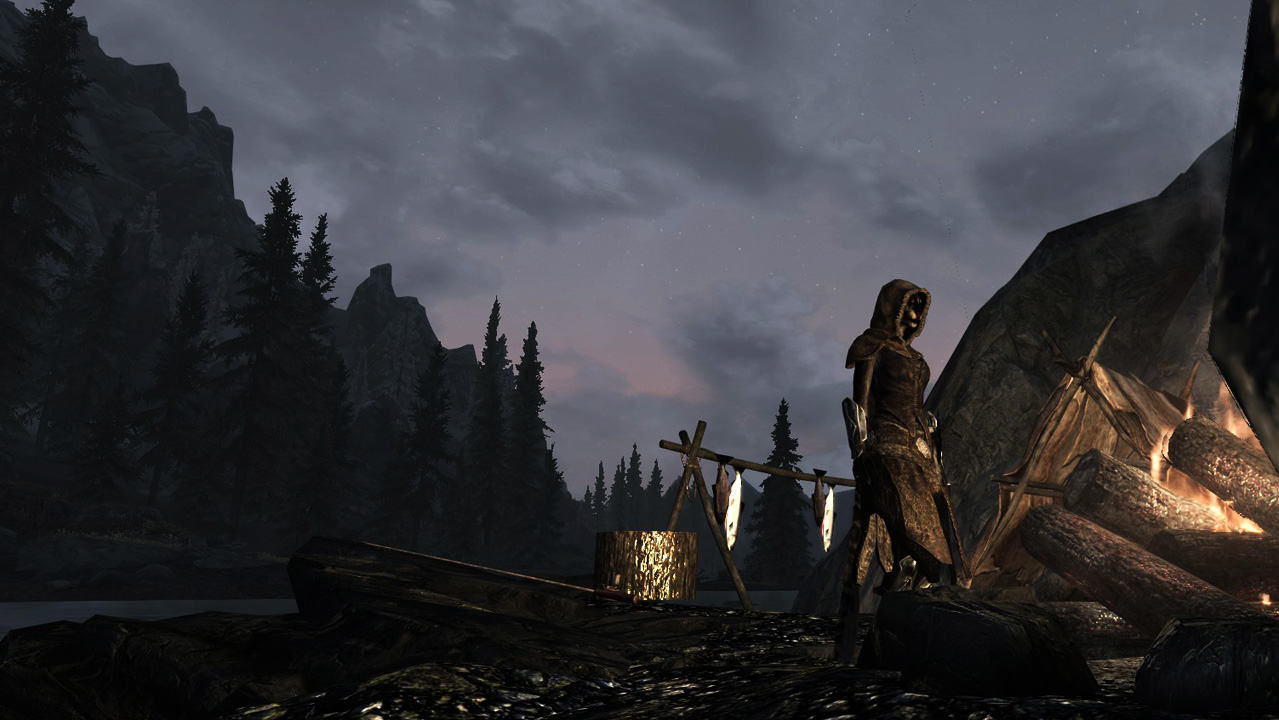
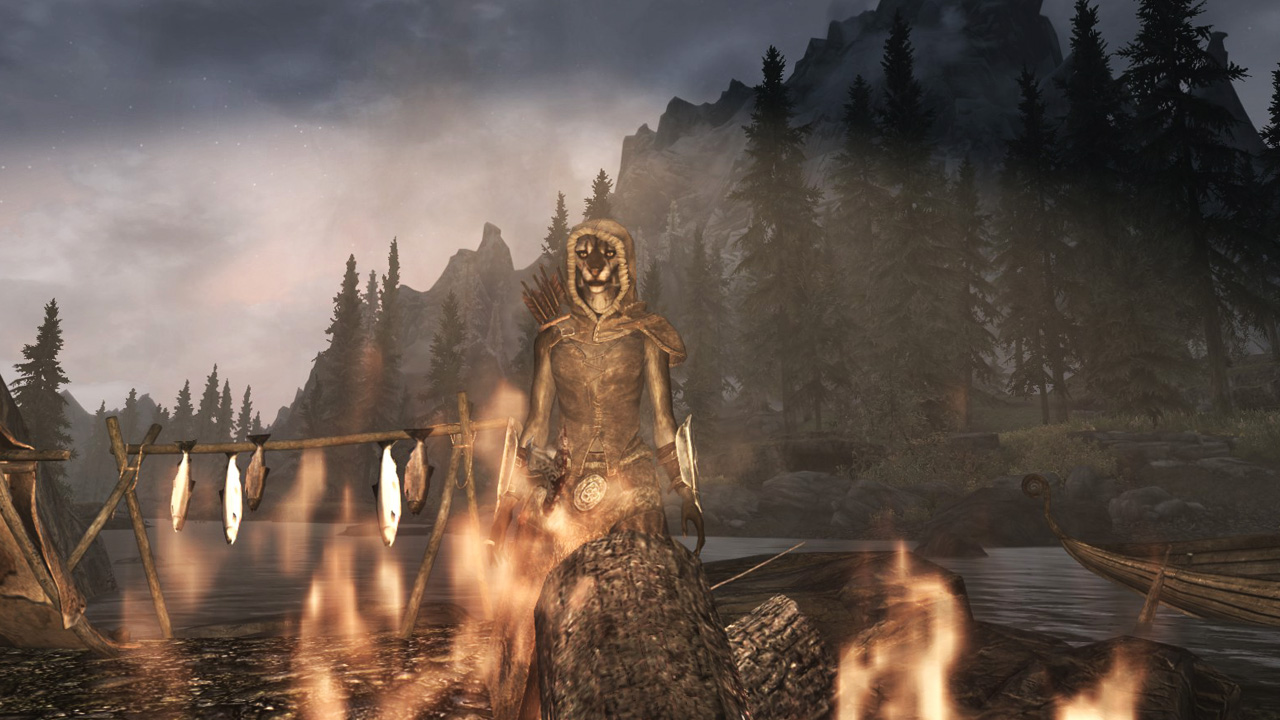
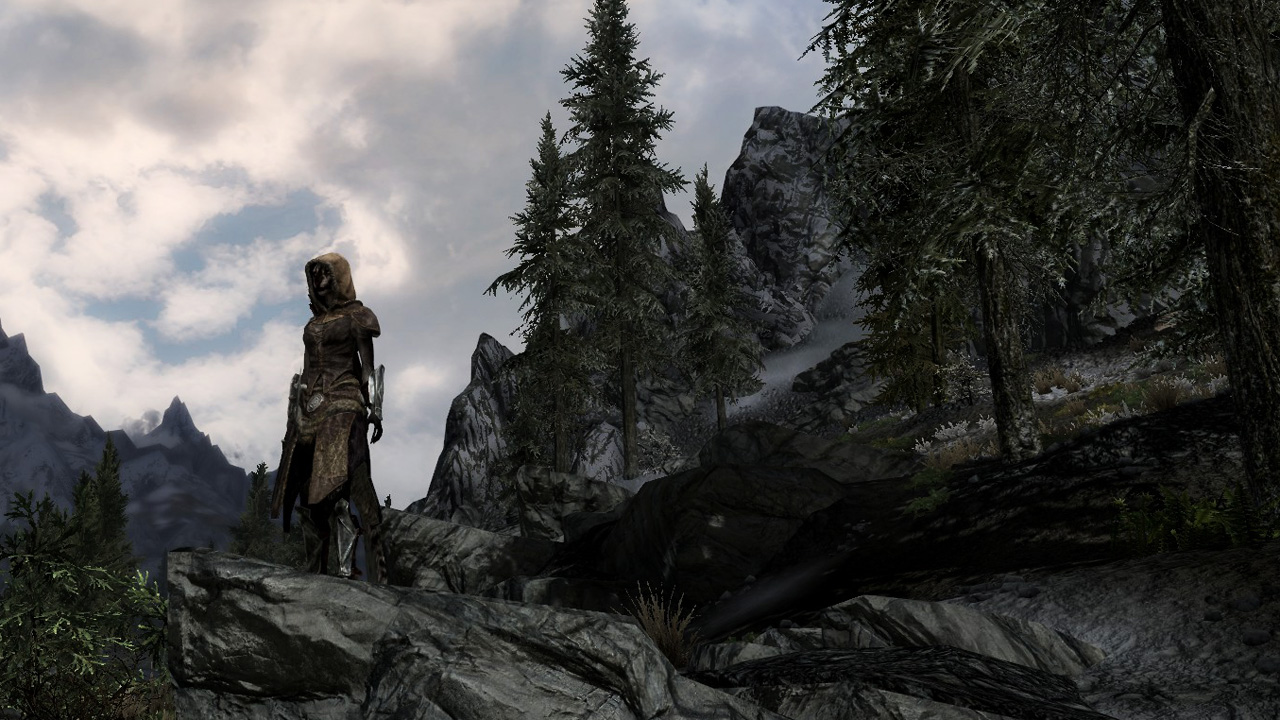
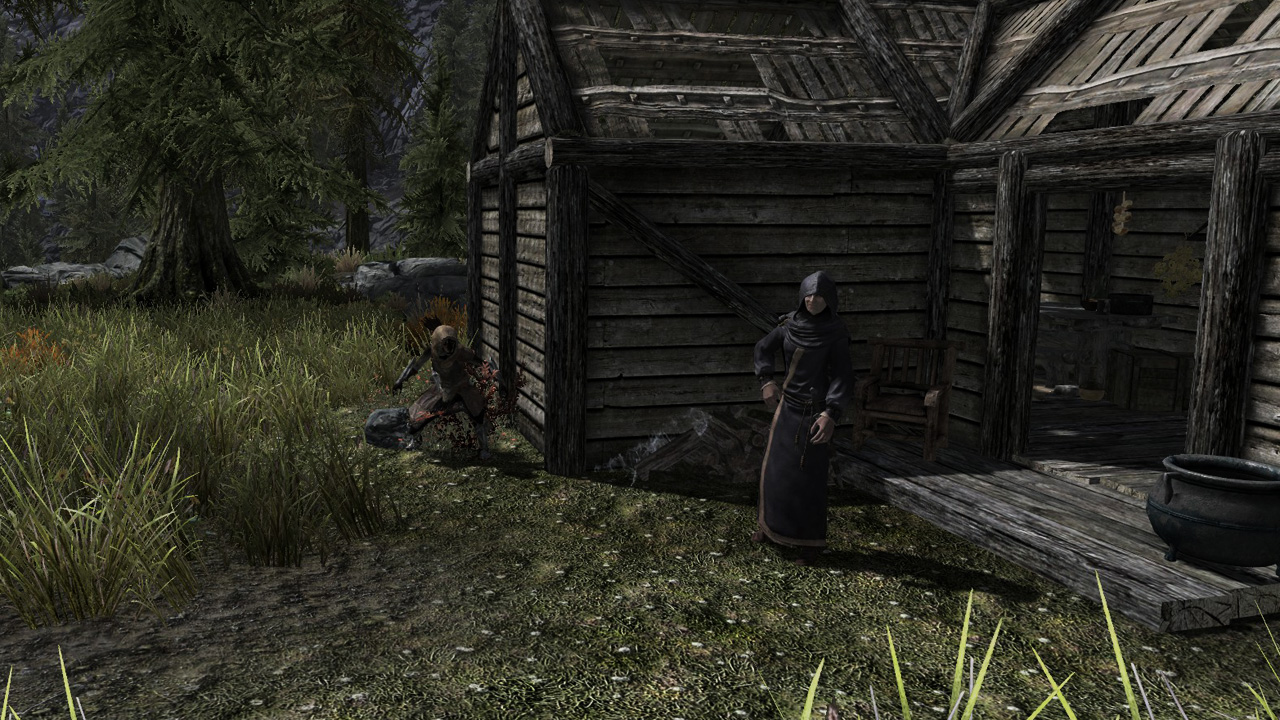
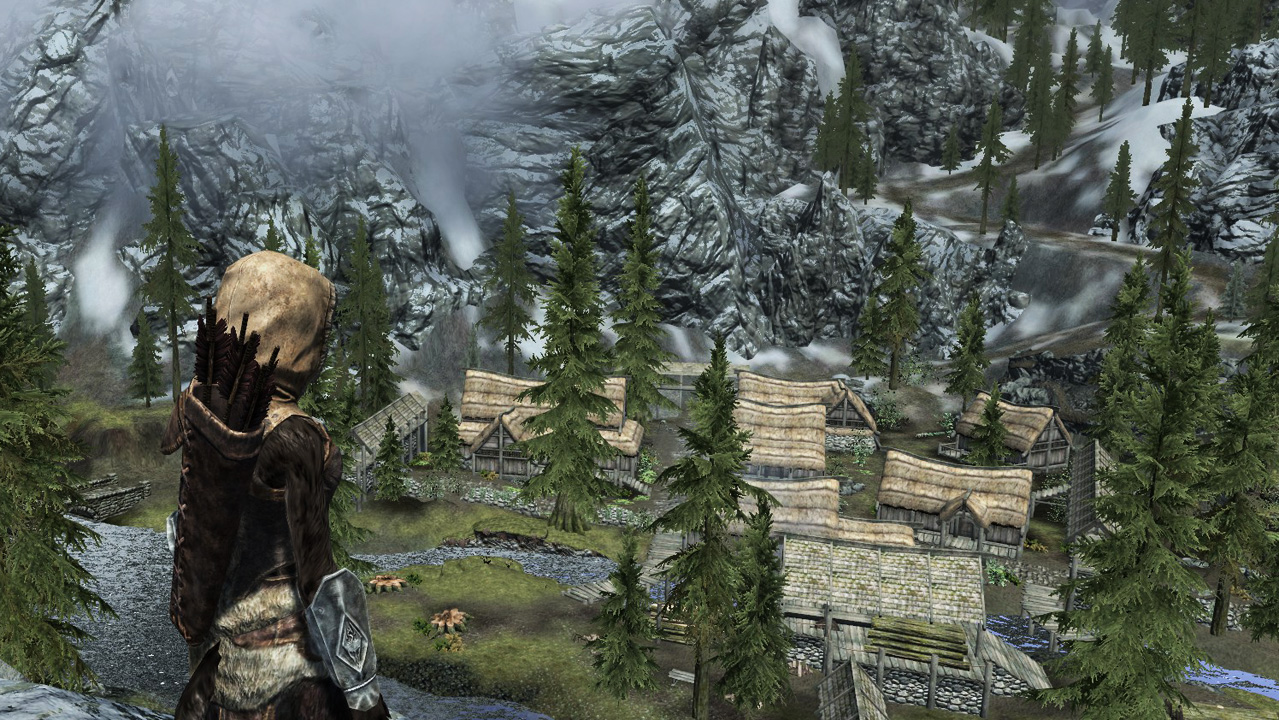
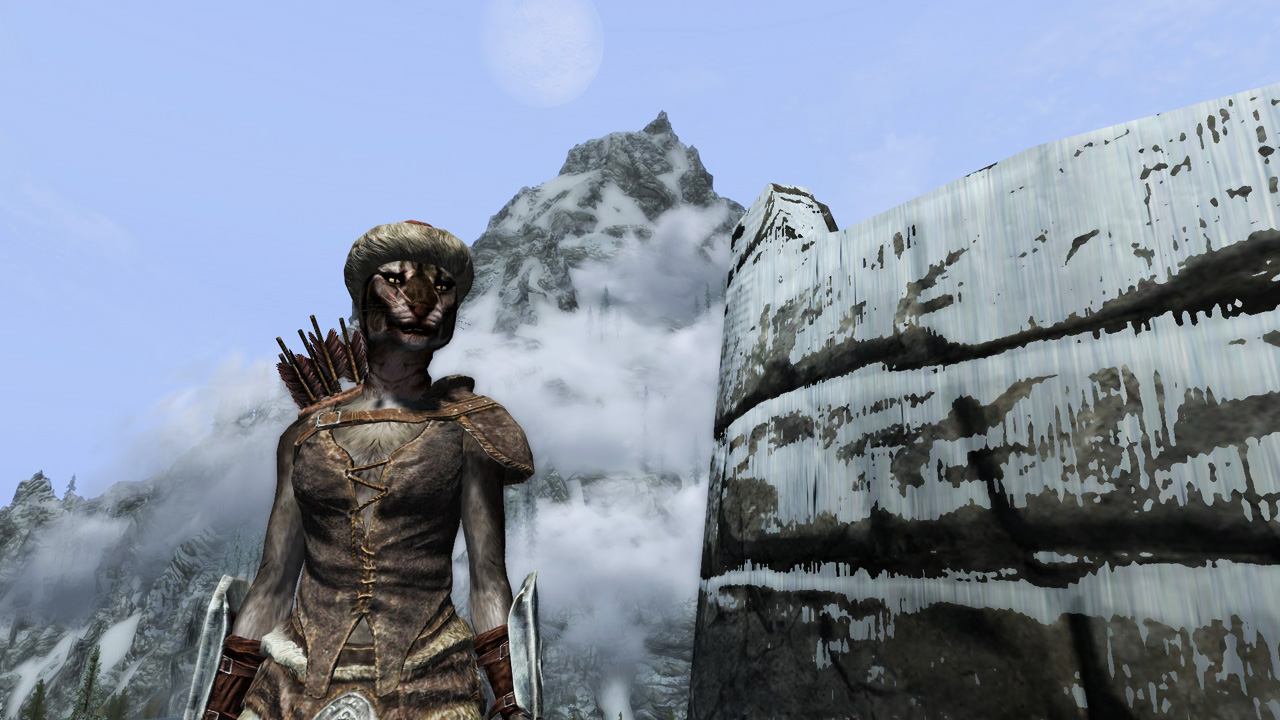
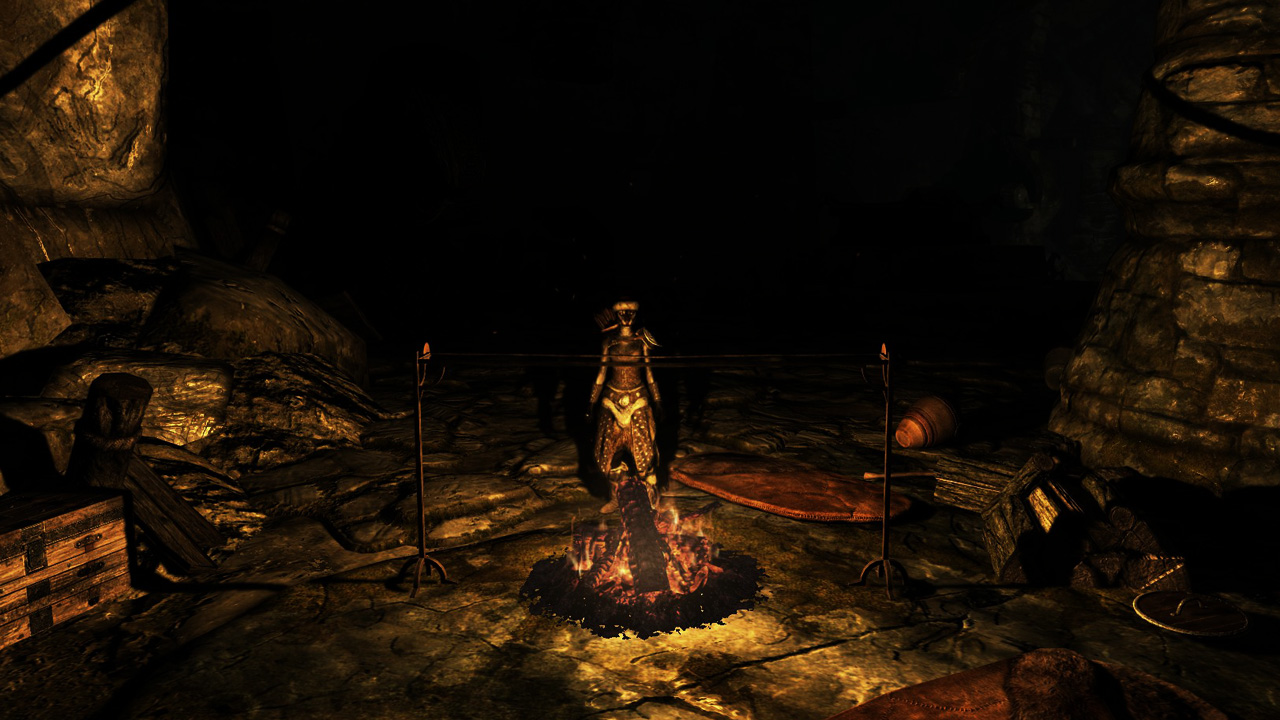
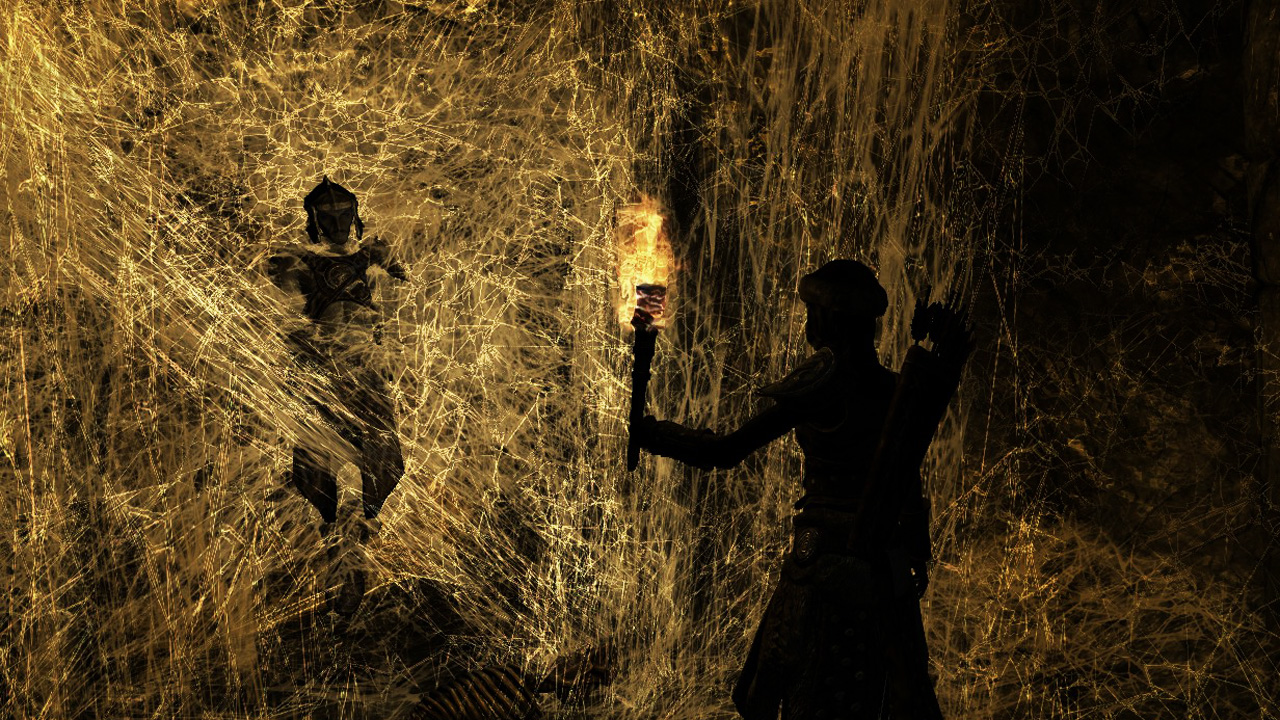
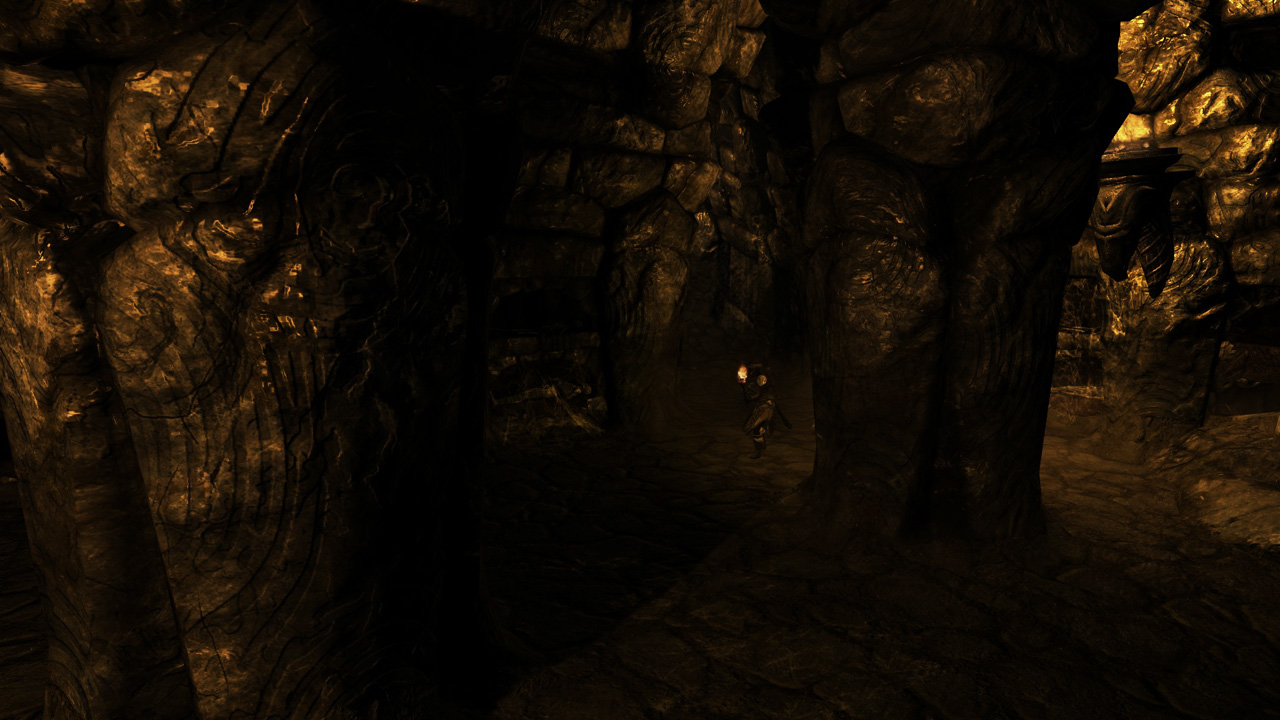
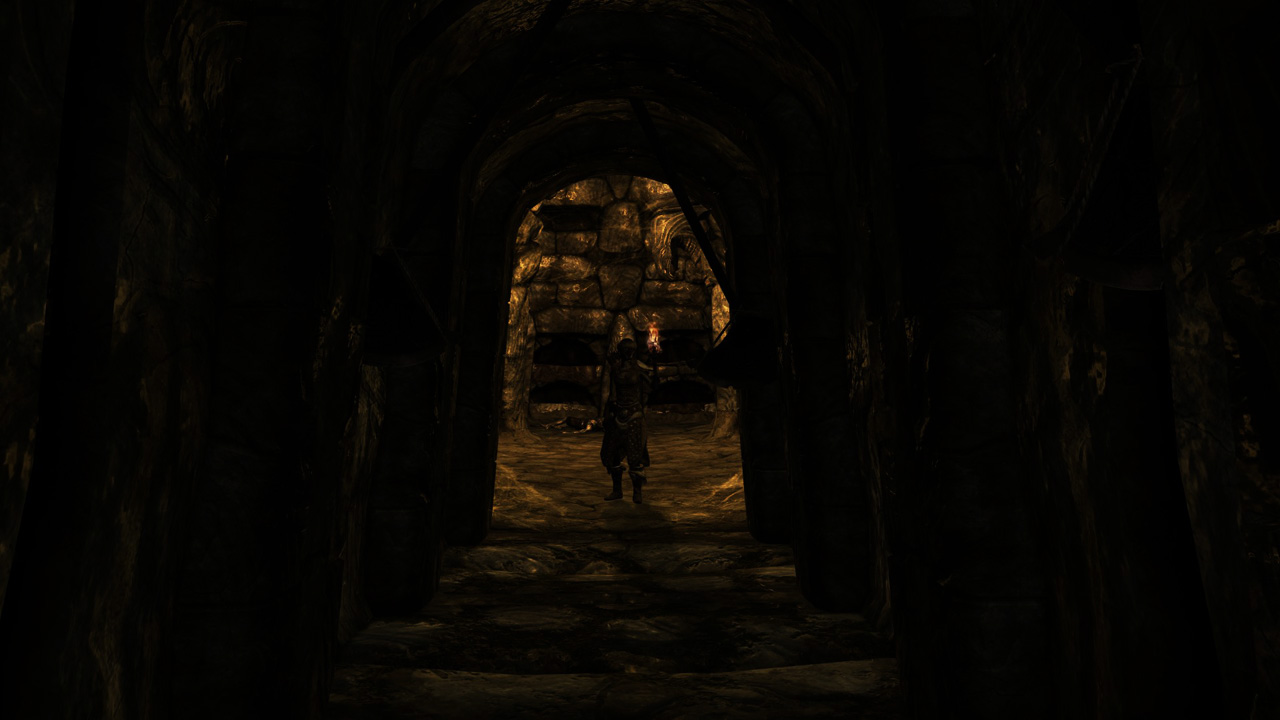
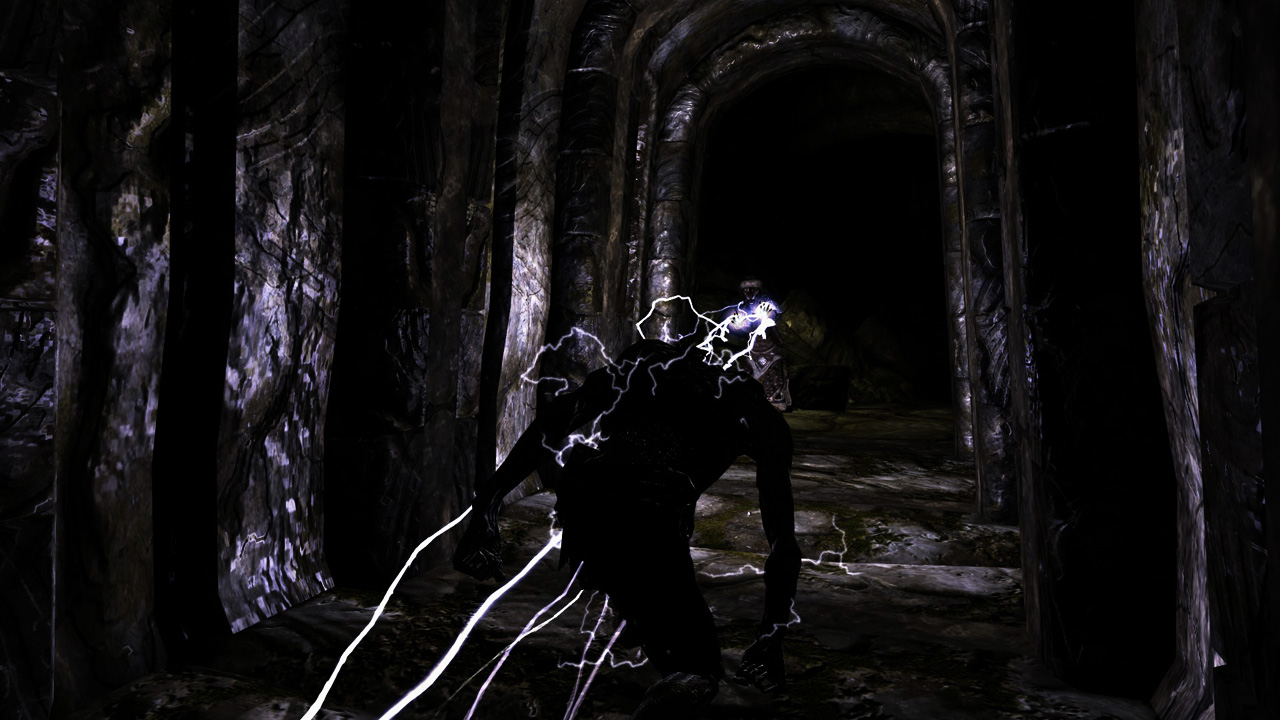
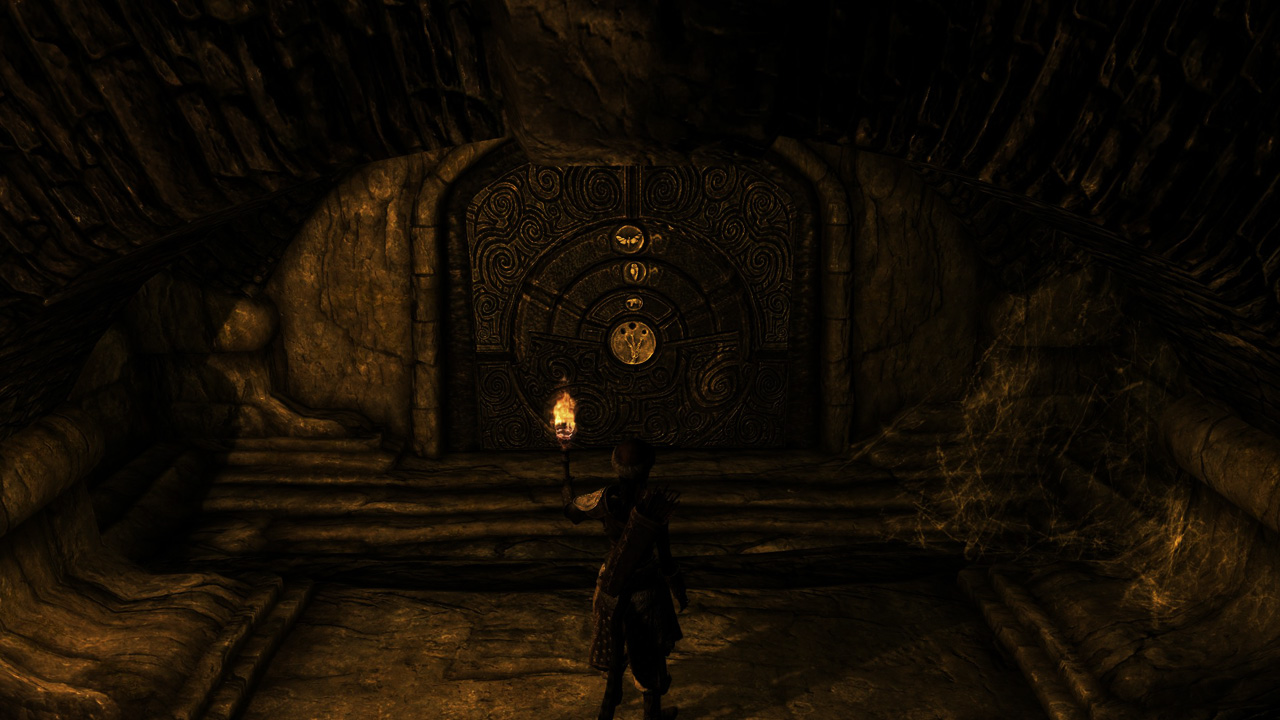
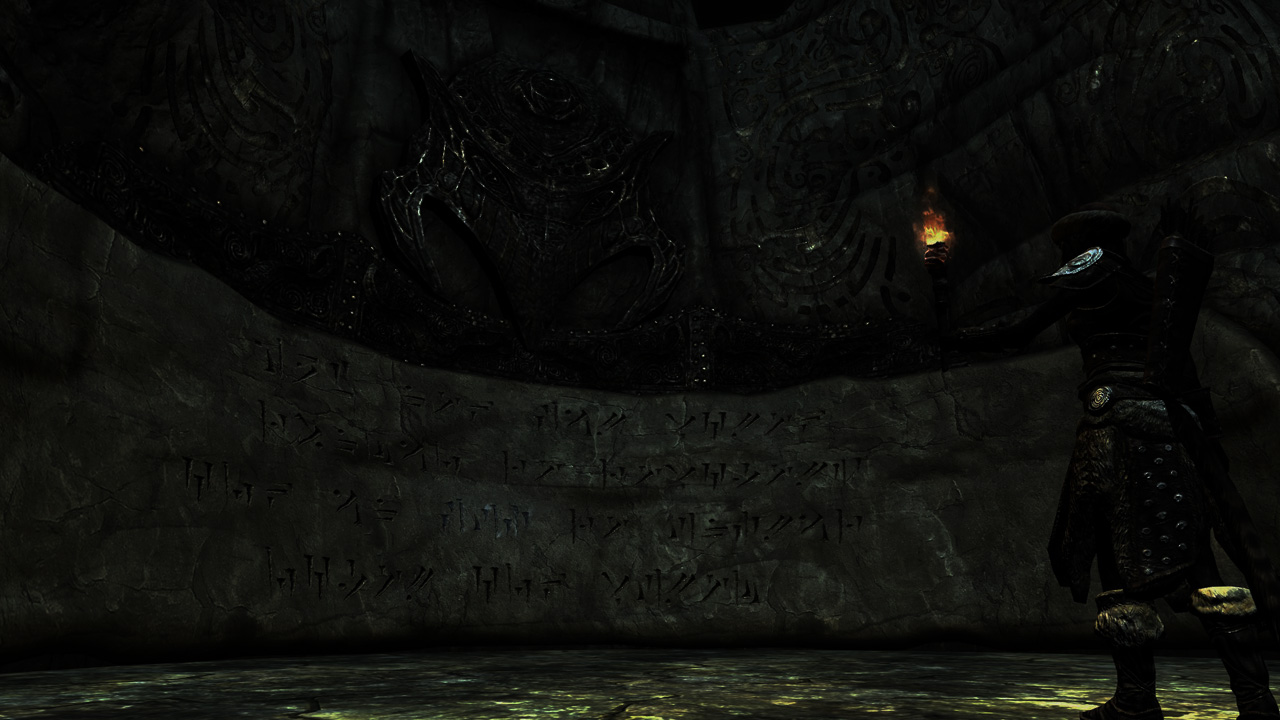
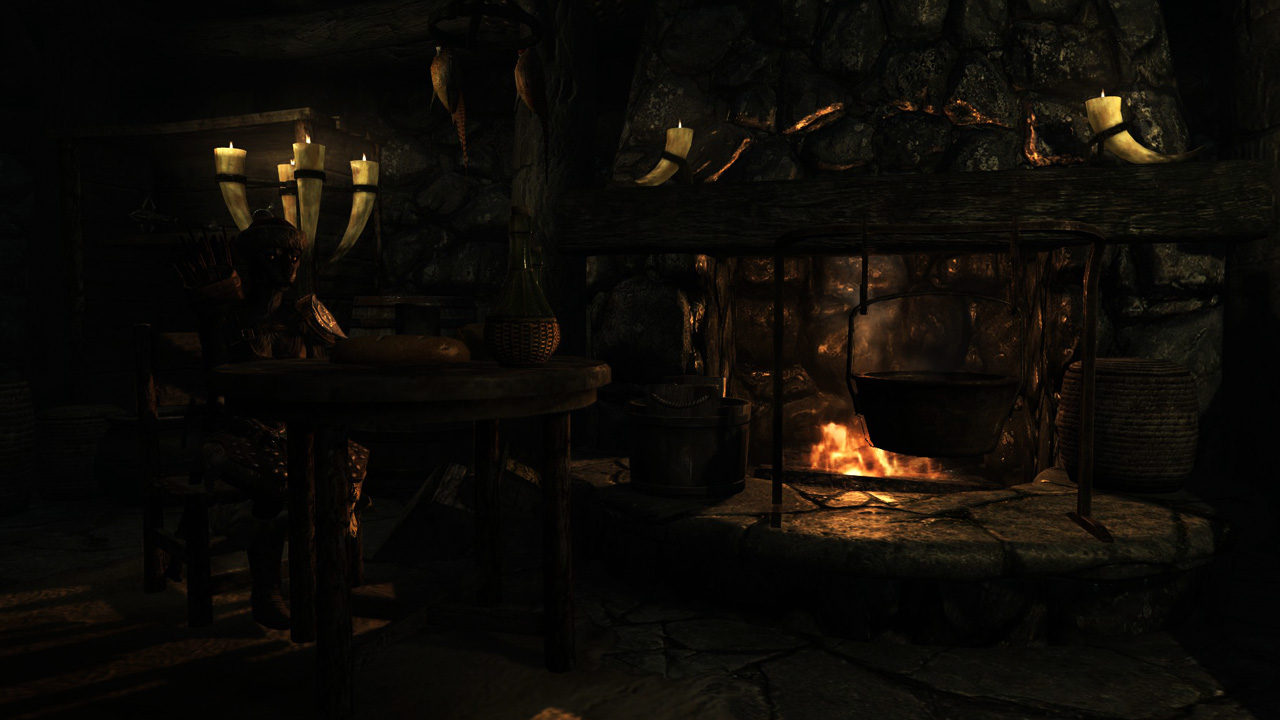
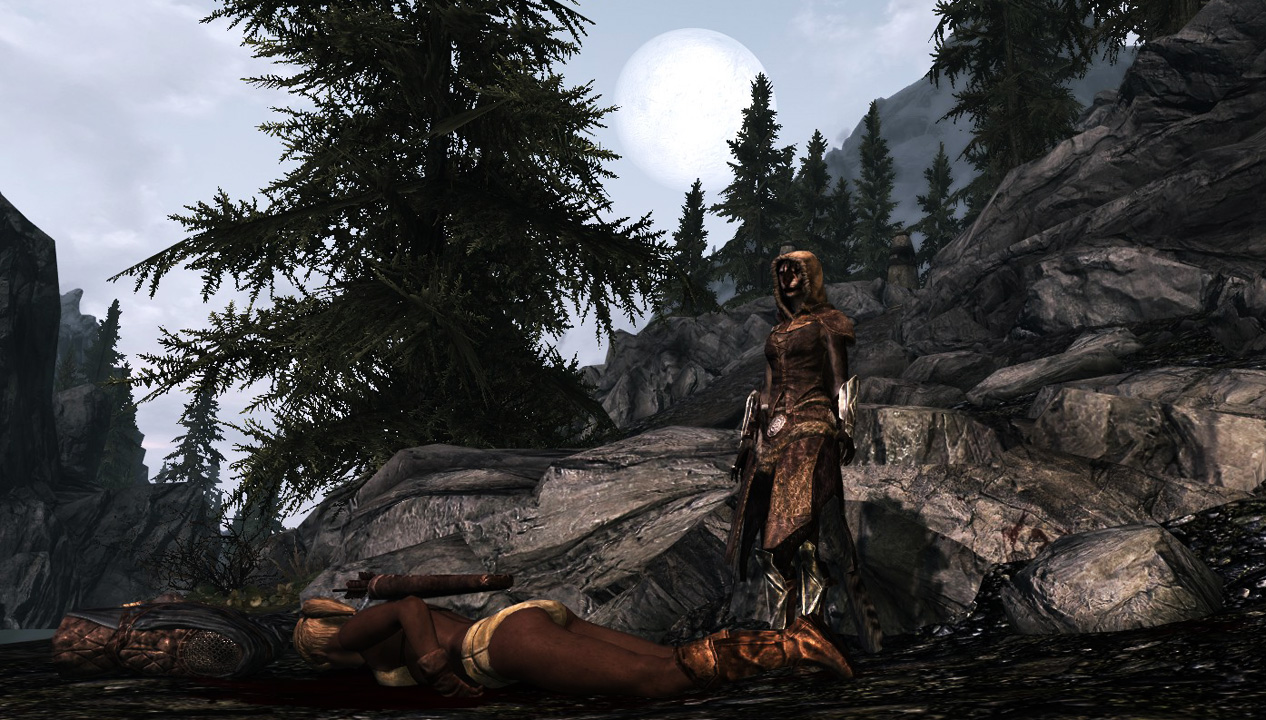
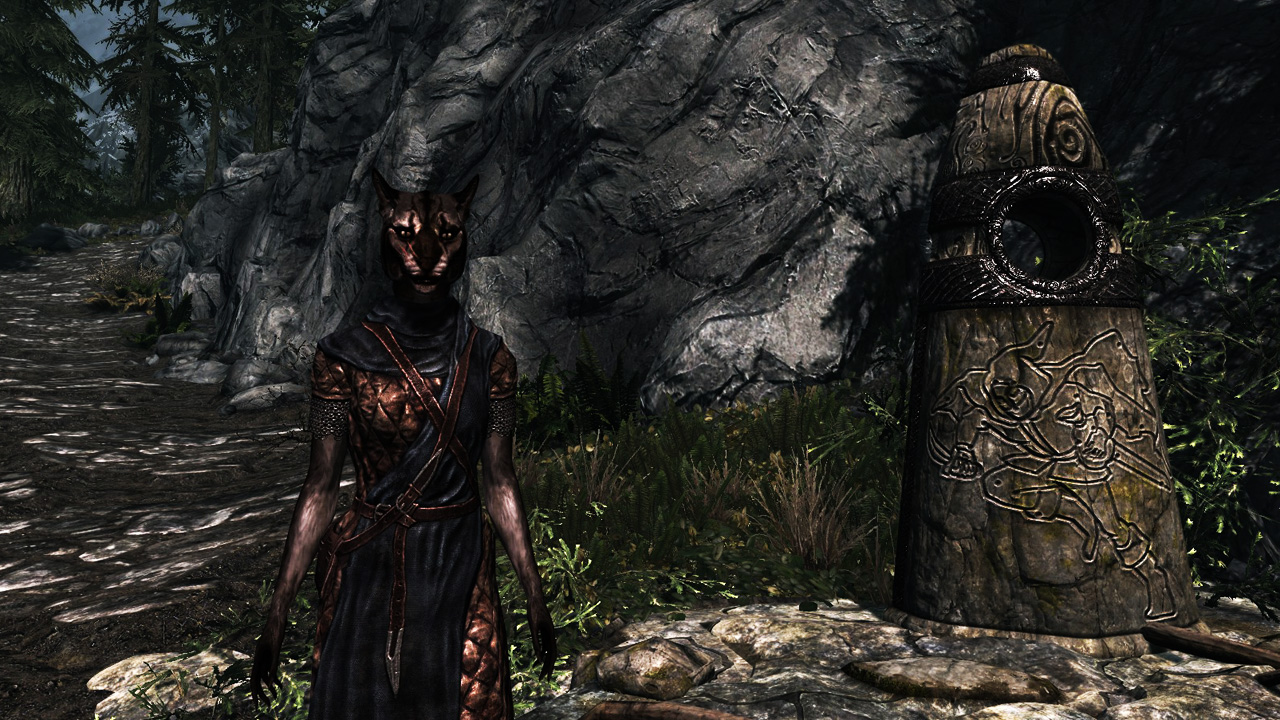
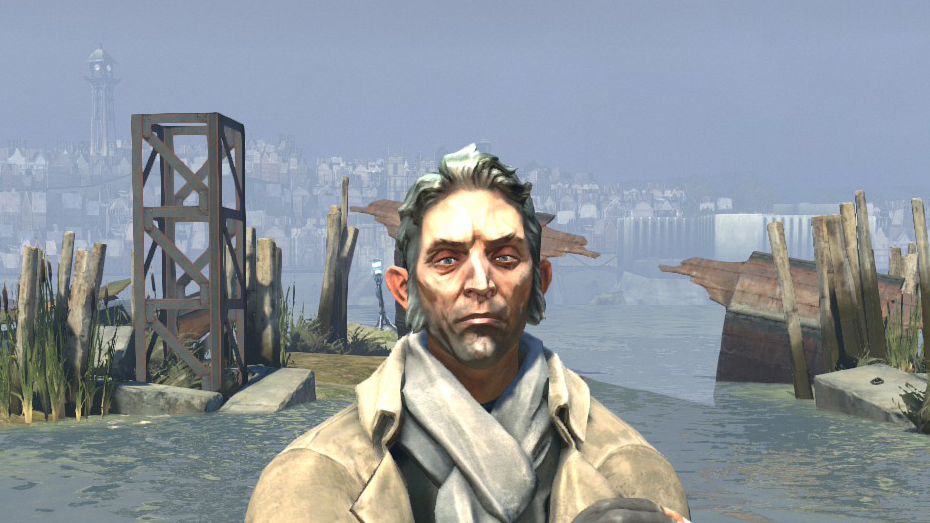
I am replaying Skyrim. I am taking screenshots as I go. I’m trying to document it in the same way that a war photographer would. I’m certainly not pretending that the character is me. Instead, I follow her. I guide her sometimes. But mostly, she lives by her own violent logic. I just try to capture it and make it more beautiful than it really is.

What follows is the document of a war.


Posted in Return to Skyrim | Tagged , , | Comments Off on Return to Skyrim: Opening Through Bleak Falls Barrow

Supplement to Black Hole

I just finished Charles Burns’ Black Hole

It is brilliant, and I am working on a longer post about the comic. But, in a circular move, I am posting this supplement to the comic first. One of the story conceits of the comic is that there is a sexually transmitted disease called The Bug. It is spreading around in teenagers. It causes physical mutations, sometimes easily hidden, sometimes not.

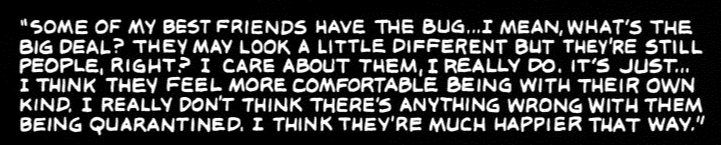
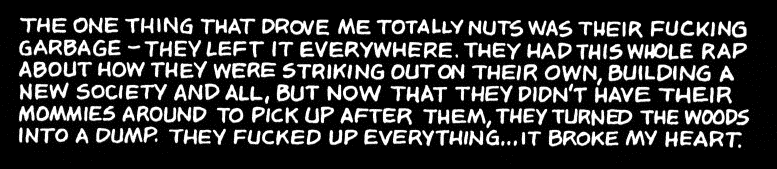
The opening pages of the individual comics, rather than the collected edition that I linked above, have small paragraphs that are part of what seems to be interviews. That is, at some point in this fictional world, someone performed interviews about The Bug and about the teenagers who spun off from society and went to live in the woods. A commune of disease and whatnot.

So these are those fragments, those statements. They are all from different speakers, but they do make a huge narrative. Pretty amazing stuff.

Posted in Comics | Tagged , , , , | 1 Comment

Up Interviews Theron Jacobs

This isn’t content. Instead, its an index, a pointing finger that shouts “look” through its pokey-poke powers.

Theron Jacobs, noted internet poet and twitterati, was interviewed by Up,
which “exists as a space dedicated to writers and artists driven to create by, of, and for the body. We want your tortured bodies, happy bodies, laconic bodies, sexy bodies, hurried bodies, dripping bodies, fat bodies, thin bodies.” So now you know.

I’m not going to “read” the interview here, but you should read the whole thing.

This is my favorite part of the interview (warning: joke necrophilia [is that a thing people care about being warned about?])

Here’s one that’ll really test your knowledge: is is necrophilia if you’re both dead?

OOOH YES GOOD QUESTION. ABSOLUTELY, YEAH. IT’S DOUBLE NECROPHILIA WHICH IS EXTRA ILLEGAL AND COMPLICATED, AS WELL AS LOGISTICALLY DIFFICULT. I MEAN, YOU REALLY GOTTA WANT IT. IT HAS A STRANGE BEAUTY, THOUGH. I MEAN THE SORT OF BEAUTY FOUND IN MAGNIFIED PICTURES OF POLYMOUTHED WORMS WHO LOOK LIKE THEY’RE SCREAMING ALL THE TIME AND FEED BY WIGGLING INSIDE SOMETHING LIVING AND SECURING ONTO ONE OF ITS ORGANS OR THE LAZY, SATED WAY A LION WILL SOMETIMES LOOKS AFTER A KILL, IT’S FACE ALL COVERED IN BLOOD.

I GUESS I MIGHT MEAN HORRIFYING. NOT BEAUTIFUL.


Go read it!

Posted in General Features | Tagged , , | Comments Off on Up Interviews Theron Jacobs

On Digestate: A Food & Eating Themed Anthology

I think that Digestate was the first thing that I kickstarted. As you may know, I think the very idea of kickstarter in the field of videogames is kind of a hole in the ground. It preys on nostalgia and it has been, generally, something to huck your money into without a return (look at Darius’ blog post about his own returns [read the comments {this is the only time I will tell you to read a comment thread, probably}]). But, thankfully, graphic novels actually seem to be getting pushed out/finished/printed/whatever.

So after a few months of waiting, I received Digestate in the mail this past weekend. I devoured it in one sitting.

(Side note: I made that pun on purpose, but I didn’t want to just write “ha!” or “haha!” in parenthesis. I’m toying with the idea of trying to create an uncomfortable laugh only in text–“HA! HAHA! Ohhhhh! HAHAHAHAHA!” but I think that might not work so well. Maybe this is where linking GIFS is appropriate.)

Retry.

So after a few months of waiting, I received Digestate in the mail this past weekend. I devoured it in one sitting. 

Weirdly enough, I purchased Digestate because I was feeling angry. James Kochalka posted on his blog about his piece, which he characterized as a “defense of eating meat.” And I, horrified by the idea, immediately plopped down some cash for the comic anthology. Note: you shouldn’t do this. You shouldn’t spend money to be angry.

I’m happy with my purchase, though not for the Kochalka piece (I love James’ work, but I don’t even think that he makes an argument for eating meat so much as he demonstrates the ethical knot at the center of eating practice and then goes “well, meat is tasty! whoopeee!”).

EDIT: James Kochalka rightly comments and points out that he doesn’t say anything of the sort. The “whoopee!” above isn’t meant to be an actual quote from his piece. His argument is that human beings are agents of suffering and that our very existence might be based on the fact that we are able to generate suffering in other creatures, meaning that (and this is a quote) “our job is to torture all living things until their consciousness is ready for spiritual enlightenment. [Humans] are cursed evil creatures but our every vile act helps bring peace to the souls of our victims. I hope.” Once again, I don’t find this compelling, but I also didn’t mean to totally mischaracterize Kochalka’s argument.

The talent on display throughout the collection is astounding, and the anthology format really gives a sense of different arguments for and against meat consumption.

Because, really, that’s what the book is about. It is about “food and eating,” and there are some stories that fit that really well (Alex Robinson’s “That Peanut Butter Kid!” and Neil Brideau’s “Tell now, The Tale of the Argus Mushroom!” come to mind immediately), but mostly the authors use the topic of food to meditate on the ethics of eating, consuming, being complicit in the murder of, or living in direct connection to animals.

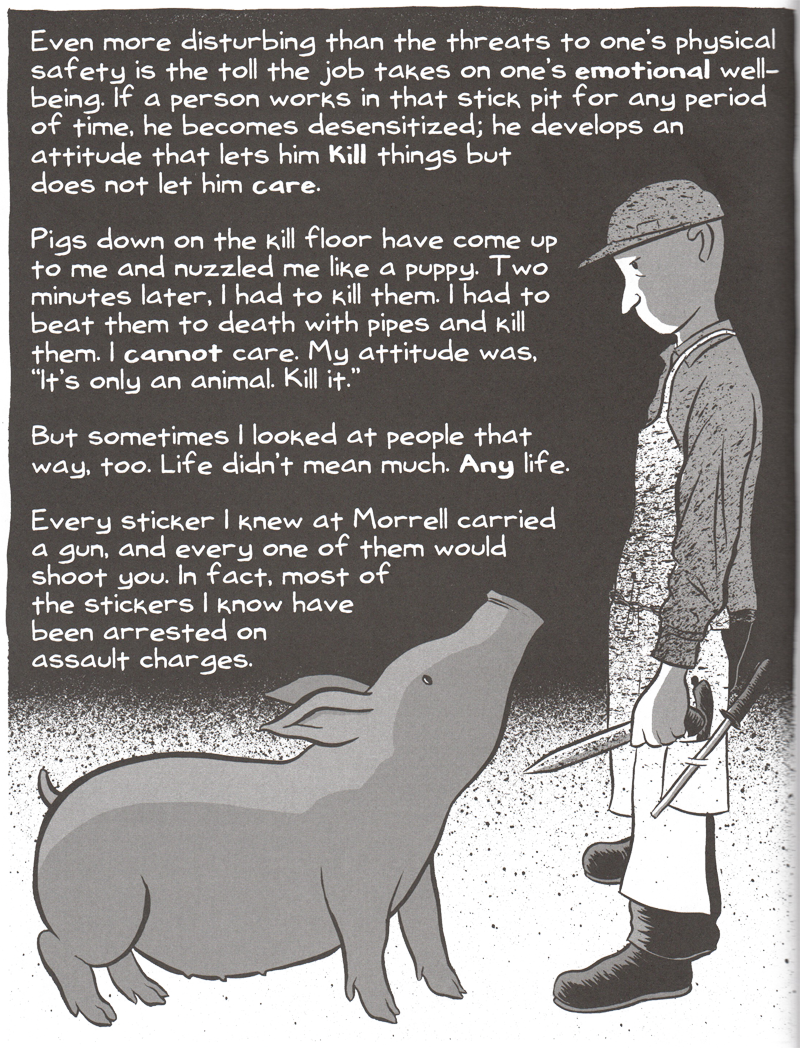
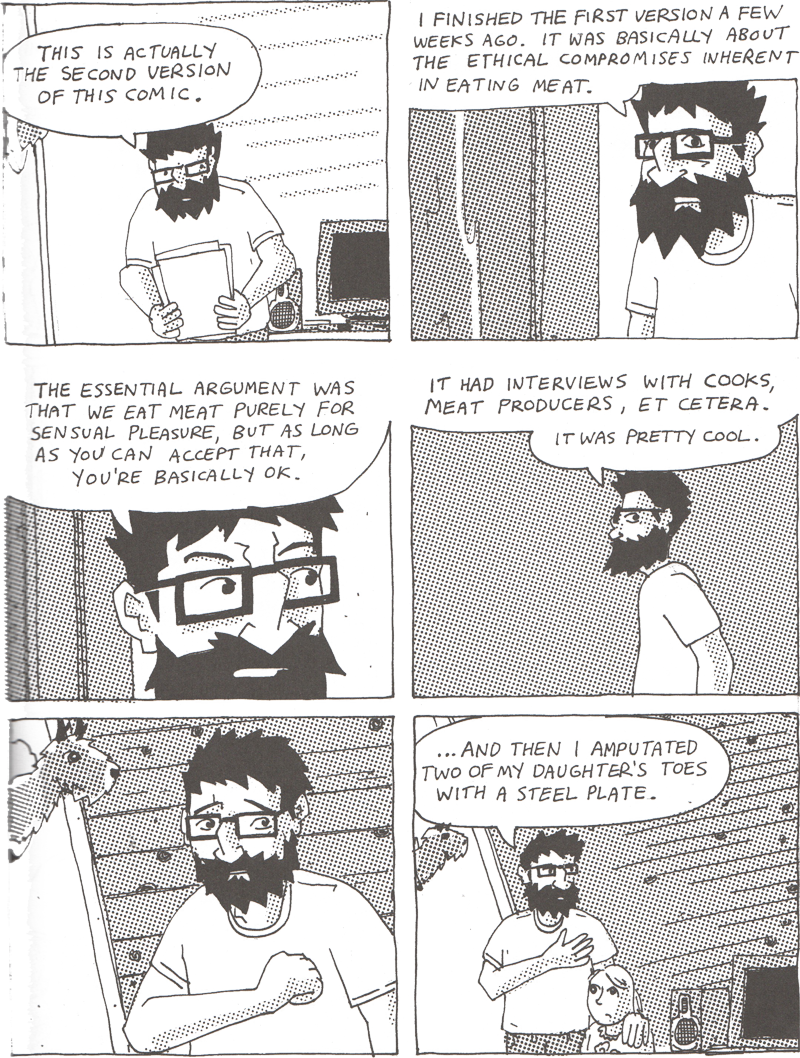
I’m not going to trot out the “power” of words and pictures like everyone does when they talk about comics to a general audience. Just look at this image from J.T. Yost’s “Slaughterhouse Stories” (click through for bigger):

Yost’s story, made up of full-page artwork and a narrative laid over it in paragraphs, affected me the most out of all the stories in the collection. It meditates on slaughter and what it does to human and nonhuman alike. It is beautiful, and I can’t imagine that anyone who eats meat wouldn’t shy away from it a little more afterward. That said, it isn’t merely polemic. Yost isn’t manipulating information. The story is clinical. The words are rendered clearly, with no flourish, a textual version of Yost’s own clean, thick lines.

Ugh, that last paragraph. Words.

What I’m trying to get at is that most of the stories in the collection, especially the ones that are actually working to tell a story, are very clear. A throughline exists: our lives cannot be separated from what we eat. We are connected to the lives of animals, and one another, by what and how we choose to eat.

I don’t eat meat, and I have become increasingly militant about explaining to others why they shouldn’t either. Ethically, the consumption of other creatures is bankrupt. Environmentally, factory farming and the subsidies that prop it up are irresponsible and catastrophically destructive. I’m not interested in policing other people, but I’m certainly open to pointing out how and why certain behaviors are violent, ethically bankrupt, and traumatic for me personally.

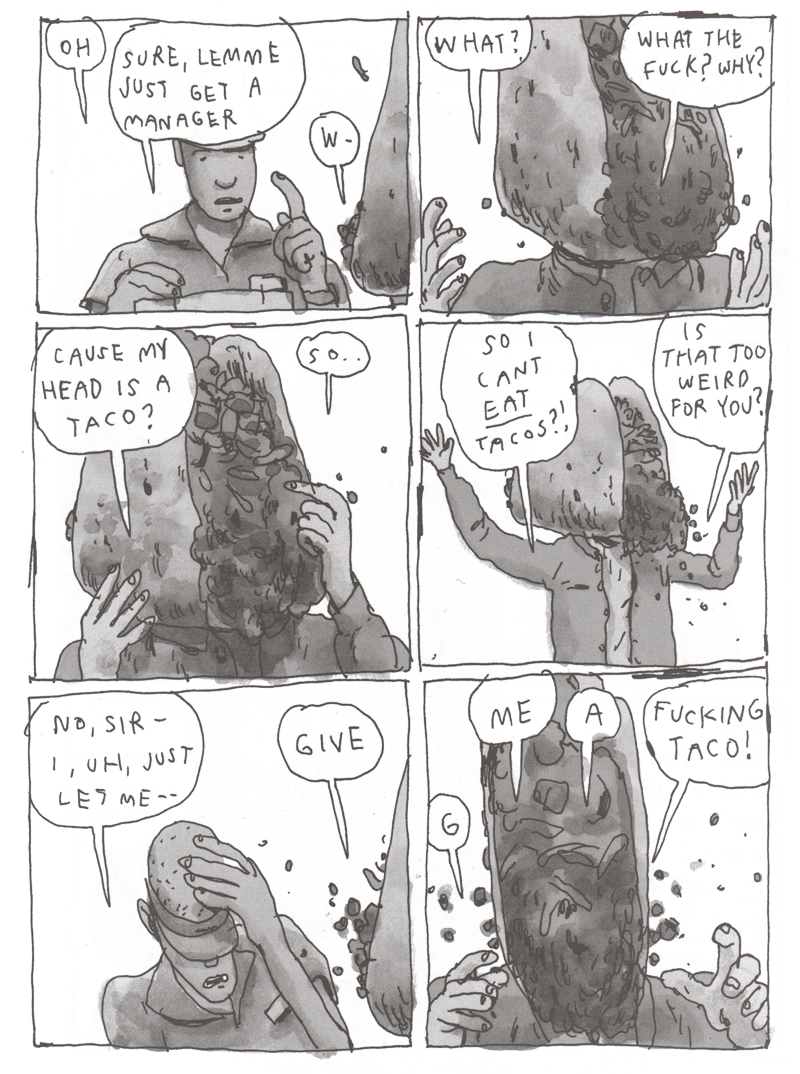
With that in mind, I was drawn to certain stories in the text. Victor Kerlow’s “Taco Head,” about a person with a taco for a head who wants to eat a taco, is both brilliantly satirical and  wildly open to interpretation. A page below:

A number of stories focus on the relation between animal others and human beings. Jess Ruliffson’s “City Chickens,” avoiding an animal consumption narrative in favor of one about care ethics and responsible animal ownership, is a nice bridge between something like “Taco Head” and K. Thor Jensen’s “Living With Murder,” about the realization that his daughter’s toes are meat in the same order as beef and pork.

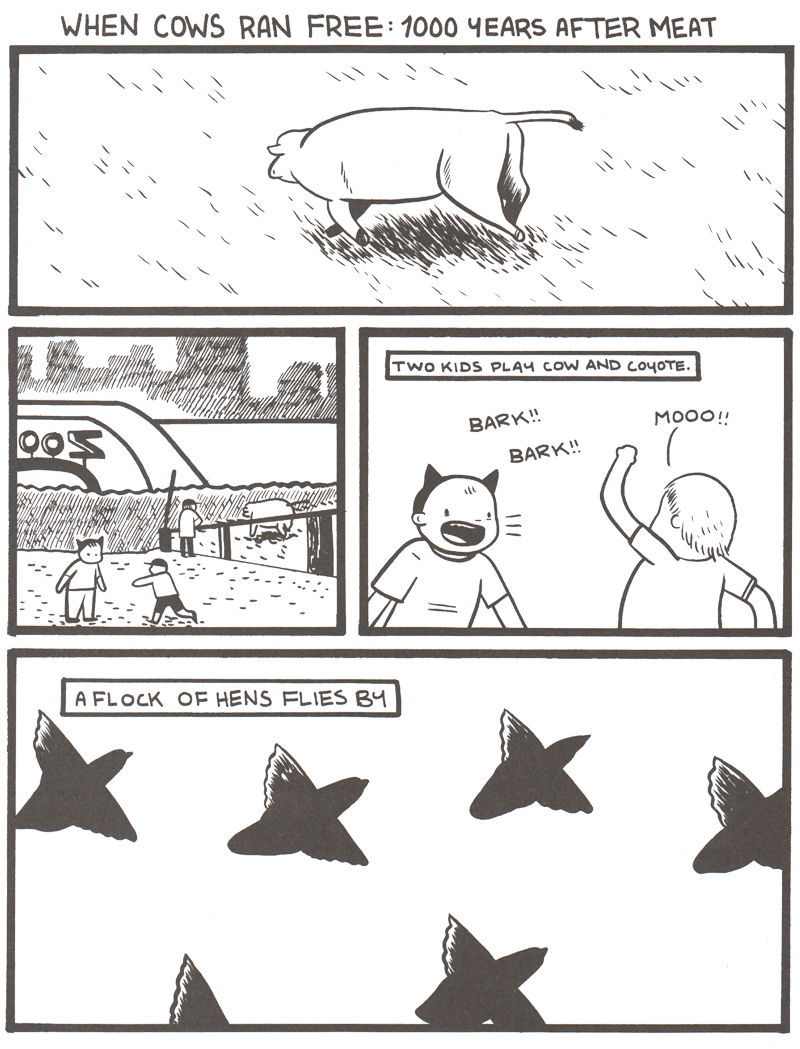
The most profound takeaway from the whole anthology is Box Brown’s comic that ends the collection, “When Cows Ran Free: 1000 Years After Meat.” Brown gives us a world where cows can run free, but kids are still mean to other kids who they don’t like for stupid reasons. There’s a beautiful reading of the comic–humans and cows will always be meat, but just like kids grow up and stop being mean for no reason, maybe the human/animal relation will change.

Maybe.

So I suggest that you go buy Digestate. At 287 pages, it is totally worth a paltry $20.

Posted in Comics | Tagged , , , , | 4 Comments

On Dishonored

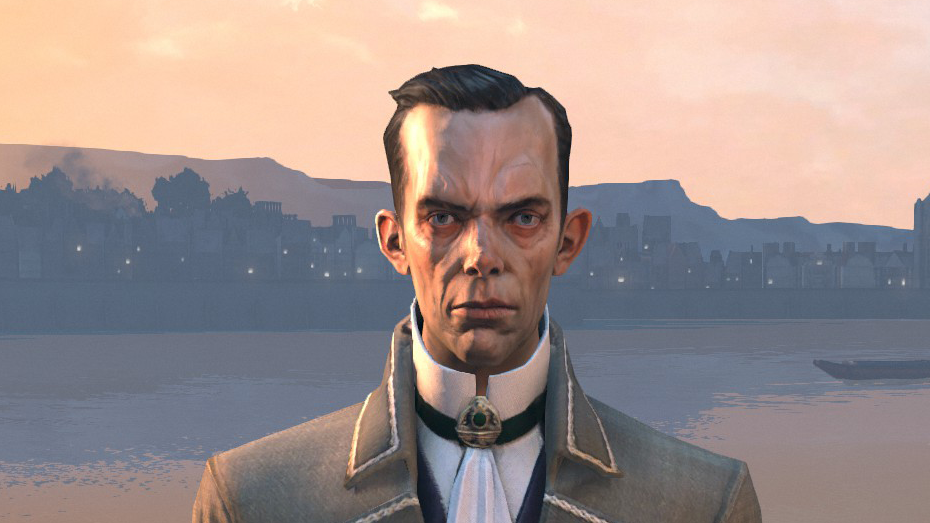
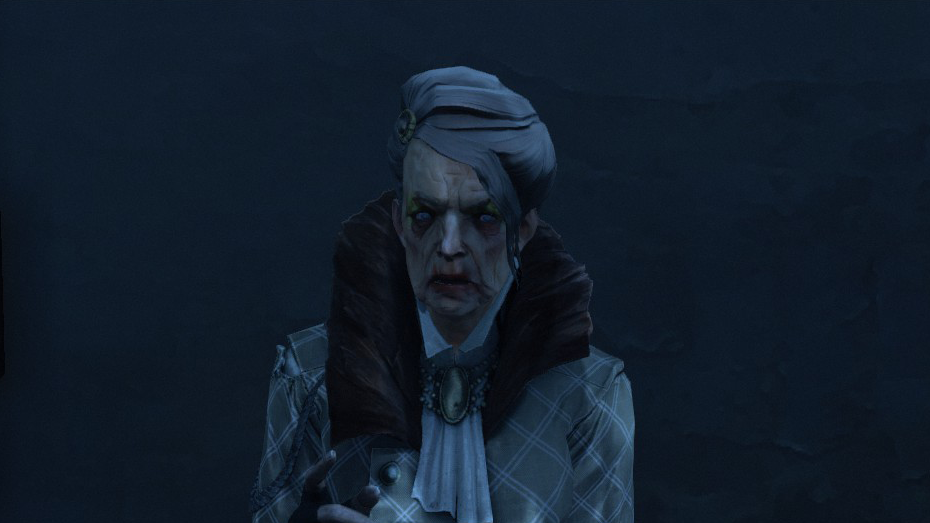
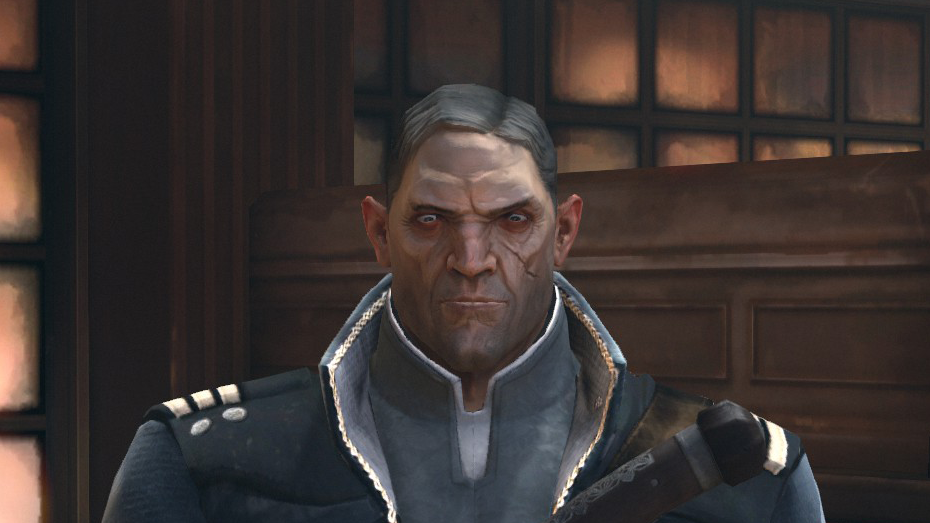
Weirdly, I don’t have a lot to say about Dishonored, positive or negative. My initial impressions were profoundly bad, but everything after the second mission or so was so heavily focused around being the most vanilla experience ever that I couldn’t be turned off by it.

But I do have some short remarks to make about the world of Dishonored, the world that houses Dunwall, a city covered in blood.

Or, rather, a city that covers a great sin, a great tragedy. The history of Dunwall is revealed in snippets, and over the course of the game it becomes apparent that it is wholly concerned with layers. Let me run through a couple quick examples:

Dunwall was built on top of another city. That city, more in line with The Outsider, was aware of the magic of the world. The various whalebone trinkets and doodads that Corvo finds and uses to become magically powerful are leftovers from that civilization.

The bones of whales have power. The first people knew that, and so they carved them up. The blubber of whales have power, and so the people of Dunwall slaughter/ed them en masse in order to fuel their civilization.

The civilization is defined by its religious structure, a pseudo-Catholic faith that is so heavily worked into everyday life that that game can’t separate the two from one another so you can see how they work. However, the Outsider shows up occasionally, asserting that he was there before the church and its High Overseer.

The high church culture, in turn, cannot be separated from the aristocracy, which Corvo spends quite a lot of time infiltrating as well. But every moment spent sneaking around in aristocratic bedrooms is met with an equal in the sewers, in the closed districts, where men in stilted armor chase plague victims and kill them with explosive arrows.

And lets not forget the overall story. Political layers; rebellion versus State. The assertion of the self and others to the highest seat of the State.

I’m reminded of Zizek’s reading of Kant’s essay “Perpetual Peace” where Kant thinks through the legal status of rebellion. Zizek writes:

What is, while the rebellion goes on, a punishable crime, becomes, after the new legal order is established, the opposite–more precisely, it simply disappears, as a vanishing mediator which retroactively cancels/erases itself as a result. . . . Kant here is one of many conservative (and not only conservative) political thinkers, including Pascal and Joseph de Maistre, who elaborated on the notion of the illegitimate origins of power, of a “founding crime” on which state power is based; to obfuscate these origins, one must offer the people “noble lies,” heroic narratives of the origins. (Living in the End Times, 32-22)

We get these narratives over and over again in Dishonored, particularly through the books and radio messages that Corvo hears during his missions in Dunwall proper. The High Overseer died nobly, murdered by a savage. The noble people of Dunwall have mastered the sea and the brutish whales, taking the oil from their bodies just as we were meant to do.

Dishonored, like every game that builds a world, has in-game notes for us to read. It is “immersive” to read fragments of stories, apparently, but this one in particular gives a good look into the “founding crimes” of Dunwall:

On Hunting Whales
[except from a forward-gaffer’s journal-By Old Grum]

These new ships made by that Sokolov fellow make life easier than it was in my youth, I’ll tell you what. Ere was, we were at the mercy of the winds. Nowaday, the engines git up at first whale-sign and there aint time enow to roust the boys from they’re bunks afore you’re on the herd.

We cull out the biggest bastard we can lay eyes on and the pilots drag us out from the circlin’ brutes. Them things groan and bellow across the water, like they’re callin’ to each other. Men below say you can feel it in the hull.

But when the harpoons go in, the beast cannot make for deep water no more. Once it weaks from lost blood, we launch the hook-boat and put chains into the tail. Then the winches drag the bastard backward up the chute and into the rigging overhead.

So Dishonored is a game about layers. But it is also about power and founding myths which, as Zizek tells us, render themselves invisible.

The central core of the game, then, is something rendered invisible. All of the other layers, the dichotomies that displace one another, are spoken and visible. They are told to the player in order to mask a hidden dyad that cannot be split.

This dyad consists of State power and whale genocide.

The two cannot be split. The power of the government of Dunwall is dependent on hidden violence. It needs places to dump bodies. It needs gadgets that shoot invisible energy into the bodies of victims to render them into ash–that is, to render them nonexistent. And we shouldn’t make the mistake of saying, “Well, that is just the eviiiiiiil government! The good government would never do that!” Plague bodies were piling up and being disposed of for months before the game began. Corvo didn’t pick up stealth, assassination, and “necessary violence” in prison. It was always there. Corvo is just doing what Corvo has always done–it just happens that it is against the State for most of Dishonored.

The genocide of whales in functions in the same way. It is rendered powerfully, but never blatantly. It is hidden in the mere aesthetics of the game, in passive portraits and in historical accounts that have to be sought out and read. It resides in the mystical narratives of a still-beating heart that only calls out if you select it and then listen as it speaks. For the average player, and certainly the average citizen, these things are aesthetic–and therefore they are buried, rendered invisible in the same way that a texture on a barrel or the architecture of a level is invisible. We see, but we don’t see.
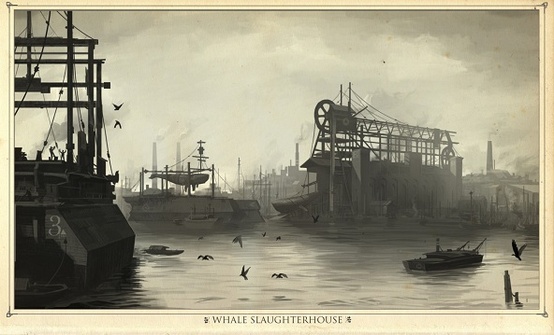
Layers.

They butchered the deep ones here, breathing in the rich stink of their enchanted flesh. When the sea wall broke, many strange things were drowned and forgotten. They bring the bodies here. With rough hands. Rough hands and cages. Some of them are still breathing. The water is so cold and it is the last thing they feel. – the Heart

And none of this is told to you. As a commenter on Matthew Weise’s blog says,

I agree that story is good. I don’t fully understand how story is connected to other parts of the game. For example, we don’t see how whales are captured and killed. It’s not obvious if there is a connection between killing of whales and humans. Although maybe I missed it. Also books are scattered randomly in different places. Careful placement of books could emphasize visual environment.

“Maybe I missed it.” No one missed it. You had to go look for it. But if you did miss it, you still felt the repercussions.

That’s the reason for all the layers, all the pairs, all the bad stacked on top of itself so deep that you can’t see the bottom. The truth is that Dunwall is an object lesson in how to live on after a great sin. It is how to live in what James Stanescu has called a “post-lapsarian world.” Stanescu, is writing about ethics, says that

Ethics is not a pathway for innocence. Rather, it is about how to live after innocence, how to exist in a fully post-lapsarian world.

Which is to say that ethics is a project of realizing the violence that we are complicit in and then dealing with it, particularly through not doing it anymore. Or at least trying to counter that violence, minimalizing it. Recognition is the critical component here.

And so Dishonored is a key example of a world where ethical life becomes impossible. There is no opportunity for meaningful recognition of the hidden dyad that drives Dunwall. There is no way to recognize complicity, to try to do better, and so Dunwall will continue to rot. The pre-credits roll where Corvo and the Empress live happily ever after is yet another founding myth in a series of founding myths.

State violence still has to go on. Political prisoners have to be disposed of, plague victims have to be experimented on, and rats have to be driven out of cities. Dunwall will still be fuelled with the deaths of whales.

I’m sorry, that wasn’t short at all.

Posted in General Features, Video Games | Tagged , , , , | 1 Comment

Dishonored is a Game About Standing A Reasonable Distance From Other People

Posted in Photography, Video Games | Tagged , , , | Comments Off on Dishonored is a Game About Standing A Reasonable Distance From Other People

Designing Horror: Nyctophobia

This post is part of the Designing Horror series.

Game: Nyctophobia by Nik Sudan 

Nyctophobia is a game where you play the saddest British man on the planet. You are a security guard, working your working day, and goddamn if the power doesn’t go out.

Oh, and there are freaky monsters.

1. How Does It Work?

There are a couple mechanics at work here, and all of these synchronously acting together make the heart of the game.

At the top, we have actual voicework–most horror games, and indie games especially, eschew voice in favor of scary sounds, jump cuts, etc. The additional layer is helpful with pulling the player into the game–you aren’t a voiceless protagonist. You aren’t really the character at all–instead, you become a steward. I don’t want the reedy little Brit to be murdered by nameless things, and that makes me strangely emotive. And this is something that is vastly underutilized in horror games–care. Not “I care about X,” but the desire to preserve a life that is demonstrably weaker than that of the player. I have control of the security guard. If he dies, I am responsible. And that’s horrifying (I feel bad for parents.)

The control scheme is part of this, of course. You move your mouse around to direct a flashlight. As you walk, you come upon scary monsters. They leap at you. The flashlight goes out. Your heart races. The screen get shaky. This, surprisingly, is incredibly effective. There were moments when the character was at the edge of the map, his flashlight scared into the off position, and the screen was vibrating so hard that he was clipping out of my vision. I was gripped; I can’t do anything to save him. He’s gone.

Of course, he wasn’t; I pulled him back from that edge, and honestly, I’m not sure if the character can be killed by the monsters. But damn if I didn’t panic, didn’t feel like I was going to lost something important to me. I’m really, really impressed with that. I feel like I was incepted with an emotional response.

2. Why Is It Horror?

A lot of what I have written about here in the Designing Horror series has been, I think, about loss. The prime ways of making something horror: replace the aesthetic with one that is alien, evil, etc.; remove sight; replace diegetic sound with scrunchy noises. All of these are predicated on an expectation of the real and then a supplement to that expectation. “You want a normal town? YOU GET SILENT HILL!” “You want to see clearly? TOO BAD, YOU CAN’T SEE SHIT!”

Nyctophobia does those things, of course. It takes away sight, sound, and control. But it also does something unique in that it gives you one last thing, the scared British man, and then threatens you mercilessly. The game constantly asserts that it is going to take him away and do terrible things, even if it never happens.

3. What Did It Do To Me?

Jump scares. A nagging worry. A worm in my heart that raced every time a monster came near.

Read about other games in the Designing Horror series. 

Posted in Designing Horror, Video Games | Tagged , , | Comments Off on Designing Horror: Nyctophobia

A Game I Made: Goblin Story

I hate artist statements. This guy up here is an old goblin. He has a story, but it might not be the story that you think it is.

I made a game called Goblin Story, and it is about a goblin.

You move and it tells you a story.

I “game jammed” it in five hours. I came up with everything (art assets, music, concept) in that time.

If you like it, yay! If you don’t, oh well. At least it was free.

You can play the game here.

You can look at all the games I have made here.

Posted in A Game I Made | Tagged , , | Comments Off on A Game I Made: Goblin Story

Designing Horror: Metro 2033

This post is part of the Designing Horror series.

Game: Metro 2033

No one told me that this game was actually good when it came out, so when I picked it up for $5 on a Steam sale whim, I was super surprised. It is phenomenal. I like it a whole lot. Let me say some more silly, fannish things about the game. Ugh.

Anyway, I’m mentioning the game here because it does some really interesting things with the horror genre. While it doesn’t fit precisely in that tradition, it certainly rides the horror/action line, and it definitely depends on cultivating a scary atmosphere in order to fill in the spaces between the action. So let me do a little bit of analysis.

1. How Does It Work?

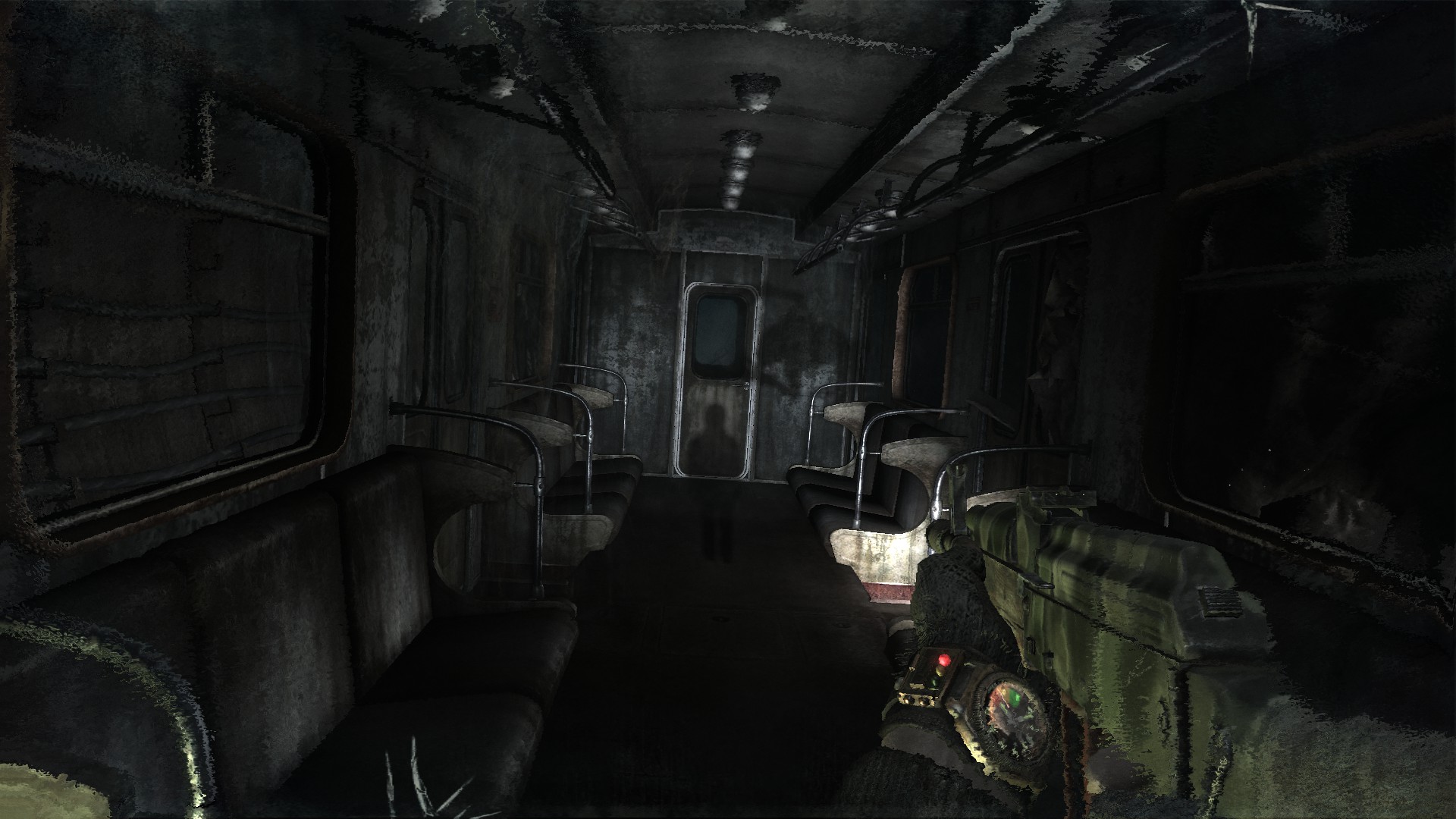
Metro 2033 tells you that the world is horrible and then shows you. And that, weirdly enough, is unique. A lot of writing that I have done on horror games in this blog series has been about how most horror games are reliant on aesthetics and sound design in order to give you a sense that the world the player inhabits is one that is, in a word, “realscary.”

Metro 2033 doesn’t do that. In fact, the aesthetic is ours. If you have ever explored urban ruins, you have a feel for what Metro 2033 is giving you already. The same goes for the sound design–it isn’t droning, buzzing sounds or slithering creatures from the backrooms of Hell. It is mostly just wood on wood, metal on metal, and the occasional man with a heavy Russian accent screaming “Noooooooo!” The monsters that you meet, even the supernatural ones, are materially present. They all make smacking noises when they run your companions through. A shotgun splatters them across the wall the same as it does your best friend.

It also works through explicit references to horror tropes. Normally, if I rattled off that pretentious-ass sentence, I would mean something like Cabin in the Woods that is a very specific kind of commentary on the horror that has come (and that which will be [spoooooky]). Not this time; instead, I mean that Metro 2033 makes the player recall very specific material practices in the world and then interpellates them with a spectral element.

An example:

The player follows Khan, an experienced traveler of the postnuclear metro, through a haunted passage. “This tunnel knows me well,” he says. He begins to pray. “Don’t tell anyone about this,” he says. The practice of prayer, a standard event in most of the world’s population, becomes intimately tied with the horror element in the world of Metro 2033. In a sense, it is Derridean hauntology–our life outside of the game radically returns to the present. The game narrative becomes haunted by our own, extra-gaming lives.

Another example:

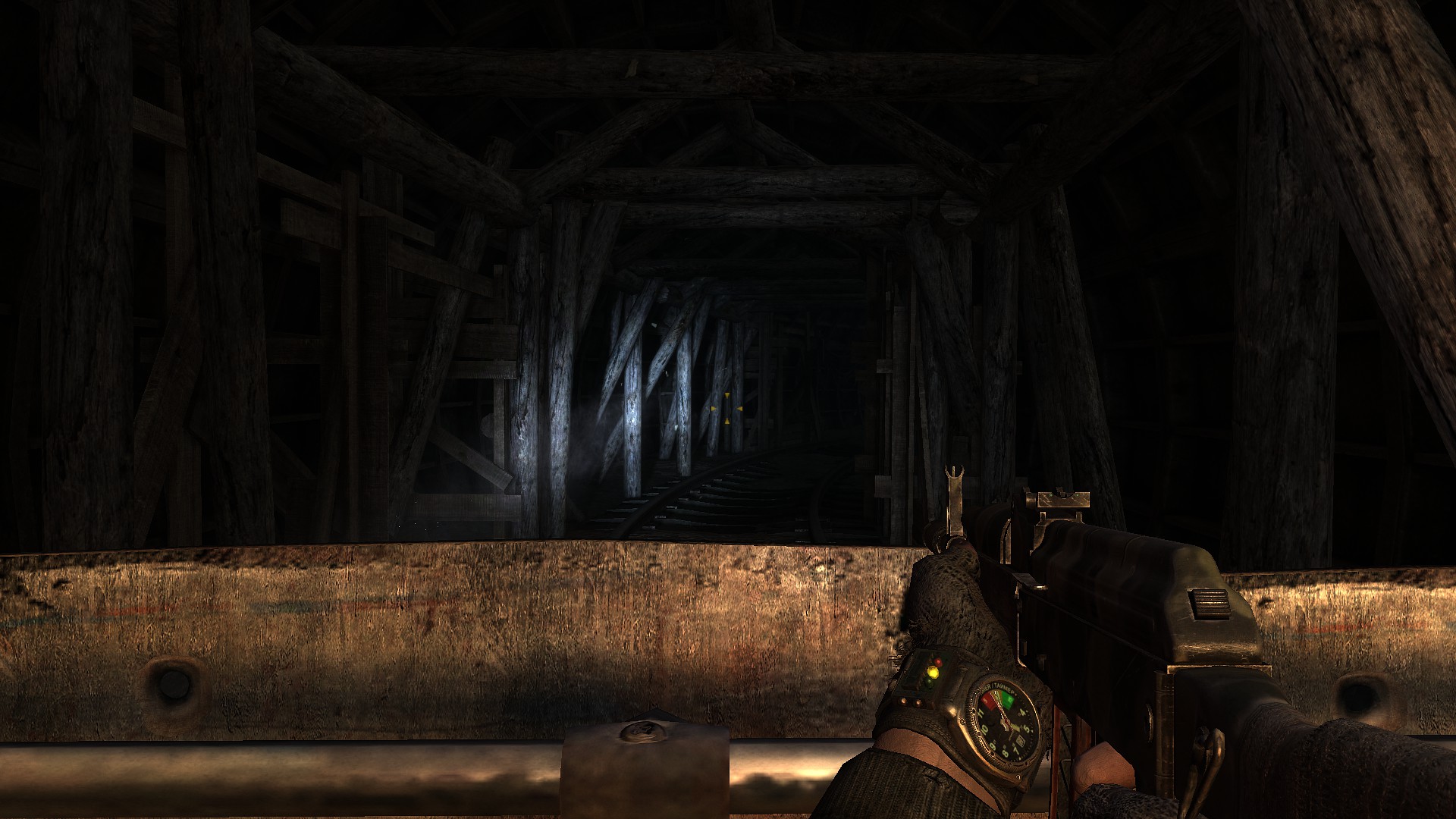
The player rides a cart on the tracks. You’re on rails, and god, the creatures are coming. Your flashlight barely shows you what is in front of you. Suddenly, there is a train. To get close to it, about to smash into its solid steel, and the track veers left. You speed down a long tunnel. You splash out onto the ground.

Structurally, this is an on-rails haunted house attraction. It has the same movements. But what does it mean for a real experience to be supplanted into a fictional world where the haunting, where the possibility of death, is immanent? It becomes more real than real; more haunted than a haunted house.

2. Why Is It Horror?

Metro 2033 is horror because it takes the world we live in and stretches it. It is horror because it is makes itself seem possible. It is materially connected to the living world.

3. What Did It Do To Me?

It freaks me the hell out every time I play. I have to take long breaks between sessions.

Read about other games in the Designing Horror series. 

Posted in Designing Horror, Theory, Video Games | Tagged , , , , | Comments Off on Designing Horror: Metro 2033

On Richard Skelton

Richard Skelton haunts me.

Sometimes I will be in the shower and I will just be doing the shower thing and a surge of string will come to my mind. I’ll hum for a little while. Or I will be walking to the train station, and silence and the clip clop of my shoes and birds will do their bird noises and I will thing about an underlay of violins. So when I say that Richard Skelton haunts me, I mean that his music, his composition, has somehow colonized my brain to such an extent that I will insert him into my life without fully realizing what I am doing.

Richard Skelton is living in my brain.

I’m getting ahead of myself. Lets go back for a second. Listen to this track. Turn it up all the way. Sit back, close your eyes, and just fucking chill out for a second. You can overdose on information in five minutes.

So maybe now you get it. Long sequences. Chains of sound that never really stop, never make themselves discrete. Surges of wind and water. The dissolution of the space between you and the world.

It isn’t just the music that draws me to Skelton, though I admit that if I knew nothing about him other than his albums, I would still love it all. In 2004, Skelton’s partner died. He made music. He made a lot of music. He seems to have channeled all of that loss into desperate sounds.
Richard Skelton writes the soundtrack to half-sleep movements, eyes closed, a bedfellow touching absently. The soundtrack of water mediating a touch. The soundtrack of blood and breath.

EDIT: check out this quote from this interview

For me, forging a connection with landscape through music has been a way of feeling part of something larger than myself, of anchoring myself during a time of great personal upheaval. The landscape itself has answered many of my questions and asked a good many more in return. The redemption it offers isn’t easy. It means the loss of the self, a surrender of those very things that we hold dear. Love. Familial ties. Memories. It can be a form of release and a kind of horror. But paradoxically, the landscape also remembers. It enshrines the smallest and the most seemingly inconsequential in layers of soil. A leaf. A bird skull. A seed.
 

So look here to buy his things. Read his poetry. Listen to the songs. 

Posted in General Features, Music Time | Tagged , , | Comments Off on On Richard Skelton