Marcom in A Brief History of Yes

So now it is Maria’s turn to laugh. She laughs. And the girl opens her mouth and all of the laughing animals and not-animals run out of her mouth and into the air–which butterflies and sandhill cranes which hillside songbird three-legged city dogs, which leaves and dust motes and dirty laundry and her boy’s sweat-smells and food stuffs and movies and sunlight and fashionable blouses and songs and fate and she knows something now which she can laugh to so she does it.

-Micheline Aharonian Marcom, A Brief History of Yes p.53

Posted in Quote Time, Theory | Tagged , , , | Comments Off on Marcom in A Brief History of Yes

Call of Duty: Ghosts – Death as a Language

whiteout-multiplayer-map-layout

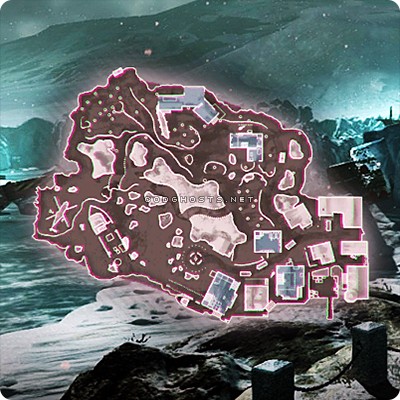
In Call of Duty: Ghosts there is a map called “Whiteout” and within that map I often wander.

I roam the map in solitude because despite always coming to this map in order to play team-based activities, I never manage to play team-based activities.

The west of the map is dominated by a series of hills and tunnels, multiple tiers hidden by their clustered design; underneath those hills and tunnels, between the cliffs and the sea there are ruined ships. Beyond those ships, to the southeast, there’s a village that comprises that area and most of the eastern part of the map. To the north, there is a ski lodge and a sawmill, and between those two locations and the cliffs, most of the deaths on the map occur.

I don’t stay there. I push out from the spawn location, where my team pushes and shoves in order to sprint to the front line to die in droves a little bit slower than the other team so that we can “win” in this arbitrary horrorshow.

I walk away from my team members. I stand in the village.

Skulls pop up on my screen. They show through the scenery, the models, the level design. They appear through everything. I stand in this serene and confusing small world in a bigger more confusing world designed to call players into lanes of murder and the world becomes understandable to me because of those murders.

Death makes meaning out of my act of wandering away from the arcade loop of react and respawn. I see the shape of the world through the loss of their lives. Between ski lodge and ice canyon they walk into gunfire from accurately modeled rifles, and I watch those wasted lives become iconic and render the world sensible.

And then I am there too.

Posted in Video Games | Tagged , , , | Comments Off on Call of Duty: Ghosts – Death as a Language

Terry Kennedy on his Baker 3 Part

Posted in Skateboarding | Tagged , , | Comments Off on Terry Kennedy on his Baker 3 Part

Samantha Allen on the Transgender Day of Remembrance

On November 20th, we cannot mourn the past without interrogating our present. It’s easy to grieve the dead; it’s harder to come to terms with our complicity in their oppression, with the parts of ourselves that would still regard a transgender woman of color in Brazil as the bridge too far. As Audre Lorde wrote, “I urge each one of us here to reach down into that deep place of knowledge inside herself and touch that terror and loathing of any difference that lives here. See whose face it wears.”

If transgender people remain stubbornly in the shadows of progressive politics, it is because we are still the terror inside the liberal imaginary, we are still the wearers of those loathed faces. Today is the Transgender Day of Remembrance. Light a candle today. Shine it on yourself.

Samantha Allen, “Transgender, Dead, and Forgotten

Posted in Quote Time | Tagged , | Comments Off on Samantha Allen on the Transgender Day of Remembrance

Kanye via Isaac

I’m writing on Kanye and the videogame aesthetic right now.

Sample:

kanye3 isaac-before--article_image

Posted in Theory | Tagged , , , | 4 Comments

a quibble in being

morton1

morton2

morton3

Posted in Theory | Tagged , | Comments Off on a quibble in being

“1945-1998” by Isao Hashimoto

Posted in General Features | Tagged , , | Comments Off on “1945-1998” by Isao Hashimoto

Brian Taylor on Joe Magarac

Since the ’30s, plenty of folklorists have suggested [Joe] Magarac was totally made up by Francis. But whether Francis or other steelworkers made up Magarac, whether he was initially intended to be empowering or amusing or critical of the industry isn’t really relevant. Despite his size and strength, the man is nonthreatening to both industry and your daughters.

He literally kills himself for the good of the company.

You don’t have to squint very hard to see a cautionary tale here: an ironic criticism of the exploitation of a worker’s goodwill, their enthusiasm for their work. That version of Magarac could be useful to some workers in the games industry right now. While the immediate threat of long-term bodily harm has been taken out of the equation (at least for the majority of game developers; Nina Huntemann and Darius Kazemi’s The Three Least Powerful Women in Gaming succinctly and surgically criticizes the way the game and tech industries exploits young women’s bodies), stories of crunch time abound.

“Crunch” is the polite-company term for when a team has to work overtime to meet a project deadline. Giving it its own name might suggest it’s not a normal state of affairs, but in a quality of life survey conducted by Game Developer magazine earlier this year almost 70% of respondents said they work over 50 hours a week during crunch time, and over 70% reported crunch times that last for over a month. 50% of respondents reported a “somewhat negative impact” and another 28% a “very negative impact” on their family and social life because of it.

– Brian Taylor, “Crunch Time

Posted in Video Games | Tagged , , , | Comments Off on Brian Taylor on Joe Magarac

TCiW Holiday Buyers Guide 2013 – Fiction Books

A few weeks ago I floated the idea that I might do a buyer’s guide for the oncoming holiday season. Now I decided to do it. This is a holiday gift guide for people who think that the things I pay attention to are things that are neat. This is going to be a list of five things, but these aren’t in an order of importance. It is just an ordering device.

Alright.

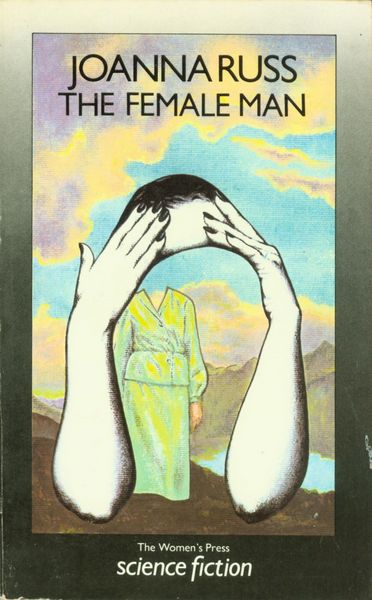
1. The Female Man – Joanna Russ

This novel is infinitely complex, and fits firmly in the “new wave” of science fiction that popped up in the 1970s. Fractured across the stories of several women who are all parallels of one another, wrapped up in different histories and causalities, The Female Man makes impassioned arguments for the sovereignty of women, cybernetic politics, and solidarity across universes. There’s a beautiful section at the end of the novel that breaks away from the central characters, revealing Joanna Russ herself, and she speaks with immense clarity.
femaleman2

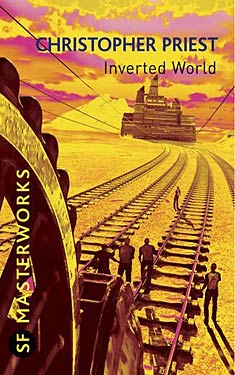
2. Inverted World – Christopher Priest

Priest writes about a world wholly different and unthinkable to us. A fortress travels forward on tracks laid day by day, making its path. A civilization lives in this fortress, and they have a secret. They come upon indigenous people, and those people laugh at the civilization on tracks. It keeps on truckin’.
cp_inverted

3. The Mirror in the Well – Micheline Aharonian Marcom

The blurb on the back of the book starts with “A woman’s sexual awakening is a tragedy when the woman is married to someone other than the make who awakens her,” and the book is so much more than that I could yell at whoever wrote the blurb. It is a story about knowing and the pain of knowing and the fragmentation of the heart and mind around attempting to live everyday life. A strange mate to the AltLit crew; a Twine game reverse engineered into a novel.

[I would have a cover here but the design makes it look like a porn novel and I generally don’t put naked people in my posts.]

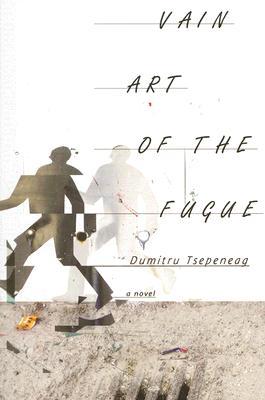
4. The Vain Art of the Fugue – Dumitru Tsepeneag

This novel is about a man who is late to catch a bus and so he runs outside and the bus pulls away and he follows, yelling for the bus to stop. This book is also about a man who is late to catch a bus but gets there just in time and is able to hop on the bus and sees a man who looks familiar running after the bus. You get the picture.
759968

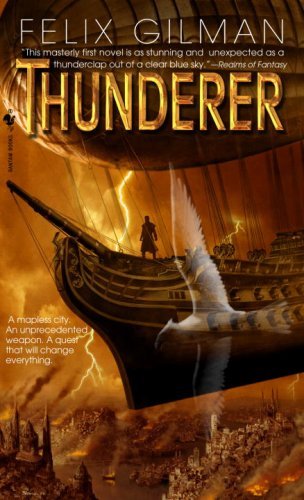
5. Thunderer – Felix Gilman

There is a fantastical city with no limits that changes at will, shifting in and out of possible realities through the presence of gods. Metaphysical debates rage about the nature of these gods–do they know us? Are they elemental in nature? Do they understand the world as we do? The book follows a young man named Arjun, a follower of his own god, on his journey through the incredibly deep and polymorphous city. No joke, I am absolutely enchanted with this book.

This cover is awful and really doesn’t do a lot to sell you on the idea that this book is not traditional boring fantasy fare.
thunderer

Posted in Buyer's Guide 2013 | Tagged , | 2 Comments

AMBER: Journeys Beyond

I played AMBER: Journeys Beyond on CDROM more than a decade ago and it was super strange and I never got very far. I did some research last week after a helpful bunch of people helped me figure out the name of the game on twitter (thanks Eric!), and I found out that it is very difficult to run on a modern computer.

SO I FOUND THIS AMAZING LP. The person who does it is really great and explains the game and isn’t annoying in any way. This is the holy grail of LPs. It takes somewhere around two hours to get through, but I think the game is really neat and pretty advanced for a game that came out in 1998.

It is also super dark and every plotline deals with grisly murder or suicide or creepy dolls.

Posted in Video Games | Tagged , , | Comments Off on AMBER: Journeys Beyond