Robert Yang on Ludonarrative Dissonance

I have several interesting posts (to me) that I want to write this week, but I came home from Gameloop 2013 (which I will write about at some later period) with a serious case of airplane flu. Hopefully this isn’t full on Contagion.

So I don’t feel very well and I’m a bit grumpy and because of that here is a link to a very important post by Robert Yang where I think that he has totally put the term “ludonarrative dissonance” to bed. My takeaway is essentially “no one gives a shit about dissonance,” but you might have something else. You can read it here.

Here’s an excerpt:

Clint Hocking famously coined “ludonarrative dissonance” to describe moments when what’s happening in a single player action game doesn’t fit with what the game is telling you is happening — maybe it’s just plain wrong, maybe the tone doesn’t match, or maybe the game thinks this thing is more interesting than it is — either way, it doesn’t quite work.

It’s when you realize your sympathetic handsome male player character is a sociopathic mass murderer, or maybe when a character in an RPG “dies” despite having already died and revived dozens of times before, or maybe the brief instance when an elite soldier NPC glitches in the middle of a doorway despite all the boring game lore dumped on you. Sometimes it’s intrinsic to making a game about killing people, sometimes you hope fridge logic kicks in, and sometimes it’s a technical quirk you forgive.

But I feel like that theory doesn’t explain what actually happens out in the field: if Bioshock Infinite was forged entirely, purposefully, from solid ingots of 100% pure ludonarrative dissonance, why didn’t this annoy the shit out of everyone? Isn’t ludonarrative dissonance supposed to be jarring and horrible? Why was the unusually unified critical response to Binfinite something like, “wow this game is colossally stupid,” but the mainstream response was, “this is amazing”?

So I have a new theory — most players do not find dissonance to be dissonant, and therefore ludonarrative dissonance doesn’t really exist.

As I said before, read every glorious word here.

Posted in Video Games | Tagged , , | 5 Comments

Ann Hirsch’s “Scandalishious”

This is the first thirty minutes of Ann Hirsch performance. She lived the life of a youtube “camwhore” (her words) for a significant amount of time, and I think this is the culmination of that work as a performance for a group of people in a small space Some of the videos she is sent are heartbreaking; the chats linger. The laughter in the audience makes me ashamed to be a human and destroys me.

I’m sorry I’m not writing about this well, but I’m doing this early Thursday morning. Time travel.

You can find Ann Hirsch on twitter. You can see more of her art here. You can listen to her on one of my favorite podcasts here.

Posted in General Features | Tagged , , | Comments Off on Ann Hirsch’s “Scandalishious”

Pettman on Marder’s Plant-Thinking

This is one of the central claims of Plant-Thinking, and yet I had difficulty squaring it with my own (admittedly inexpert) knowledge of “actual” plants. No doubt vegetal life is in many ways “unity in flux.” But does that mean it is also always already a gift of “primordial generosity”? Consider just a few examples from the plant “kingdom”: poison ivy, toxic sap, stinging nettles, sharp thorns, poisonous spines. Some plants employ deceptive mimesis in order not to be eaten or colonized. Orchids punk wasps into thinking they’ve just had sex. Some even play dead. Others, like bracken, have themselves colonized entire valleys of Europe, thanks to their powerful cyanide-based toxins that can cause blindness and even cancer. Carnivorous plants, like the famous Venus flytrap, are not above kidnapping and murdering their meals. During the week when I was writing this, the BBC News Science page featured headlines such as “Perfumed Plant Lures in Mammals,” and “Plant Chemicals ‘Manipulate’ Ants.” Even when not being outright aggressive or duplicitous, some plants require a quid pro quo from their pollinating insects, or passive-aggressively trap them for the night, for the benefit of their selfish genes. Trees fight to the death for access to light. Acacias and rattans enlist ants to defend their sovereign territory. The mistletoe and dodder plant are downright vampiric.

No doubt Marder would object that this list of tyrannical flora is just so much “ontic” botany, overlaid with deceptive anthropomorphic narratives. Self-preservation, he might say, is not an evolutionary tenet, but a projection of human hubris. But given the many and varied ways in which plants protect their territory, or invade others’, the ontic/ontological disconnect may be so large as to be untenable. The Derridean “hospitality” which the author sees in all plant-being appears more like skewed rhodopsin in the eye of the beholder. Marder occasionally seems aware of his overreach, as when he writes, “Even if a plant (for instance, milkweed) produces toxins to ward off pests or insects, it does not, strictly speaking, do so to protect itself (or better yet, its ‘self’).” Why on earth not? The difference between an animal defending its territory, and a plant defending its territory, is never addressed. And while there is a certain decadent romance to a life-form which flourishes “only in ‘falling apart,’” this description surely doesn’t apply to the strangling fig tree, so named for its tenacious will-to-flower. To label all plant-life as inherently generous is to also imply that mice are “generous” to cats. In short, I would have liked to see more agon.

Don’t misunderstand me: Having myself been profoundly influenced by late 20th-century philosophical discussions of “inoperable/coming/unavowable communities” (Nancy, Agamben, Blanchot), I am highly sympathetic to “the principles of inherent divisibility and participation.” But the degree to which plants really do traverse “all other modes of living while preserving their differences” or give themselves “without reserve … free of any expectations of returns from the other” seems highly questionable, given the general economy of ecology, which includes cacti, nettles, and vegetal parasites of all kinds. I kept wishing there were more examples to support this particular argument, rather than the sheer weight of assertion, as if this facet of the vegetal world were generally understood to be the case. Our grids of identity are certainly complicated when we consider plants, but that doesn’t mean they are abolished. Indeed, the strongest critics of this Levinasian fancy would probably be the object-oriented ontologists, many of whom insist upon the withdrawn, monadic aspect of any given (individuated) entity. The organic commons here can look pretty hostile and dangerous when viewed in slow motion.

Dominic Pettman reviewed Plant-Thinking at the LA Review of Books

Posted in Theory | Tagged , , , | 1 Comment

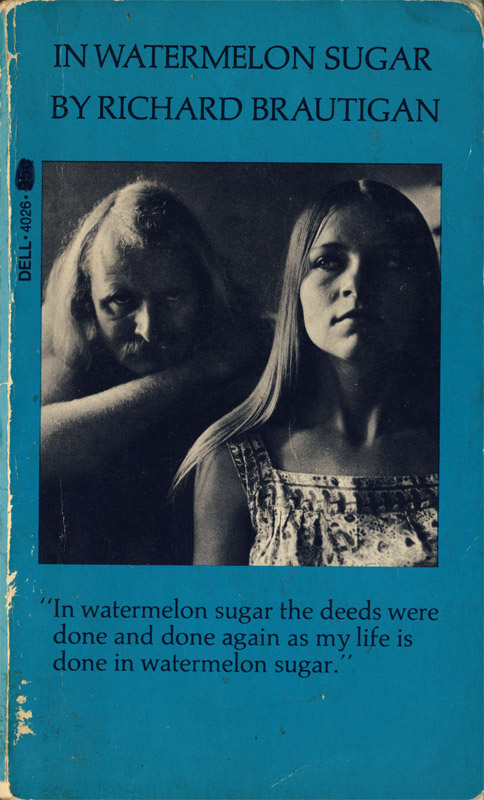
In Watermelon Sugar and Game Design

brautigan_2_watermelon_sugar

I’ve been trying to figure out how to write this post for a while. Several weeks ago I tweeted that everyone who makes games should read Richard Brautigan’s In Watermelon Sugar. Sam Crisp read it and flat-out asked me why I recommended it, and I kind of floundered.

My explanation in an email was this:

I think it gives a really great primer on how you create narrative within a set of rules without rendering everything in the world so explicit. Right now we’re at this weird point in games where we create these worlds, put players into them along very narrow pathways, and then provide SO MUCH FUCKING INFORMATION in codexes (I think about Tomb Raider and Remember Me here). IWS gives you an entire world with some very clear rules and just sort of poetically works within those rules to give you this very tight, very enjoyable weird science fiction story. It is pleasant, it feels good, and it doesn’t fall prey to overexplanation.

I stick by this, but In Watermelon Sugar is more than the sum of its nonexplanations. Over the past couple years, I have seen more and more people making the connection between games and poetry or games and theater (and I’m sure these arguments have been made for the past hundred years in some capacity, but I’ve only keyed into them very recently.)

I think In Watermelon Sugar is important for game devs to read because it is the basic operations of a video game pushed backward into literature. The book retains a bare bones plot that is propped up by various locations and material properties, and these limitations allow for Brautigan to make small yet drastic performative leaps away from the familiarity of what he has crafted. For example, the book presents us with the idyllic, communistic iDeath, the group home that a number of characters live in. We’re never quite sure what it looks like–we know people live there, that it is open to plant life, that it is growing, but not much else. This semi-familiarity–this sense of understanding the shape of something without having a clear representational image of its bounds a limits–means that Brautigan is always free to move outside of those limits. There can’t be any violation of the reader’s trust, of the rules of the space, because we don’t clearly understand what those rules are in the first place. Thus when it is explained to the reader that there are many bricked up rooms in iDeath, solemn memorials to the dead, we don’t balk because it is against our expectation. We just accept it.

I think this is important and should be taken seriously by developers who are working with narrative as well as those who are simply devising rules and systems. In the excerpt from the email to Sam above, I’m commenting on how I think that there’s an overexplanation of worlds in games, as if the act of writing thousands of words of backstory somehow makes them more “real” and believable, as if internal consistency somehow generates unassailable faith on the part of the player (AVB touches on some of this here.) Video game narrative is infected by a desire for the grandiose, and honestly, it is never quite fit; when it does, I think it is totally on accident. So maybe we should be looking toward models of incompleteness, of opacity, and of oblique angles rather than models of utterly complete encyclopedic understanding. The cantina scene in Star Wars is cool because you look at all of the characters and think “wow, I wonder what their stories are.” It is much more boring to read all of their stories.

It works the same with the design of systems, although I think designing incompleteness and performative acts is hard to do–the most successful efforts in games also have a kind of de-fanged feeling to them (I can do anything I want in Skyrim, but it never really feels like your plot actions have any consequence in the world of the game). In a strange twist, maybe taking In Watermelon Sugar seriously as a way of thinking system design would also have us taking esports and emergent practices from those kinds of games into account. I don’t know how that gets transported into single player and narrative experiences, but I think it is worth thinking about.

I’ve rambled a bit, and I’m sorry, but the book had a pretty profound effect on me that I’ve been trying to parse for a few weeks. This weekend I’m giving my copy to Zoe Quinn and maybe she can make more sense of it than I can.

You can buy In Watermelon Sugar here and I bet you can find a digital copy online if you look hard enough.

Posted in Video Games | Tagged , , , | 1 Comment

Sway Talks About Riff Raff

If you’re up on your Critical Riff Raff Studies, you know that there is a now-infamous interview where a Hot 97 producer took Riff to task about embodying hip hop stereotypes as a white man. I wrote a bit about that in a guest article for W.A.R.N.

The opening of this short interview with Riff Raff has Sway responding to the arguments made during the Hot 97 segment. Note that I’ve removed some of Heather B’s interjections from this transcription to make it a little more smooth.

SWAY: Our next guest right now, I consider him a friend of the show, first time he came on…let me tell you why man. Because I like people who built…truth, their own truth. I don’t care if my truth isn’t what their truth is as long as they represent their truth and they not being facetious about what they feel, what they say, what they do and when he came up on this show I will admit that I wasn’t as well-versed on his rap history as I should have been. I knew he put out about twelve mixtapes and usually after the first two mixtapes, Heather B, I don’t keep going.

HEATHER B: Right, right.

SWAY: Those are like movies with a lot of sequels. But when the man came up on this show and had a good time with us, our audience, I asked him to rap. And I didn’t even ask him to freestyle, I just said give me a verse and the man said throw on a beat and was killin’ ’em off the top of the head with metaphors that just kept us in stitches.

HEATHER B: Sway, he said “I’m older than the moon and the sun.”

SWAY: Damn! Off the top! Meanwhile, I ask a lot of rappers to come, rappers–who rap!–and them bitches won’t do it. And so I’m always going to give him props, because no matter what you say about him, and for some reason people like to give him a lot of backlash, at least he raps if you ask him to. Welcome to the show, the one and only Riff Raff.

I have no idea how to embed the video, you can see it here.

Posted in Critical Riff Raff Studies, Theory | Tagged , , , | Comments Off on Sway Talks About Riff Raff

Parisi on Incomputable Algorithms

Incomputable algorithms are not exceptional probabilities, marking, for instance, the moment at which programming breaks down. On the contrary, incomputable probabilities are known probabilities that point toward a new conception of rule. The latter is exposed to a certain indeterminate quantity that cannot be compressed in a smaller cipher or simpler axioms than the output achieved. This new quantitative level of uncertainty is at the core of the metamodeling of everyday operations of programming, designing, measuring, and calculating probabilities through digital, biodigital, and nanobiological machines.

Luciana Parisi, Contagious Architecture p.21

Posted in Quote Time, Theory | Tagged , , , | Comments Off on Parisi on Incomputable Algorithms

Released: Laika

For some reason I believed that I had made a post about this already, but apparently I haven’t.

laika

A few weeks ago, deep in the development of Way Too Scary Game, I took an afternoon to make a Laika

It comes from a really weird place. I made the game because I saw the kickstarter project for Laika Believes and I immediately balked. There’s something about the story of Laika (you should read the wiki if you’re still confused) that I think is uncapturable on any level other than an affective one.

She was the first animal to orbit the earth. She died up there, alone. Language utterly fails when I try to explain what that means to me and how it makes me feel. So I made a game about it, about my helplessness at the past, at reading about Laika, at thinking about what she went through.

On some level, making an action game about Laika shooting her way through some generic laboratory feels wrong to me. It is like making an action game about Walter Benjamin or the the destruction of the Buddhas of Bamiyan.

Big thanks to Tara Ogaick for making the music very, very quickly for me.

In any case, you can play my helplessness simulator called Laika here.

Posted in A Game I Made, Video Games | Tagged , , , | Comments Off on Released: Laika

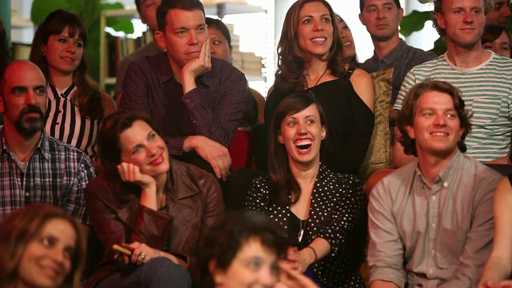
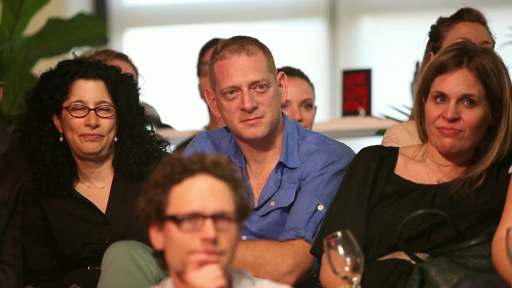
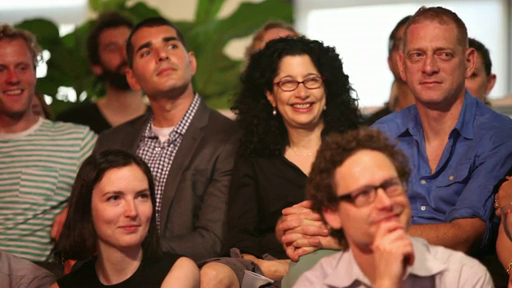
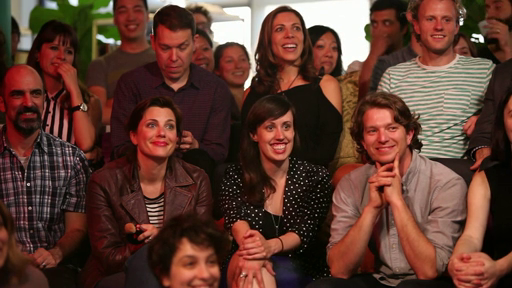
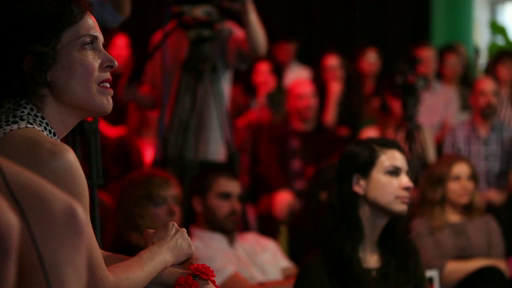
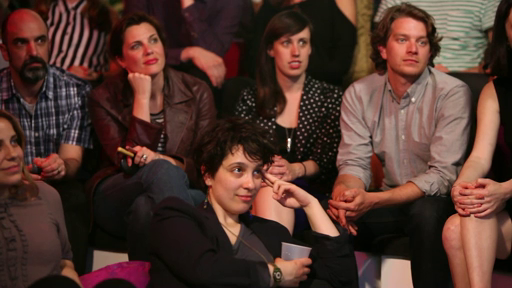
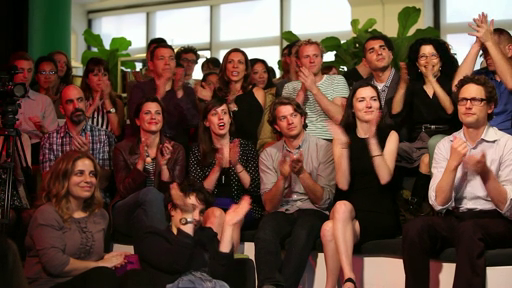
A Still From Every Audience Reaction Shot In Paola Antonelli’s TEDSalon NY2013 Talk “Why I Brought Pac-Man To MoMA”

vlcsnap-2013-08-01-22h27m47s149 vlcsnap-2013-08-01-22h28m03s54 vlcsnap-2013-08-01-22h28m13s148 vlcsnap-2013-08-01-22h28m24s3 vlcsnap-2013-08-01-22h28m53s42 vlcsnap-2013-08-01-22h29m29s139 vlcsnap-2013-08-01-22h29m44s39 vlcsnap-2013-08-01-22h30m41s90 vlcsnap-2013-08-01-22h31m52s39 vlcsnap-2013-08-01-22h32m57s172 vlcsnap-2013-08-01-22h33m54s236 vlcsnap-2013-08-01-22h34m15s184

Posted in Theory, Video Games | Tagged , , | Comments Off on A Still From Every Audience Reaction Shot In Paola Antonelli’s TEDSalon NY2013 Talk “Why I Brought Pac-Man To MoMA”

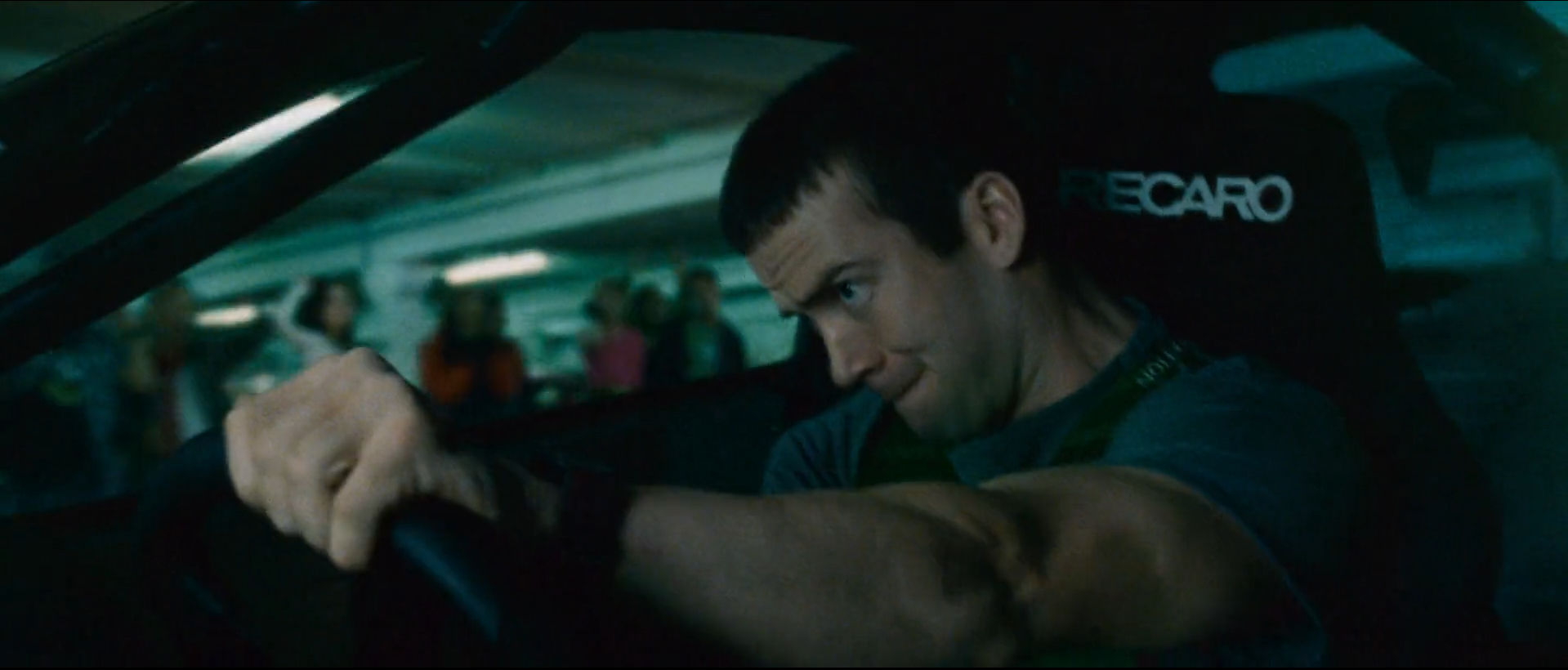
Three Stills From The Fast and the Furious: Tokyo Drift

fast1 fast3 fast2

Posted in General Features | Tagged , , | Comments Off on Three Stills From The Fast and the Furious: Tokyo Drift

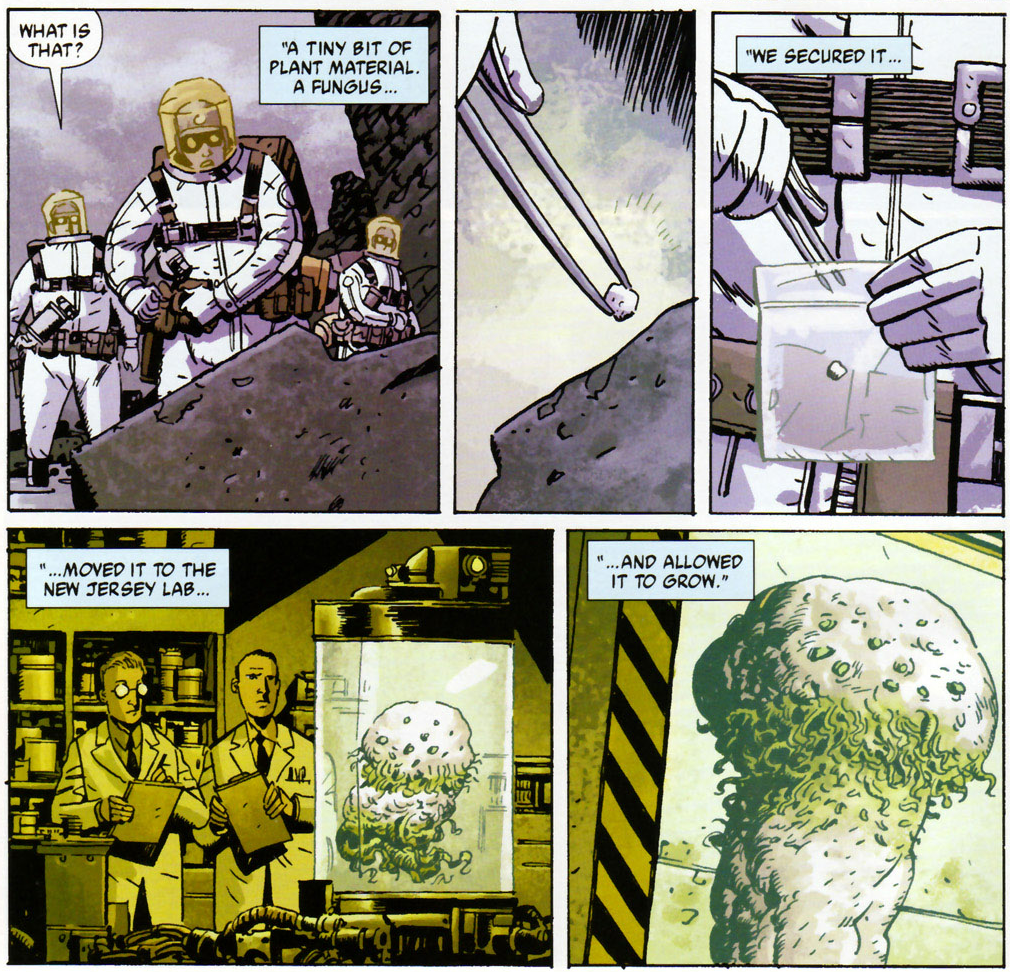
Fungal Growth

1 - plagueoffrogs2 - 1


B.P.R.D.: Plague of Frogs #2

Posted in Comics | Tagged , , , | Comments Off on Fungal Growth