Until Dawn Review at Paste

“You make choices and the choices matter” has been the bugbear phrase of videogames for twenty years. Giving players narrative options that actually pan out into their own unique scenarios has been promised by many games, and when it has been achieved (if it was achieved at all, or even attempted) it has mostly been through resource-efficient methods. The Planescape: Torment method, which is still celebrated by fans, was merely centered on changing NPC reactions; the Heavy Rain method mostly centered on making it seem like your choices mattered while largely ignoring them.

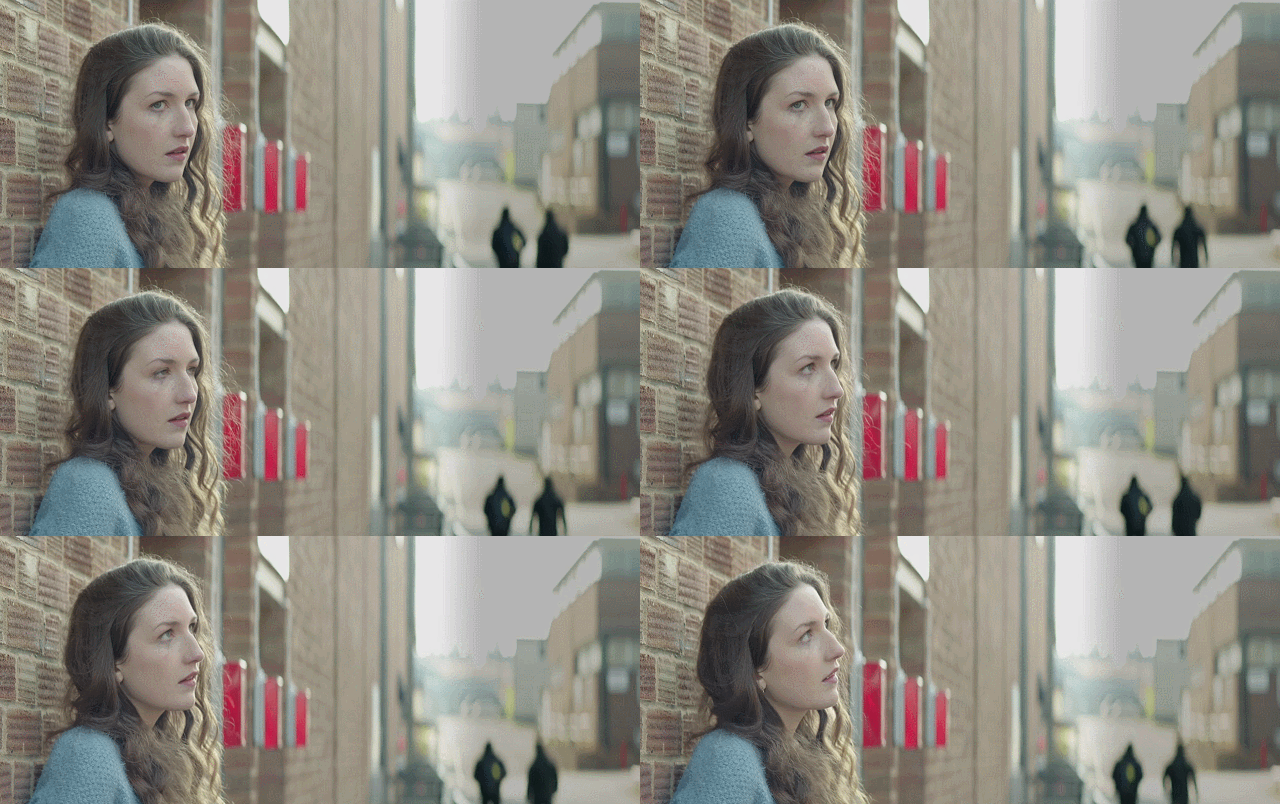
Until Dawn seems to be the furthest along in this paradigm. When characters make choices about whether to jump down a ledge or run along a path, those choices echo for a very long time. The Butterfly Effect system allows you to trace those echoes, and having played and replayed some sections, Until Dawn largely delivers on the promise of narrative splitting and choice.

Until Dawn Review: We’re All Stars Now in the Trope Show

Posted in Video Games | Tagged , , , | Comments Off on Until Dawn Review at Paste

We Played Fuse (conclusion)

Posted in Video, Video Games | Tagged , , | Comments Off on We Played Fuse (conclusion)

Warren Ellis at Haunted Machines

https://vimeo.com/124536236

This is a talk of Warren Ellis playing his history is the future in the past tune, and it’s one that I like a whole hell of a lot. However you feel about his writing in comics and otherwise, I think it’s impossible to say that he doesn’t have an incredibly synthetic mind that draws brilliant narratives from seemingly disparate materials. Here he is talking about ruins and cities and magic and Britain.

Posted in Theory | Tagged , | 1 Comment

The Most Interesting Cards in Magic Origins

I wrote about the most interesting cards in Magic Origins for Paste.

Like the Archangel of Tithes:

This is an angel who flies around and generally makes your life more difficult. That’s the general tone of angels in Magic, so you have to wonder about the theological biases in the design time, but this card is excellent because it just slows everything down. It makes the game more expensive for the other player, and it actively discourages them from being able to do anything against your roving band of angels or whatever you want it to be.


Posted in Video Games | Tagged , , | Comments Off on The Most Interesting Cards in Magic Origins

We Played Fuse For A While (part 1!)

Posted in Video, Video Games | Tagged , , , | Comments Off on We Played Fuse For A While (part 1!)

On Summer Camp’s “Bad Love”

badlove11. I watched the video for “Bad Love” fifteen times in a row. Full immersion. I got down into it, watched all of the sections, figured out how the framing works. I could go full SEK here and map out the visual rhetoric of the slow zoom, the centered frame, and the moments when those rules are broken. I’m not going to.

badlove2

2. The moments when she breaks eye contact are the most interesting. It’s almost a trope. It’s the whistful look that trails off into the distance. It’s something about her gaze. When it breaks off, when it breaks away from you, it’s almost as if you did something wrong. The Hemingway, the Plath, the look that drives its way down into the ground deep in the dirt.

badlove3

3. This shot is the second-best in the entire video. She’s watching him and her. They’re laughing. The former is standing, the latter is moving faster and more erratically than anything else in the video. And our heroine withdraws.

badlove4

4. Looking away is the strategy in this video. You capture an object with a gaze, and you break that gaze to instate a trauma. There’s simultaneity: the world gets drawn in yet forced to withdraw. Opacity as mystery.

badlove5

5. This is the best shot in the video. She denies any examination of interiority, and the camera only gives us furtive glaces, sliced looks, or brittle stares. This violence cut downward is thrilling. We lose her slow deliberation and get access to the “bad love.” The tone is regretful; the flashback is all unfettered action without thought.

badlove6

6. Watch the video.

Posted in Music Video | Tagged , , , , | Comments Off on On Summer Camp’s “Bad Love”

Bulletstorm, Narrative, and Satire

Today I released a video about Bulletstorm, a game that I have been trying to write about for years now. In all seriousness, I have a draft of an essay on the backend of this blog that’s probably been languishing for three years. It contains opinions that I don’t have anymore supported with evidence that I no longer find compelling, and I’m glad that I’ve made this video in order to get a small argument about the game out there into the world.

Posted in Video, Video Games | Tagged , , , , | Comments Off on Bulletstorm, Narrative, and Satire

Review of Metal Gear Solid by Anthony and Ashly Burch at Paste

The writing that the Burches do in Metal Gear Solid isn’t that kind of partisan work. It takes positions, of course: they hold it accountable for its sexism, its hamfisted writing, and its strange plot beats that cohere simply because the game tells us that they do. The Burches tell you at the opening of the book that they are going to be relentless in their criticism of this object that clearly meant so much to them in their shared childhood.

But somewhere near the end of Metal Gear Solid a Burch says that there’s a romantic appeal to how weird this game object is. It does lots of things that don’t quite make a lot of sense when any scrutiny is applied to them, but it does all of those things with ultimate sincerity. It might be annoying, or it might make no sense, or it might be goofy, but the wide-eyed innocence that permeates the experience drives it toward some kind of endearing endgame where you look at a caribou and weep.

[link]

Posted in Video Games | Tagged , , , | Comments Off on Review of Metal Gear Solid by Anthony and Ashly Burch at Paste

Robert Yang on Bodies

A ragdoll is an awkward body in flux that we share with the game engine, whose every movement is unknowable and unpredictable and must be negotiated. Even the most realistic motion capture cannot compete with this kind of truth. Our vulnerability and awkwardness is what makes our bodies alive.

When you spank the NPC in Hurt Me Plenty so hard that you dislocate his shoulders, the instability of his ragdoll is crucial. It helps communicate the breaking of boundaries as the game code literally buckles under your demands, desperately trying to resolve his bones into some sort of rational arrangement, but it is impossible.

Posted in Video Games | Tagged , , , , | Comments Off on Robert Yang on Bodies

You Buy It, I Play It: Crimzon Clover World Ignition

Posted in Video, Video Games, You Buy It I Write It | Tagged , , , | Comments Off on You Buy It, I Play It: Crimzon Clover World Ignition